1. What Is IVF with Frozen Eggs?
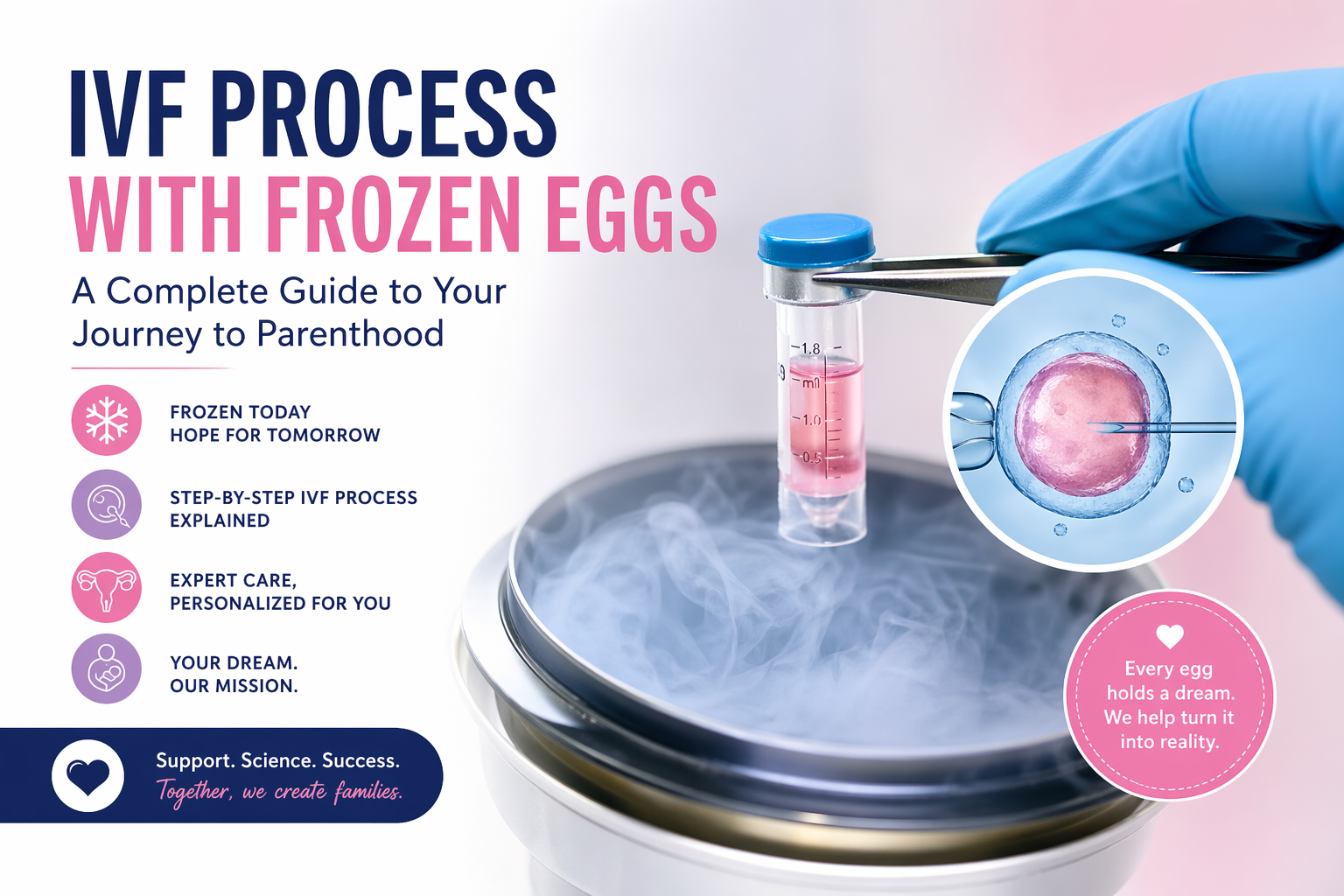
IVF with frozen eggs means using eggs that were collected earlier, preserved through freezing, and stored in a fertility lab. Later, these eggs are thawed and used in the IVF process.
The eggs are combined with sperm in a lab to create embryos. Once healthy embryos form, one or more are placed into the uterus in hopes of pregnancy.
This method gives women flexibility. It allows them to preserve fertility and use their eggs when they feel ready.
2. Why Do Women Freeze Eggs?
There are many reasons women choose egg freezing. Every story is personal.
Common Reasons Include:
- Career or education goals – delaying pregnancy until the timing feels right
- No partner yet – preserving fertility for future family planning
- Medical treatment – before chemotherapy or surgery
- Low ovarian reserve – protecting future chances early
- Family history of early menopause
Egg freezing is like pressing the pause button on fertility. It doesn’t guarantee pregnancy, but it can improve future options.
3. Who Can Use Frozen Eggs for IVF?
Frozen eggs can be used by:
- Women who froze their own eggs earlier
- Cancer survivors preserving fertility before treatment
- Women planning pregnancy later in life
- Couples dealing with fertility problems
- Individuals using donor sperm
If you’re unsure whether it’s right for you, speaking with the best IVF Doctor in Delhi NCR can help you understand your personal chances.
4. Step-by-Step IVF Process with Frozen Eggs
Let’s break the journey into simple steps.
Step 1: Consultation and Testing
Your doctor reviews your health, fertility history, and treatment plan. Blood tests, ultrasound, and semen analysis may be advised.
Step 2: Preparing the Uterus
Hormonal medicines may be given to prepare the uterine lining so it can receive the embryo.
Step 3: Thawing the Eggs
Frozen eggs are carefully warmed in the lab.
Step 4: Fertilization
A sperm is injected into each mature egg using ICSI (Intracytoplasmic Sperm Injection).
Step 5: Embryo Culture
Embryos grow in the lab for 3–5 days.
Step 6: Embryo Transfer
A healthy embryo is placed into the uterus.
Step 7: Pregnancy Test
About 10–14 days later, a blood test checks for pregnancy.
5. How Are Frozen Eggs Thawed?
Egg thawing is a delicate lab process. Fertility experts slowly warm the eggs and remove protective freezing solutions.
Not every egg survives thawing, but modern freezing methods like vitrification have greatly improved survival rates.
Today, many clinics report strong thaw survival when eggs were frozen and stored correctly.
6. Fertilization and Embryo Development
Once thawed, eggs are fertilized using sperm.
Why ICSI Is Often Used
With frozen eggs, doctors often use ICSI, where one healthy sperm is injected directly into the egg. This improves the chance of fertilization.
After fertilization:
- Day 1: Fertilization check
- Day 3: Early embryo growth
- Day 5: Blastocyst stage (advanced embryo)
Doctors then choose the healthiest embryo for transfer or freezing.
7. Embryo Transfer Explained
Embryo transfer is a quick and usually painless procedure.
A thin catheter carries the embryo into the uterus. No surgery is needed, and most women go home the same day.
After Transfer
You may be asked to:
- Continue hormone medicines
- Avoid heavy exercise for a few days
- Eat balanced meals
- Manage stress
Then comes the famous “two-week wait,” which can feel longer than a month!
8. Success Rates of IVF with Frozen Eggs
Many people ask: Does IVF with frozen eggs really work?
The answer is yes, but success depends on several factors.
General Success Factors
- Age when eggs were frozen
- Number of eggs frozen
- Egg quality
- Sperm quality
- Embryo quality
- Uterine health
- Clinic expertise
Eggs frozen at a younger age often give better results because younger eggs usually have stronger quality.
9. Factors That Affect Success
Age at Freezing
This is one of the biggest factors. Eggs frozen before age 35 often have higher success potential.
Number of Eggs Available
More eggs can mean more chances for healthy embryos.
Lab Quality
A skilled embryology lab matters greatly.
Lifestyle Factors
Smoking, obesity, poor sleep, and stress can reduce fertility outcomes.
Medical Conditions
Thyroid issues, PCOS, fibroids, or endometriosis may affect treatment.
10. Cost of IVF with Frozen Eggs
Costs vary depending on city, clinic, medicines, and lab services.
Expenses May Include:
- Consultation and tests
- Egg thawing charges
- IVF lab procedures
- ICSI
- Embryo transfer
- Medicines
- Storage fees (if eggs are still stored)
- Additional freezing or genetic testing
In Delhi NCR, costs can differ widely. It’s wise to ask for a complete package breakdown before starting.
11. Risks and Challenges
Every medical treatment has some risks, though many women complete IVF safely.
Possible Challenges
- Not all eggs survive thawing
- Some eggs may not fertilize
- Embryos may stop developing
- Implantation may not happen
- Emotional stress
- Multiple cycles may be needed
The key is to stay informed and work with an experienced fertility team.
12. Tips to Improve Pregnancy Chances
Want to give yourself the best chance? Small habits can make a big difference.
Helpful Tips
- Maintain a healthy weight
- Eat fruits, vegetables, protein, and whole grains
- Reduce smoking and alcohol
- Sleep 7–8 hours daily
- Take supplements only if advised
- Manage stress with yoga or meditation
- Follow medicine schedules carefully
- Keep all clinic appointments
Your body is like a garden—healthy soil helps seeds grow stronger.
13. Why Choosing the Right Fertility Expert Matters
IVF is not just about machines and medicines. It’s also about judgment, timing, and personalized care.
The best IVF Doctor in Delhi NCR can help by:
- Creating a treatment plan for your case
- Reviewing egg reserve and embryo options
- Managing medical issues
- Adjusting hormones correctly
- Guiding you emotionally
- Improving success chances with experience
Always check the clinic’s lab quality, transparency, reviews, and communication style.
14. Emotional Side of the Journey
The IVF process can bring hope, excitement, fear, and impatience—all at once.
Some days you may feel positive. Other days, anxious. That’s normal.
How to Cope
- Talk openly with your partner
- Join support groups
- Take breaks from online searching
- Ask questions at appointments
- Celebrate small milestones
Remember, fertility treatment is a journey, not a race.
15. Final Thoughts
The IVF process with frozen eggs has given countless people a second chance at parenthood. It offers flexibility, hope, and modern solutions for changing life plans. While success depends on age, egg quality, and expert care, many families have started this way.
If you’re considering treatment, don’t rely only on internet advice. A personalized consultation with the best IVF Doctor in Delhi NCR can provide clarity, realistic expectations, and a plan built around you.
Your path may not be simple—but it can still lead somewhere beautiful.
FAQs
1. How long does IVF with frozen eggs take?
Usually 3 to 6 weeks from consultation to pregnancy test, depending on your cycle and treatment plan.
2. Are frozen eggs as good as fresh eggs?
Frozen eggs can perform very well, especially when frozen at a younger age using modern vitrification methods.
3. How many frozen eggs are needed for IVF?
It varies by age and egg quality. Doctors often recommend more eggs to improve chances of getting healthy embryos.
4. Is embryo transfer painful?
Most women feel little to no pain. It is usually a quick and simple procedure.
5. Can I get pregnant naturally after freezing eggs?
Yes. Egg freezing does not stop natural pregnancy. Many women still conceive naturally later.



 Downloader
 Free FTP

 English
 Arabic
 French
 Spanish
 Portuguese
 Deutsch
 Turkish
 Dutch
Dutch
 Russian
 Romaian
 Portuguese (Brazil)
 Greek
Greek
