


 Downloader
 Free FTP
How Does Pressure Testing Keep Two-Piece Aerosol Cans Safe?
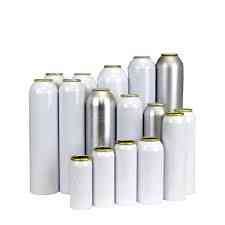
Pressure is not something most people think about when they pick up an aerosol can. They press the nozzle, the product comes out, and that is the extent of the interaction. But inside that container, something carefully engineered is happening — and the Two-Piece Aerosol Can sits at an interesting point in the story of how pressurized packaging got reliable enough to be trusted across everything from food production to personal care to industrial applications.
The construction is exactly what the name suggests. Two pieces of metal, not three. A body drawn from a single sheet, formed into a cylinder with a closed base, then fitted with a top end that houses the valve. No side seam. No separately attached bottom. The absence of those joins is not just a manufacturing detail — it changes the structural character of the container in ways that affect how it behaves under pressure, how its internal surface can be coated, and how it moves through recycling after use. Fewer components, fewer potential failure points, a cleaner interior that coats more evenly and contacts product more consistently.
Quality control in aerosol manufacturing is where this construction pays off in ways that are genuinely interesting to follow. Pressure testing is a routine but critical part of the process, and how it works reveals a lot about what manufacturers are actually trying to confirm before a can leaves the facility.
The basic principle involves subjecting each can to internal pressure that exceeds what it will experience during normal use and storage. Not by a small margin — by enough to expose any weakness in the body, the base, the seam between body and end, or the valve fitment. A can that holds under test conditions has demonstrated that its construction is sound. One that does not either deforms visibly, leaks at a join, or fails at the valve interface. Any of those outcomes removes it from production before it reaches a filling line.
Water bath testing is one method used in this process. Cans are pressurized and submerged, and the water surface is watched for bubbles that would indicate a leak. It is a simple approach, but it is sensitive — even a very slow release of gas produces visible evidence in water that would be invisible in air. For manufacturers running high volumes, automated pressure decay testing offers a faster alternative: the can is pressurized, sealed from the source, and monitored for any drop in internal pressure over a set period. A decay that exceeds the acceptable threshold flags the can for rejection without requiring manual inspection of every unit.
For a two-piece construction specifically, the areas of interest during testing are somewhat different from a three-piece can. Without a side seam, the body itself is rarely the concern. Attention goes to the join between the drawn body and the fitted end, and to the valve cup seating. These are the interfaces where different components meet, and where any inconsistency in forming or fitting can create a gap that pressure will eventually find. Good tooling, tight tolerances, and consistent forming processes reduce those risks significantly — but testing confirms they have been managed rather than assumed.
Beyond structural integrity, testing also validates that the valve functions as it should under pressure: that it opens cleanly, dispenses at the intended rate, and closes without residual leakage. A can that passes pressure testing but has a valve that does not seat properly after dispensing is still a problem, just a different one. Those wanting aerosol containers where this kind of manufacturing discipline informs every stage of production can view the Bluefire range at https://www.bluefirecans.com/product/ .

 English
 Arabic
 French
 Spanish
 Deutsch
 Turkish
 Dutch
Dutch
 Italiano
 Russian
 Romaian
 Portuguese (Brazil)
 Greek
Greek
