


 Downloader
 Free FTP
Top Wellness Yoga Practices for Stress Relief and Inner Balance
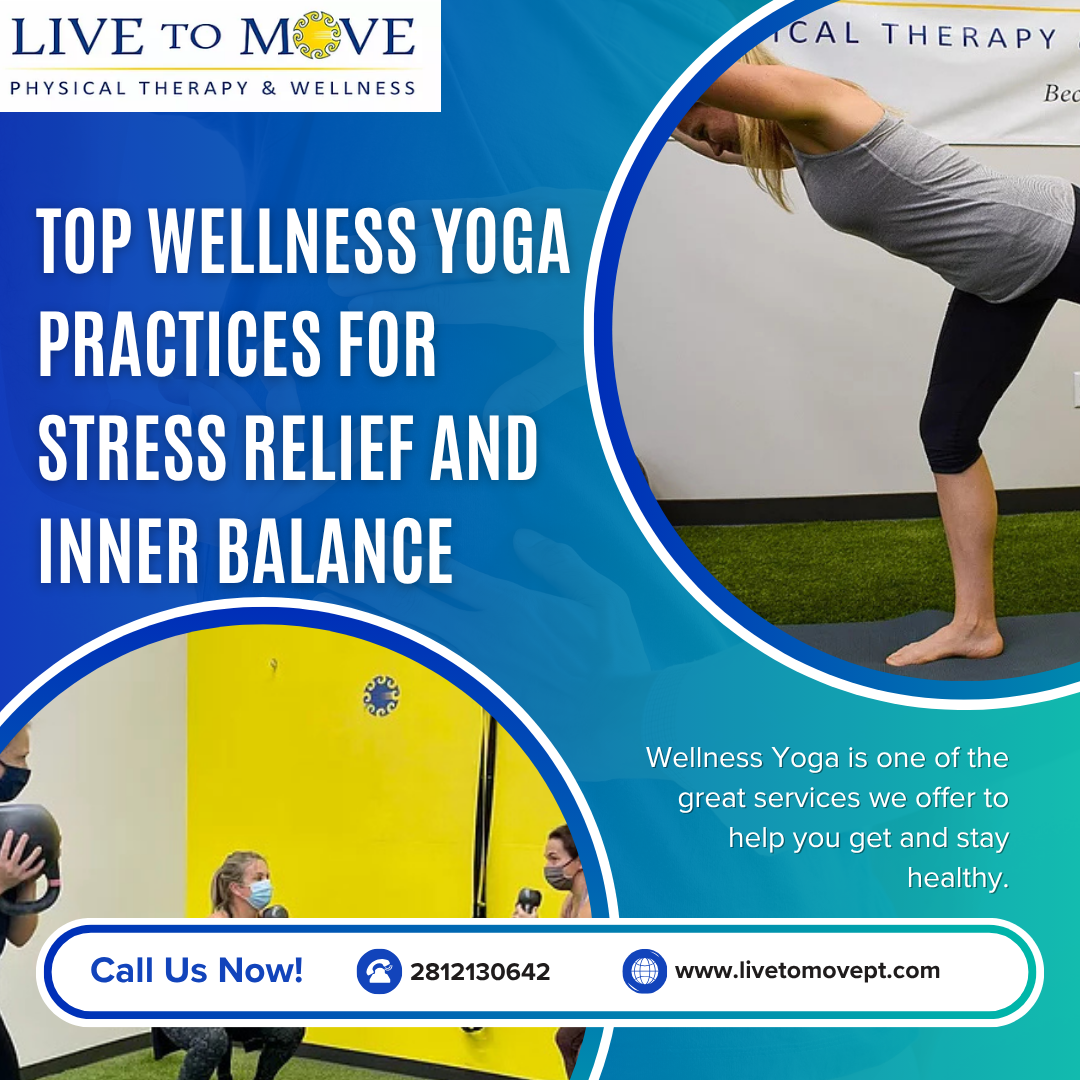
In today’s fast-paced world, stress has become a common part of daily life. From work pressure to personal responsibilities, the constant demands can leave both your body and mind feeling overwhelmed. At Live to Move Physical Therapy, we believe that achieving inner balance is essential for overall wellness and one of the most effective ways to do that is through wellness yoga.
Wellness yoga is more than just physical exercise. It is a holistic approach that combines movement, breathing, and mindfulness to promote relaxation, reduce stress, and improve mental clarity. In this blog, we’ll explore some of the top Wellness yoga practices that can help you restore calm, build resilience, and enhance your overall well-being.
Understanding Wellness Yoga
Wellness yoga focuses on gentle, mindful movements rather than intense physical exertion. It encourages you to listen to your body, connect with your breath, and be present in the moment. At Live to Move Physical Therapy, wellness yoga is often integrated with therapeutic techniques to support recovery, reduce pain, and improve mobility.
1. Deep Breathing (Pranayama)
One of the simplest yet most powerful wellness yoga practices is deep breathing. Also known as pranayama, controlled breathing helps calm the nervous system and reduce stress levels.
Benefits:
- Lowers anxiety and tension
- Improves oxygen flow
- Enhances focus and clarity
How to Practice:
Sit comfortably, close your eyes, and take slow, deep breaths. Inhale through your nose for four counts, hold for four, and exhale slowly for six counts. Repeat for several minutes.
2. Child’s Pose (Balasana)
Child’s Pose is a restorative yoga posture that gently stretches the back, hips, and shoulders while promoting relaxation.
Benefits:
- Relieves tension in the body
- Calms the mind
- Encourages deep breathing
How to Practice:
Kneel on the floor, sit back on your heels, and stretch your arms forward while lowering your forehead to the mat. Hold the pose and breathe deeply.
3. Cat-Cow Stretch (Marjaryasana-Bitilasana)
This gentle flow between two poses helps release tension in the spine and improves flexibility.
Benefits:
- Reduces stiffness in the back and neck
- Improves posture
- Promotes relaxation through movement
How to Practice:
Start on your hands and knees. Inhale as you arch your back (Cow Pose), and exhale as you round your spine (Cat Pose). Repeat slowly for 8–10 breaths.
4. Legs-Up-the-Wall Pose (Viparita Karani)
This calming pose is excellent for relieving fatigue and promoting circulation.
Benefits:
- Reduces stress and anxiety
- Relieves tired legs
- Improves blood flow
How to Practice:
Lie on your back and extend your legs up against a wall. Keep your arms relaxed by your sides and focus on slow, steady breathing.
5. Seated Forward Fold (Paschimottanasana)
This gentle stretch helps release tension in the spine and hamstrings while encouraging introspection.
Benefits:
- Calms the mind
- Relieves stress and fatigue
- Improves flexibility
How to Practice:
Sit with your legs extended, inhale to lengthen your spine, and exhale as you gently fold forward. Hold the pose while breathing deeply.
6. Corpse Pose (Savasana)
No wellness yoga session is complete without Savasana. This final relaxation pose allows your body to absorb the benefits of your practice.
Benefits:
- Promotes deep relaxation
- Reduces mental fatigue
- Restores energy
How to Practice:
Lie flat on your back with your arms and legs relaxed. Close your eyes and focus on your breath, letting go of all tension.
7. Mindfulness Meditation
While not a physical pose, mindfulness meditation is an essential part of wellness yoga. It helps you stay present and manage stress effectively.
Benefits:
- Enhances emotional well-being
- Improves concentration
- Reduces negative thoughts
How to Practice:
Sit quietly, focus on your breath, and observe your thoughts without judgment. Even 5–10 minutes daily can make a significant difference.
Creating a Consistent Routine
Consistency is key when it comes to wellness yoga. At Live to Move Physical Therapy, we recommend starting with just 15–20 minutes a day. Over time, you can gradually increase the duration and explore more advanced practices.
Tips for Success:
- Choose a quiet, comfortable space
- Practice at the same time each day
- Wear comfortable clothing
- Stay hydrated
- Listen to your body and avoid overexertion
The Role of Professional Guidance
While many yoga practices can be done at home, working with trained professionals ensures proper technique and safety. At Live to Move Physical Therapy, our experts tailor wellness yoga programs to meet your individual needs, whether you’re recovering from an injury or simply looking to reduce stress.
Conclusion
Wellness yoga is a powerful tool for achieving stress relief and inner balance. By incorporating gentle movements, mindful breathing, and relaxation techniques into your daily routine, you can improve both your physical and mental well-being. At Live to Move Physical Therapy, we are committed to helping you lead a healthier, more balanced life through personalized wellness solutions.
Start your wellness yoga journey today and experience the transformative benefits it can bring to your mind, body, and spirit.
FAQs
1. What is wellness yoga?
Wellness yoga is a holistic practice that combines gentle movements, breathing exercises, and mindfulness to improve overall health and reduce stress.
2. How often should I practice wellness yoga?
It is recommended to practice wellness yoga at least 3–5 times a week for optimal results, even if it’s just for 15–20 minutes.
3. Can beginners do wellness yoga?
Yes, wellness yoga is suitable for beginners as it focuses on simple, low-impact movements and relaxation techniques.
4. Does wellness yoga help with anxiety?
Yes, wellness yoga can significantly reduce anxiety by calming the nervous system and promoting relaxation.
5. Can I do wellness yoga at home?
Absolutely! Many wellness yoga practices can be done at home, but professional guidance can enhance your results and ensure proper technique.

 Arabic
 French
 Spanish
 Portuguese
 Deutsch
 Turkish
 Dutch
Dutch
 Italiano
 Russian
 Romaian
 Portuguese (Brazil)
 Greek
Greek
