


 Downloader
 Free FTP
Choosing Between 1099-NEC and 1099-MISC: A Practical Guide for Businesses
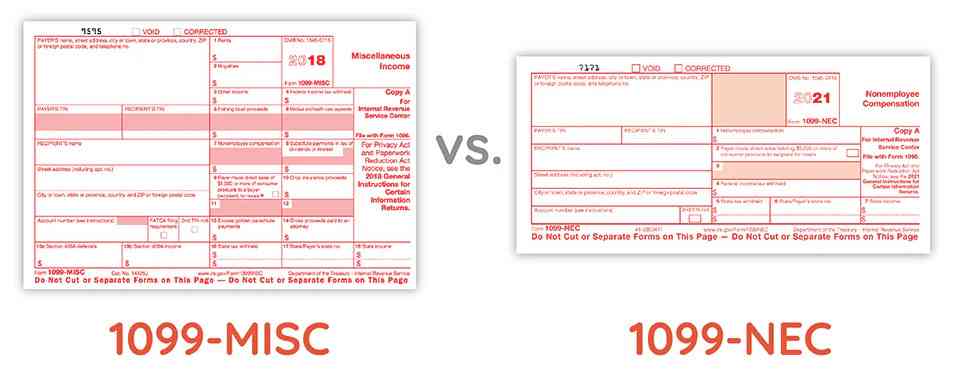
When it comes to tax reporting, many beginners find themselves confused between Form 1099-NEC and Form 1099-MISC. While both forms are used to report payments made by businesses, they serve different purposes. Understanding when to use each form is essential for staying compliant and avoiding costly penalties. This beginner’s guide will break it down in a simple, practical way.
What Is Form 1099-NEC?
Form 1099-NEC (Nonemployee Compensation) is used to report payments made to individuals who are not employees of your business. This typically includes independent contractors, freelancers, consultants, and service providers.
If your business pays $600 or more to a nonemployee for services during the year, you are generally required to file Form 1099-NEC. Common examples include payments to graphic designers, web developers, marketing consultants, or freelance writers.
The key purpose of this form is to report income that is subject to self-employment tax. Since these workers are not on your payroll, taxes are not withheld, making accurate reporting even more important.
What Is Form 1099-MISC?
Form 1099-MISC is used to report various types of miscellaneous income that do not fall under nonemployee compensation. While it was previously used for contractor payments, that responsibility now belongs to Form 1099-NEC.
You should use Form 1099-MISC to report payments such as:
- Rent paid to landlords or property owners
- Royalties (typically over $10)
- Prizes and awards
- Certain legal settlements
- Payments to attorneys (in some cases)
- Other miscellaneous income payments
This form covers a broader category of payments that are not directly tied to services performed by nonemployees.
Key Differences Between 1099-NEC and 1099-MISC
Understanding the differences between these two forms is crucial for accurate filing. Here are the main distinctions:
1. Purpose of Payment
- 1099-NEC: Used specifically for nonemployee compensation (services).
- 1099-MISC: Used for miscellaneous payments like rent, royalties, and prizes.
2. Type of Recipient
- 1099-NEC: Independent contractors, freelancers, and service providers.
- 1099-MISC: Landlords, prize winners, or other recipients of non-service income.
3. Filing Deadlines
- 1099-NEC: Typically due to the IRS and recipients by January 31.
- 1099-MISC: Usually due by February 28 (paper filing) or March 31 (electronic filing), though deadlines may vary slightly each year.
4. Nature of Income
- 1099-NEC: Income subject to self-employment tax.
- 1099-MISC: Income may not always be subject to self-employment tax.
When Should You Use Form 1099-NEC?
You should use Form 1099-NEC when:
- You pay an independent contractor $600 or more for services
- The payment is made in the course of your business or trade
- The recipient is not your employee
- The payment is made to an individual, partnership, or LLC (in most cases)
For example, if you hire a freelance accountant, digital marketer, or IT consultant, those payments should be reported on Form 1099-NEC.
When Should You Use Form 1099-MISC?
Use Form 1099-MISC when:
- You pay rent for office space or equipment
- You pay royalties exceeding $10
- You give prizes or awards related to your business
- You make certain payments to attorneys (not for services, which go on 1099-NEC)
- You issue other miscellaneous payments not covered by 1099-NEC
For instance, if your business rents a warehouse or pays a licensing fee for intellectual property, those payments belong on Form 1099-MISC.
Common Mistakes Beginners Should Avoid
Many beginners make simple but costly mistakes when dealing with 1099 forms. Here are a few to watch out for:
1. Using the Wrong Form
One of the most common errors is reporting contractor payments on Form 1099-MISC instead of 1099-NEC. Since the IRS separated these forms, it’s important to use them correctly.
2. Missing Deadlines
Failing to file on time can lead to penalties. Form 1099-NEC has an earlier deadline, so it requires extra attention.
3. Not Collecting W-9 Forms
Before making payments, always collect Form W-9 from vendors and contractors. This ensures you have accurate taxpayer information for reporting.
4. Ignoring Payment Thresholds
Not all payments require reporting, but once you cross the threshold ($600 for most cases), filing becomes mandatory.
5. Misclassifying Workers
Ensure that your workers are correctly classified as independent contractors and not employees. Misclassification can lead to compliance issues and fines.
Why Proper Filing Matters
Accurate use of 1099-NEC and 1099-MISC forms is essential for maintaining compliance with tax regulations. Filing the correct form ensures:
- Proper reporting of income to the IRS
- Reduced risk of audits and penalties
- Better financial record-keeping
- Smooth tax filing for both businesses and recipients
For small businesses and startups, proper 1099 reporting also builds credibility and helps maintain transparency in financial operations.
Final Thoughts
For beginners, understanding when to use Form 1099-NEC vs 1099-MISC may seem overwhelming at first. However, the distinction becomes simple once you remember this rule: use 1099-NEC for services provided by nonemployees, and use 1099-MISC for other types of miscellaneous payments.
By learning the differences, staying organized, and meeting deadlines, businesses can avoid errors and ensure smooth tax compliance. Taking the time to understand these forms now can save you from costly mistakes and stress during tax season.

 Arabic
 French
 Spanish
 Portuguese
 Deutsch
 Turkish
 Dutch
Dutch
 Italiano
 Russian
 Romaian
 Portuguese (Brazil)
 Greek
Greek
