


 Downloader
 Free FTP
Promote Your Product
Got a product, service, or story to share? Promote it directly to our active community and boost your brand today.
Create an Ad
Publish Bulk Blog Posts
Boost Your Reach! 📝
Have articles, guest posts, or bulk stories to publish? Send your content directly to our editorial team and feature on our platform.
Email Us Your PostsWhat Security Layers Should Be Included in Custom ERP Software Development?
Introduction
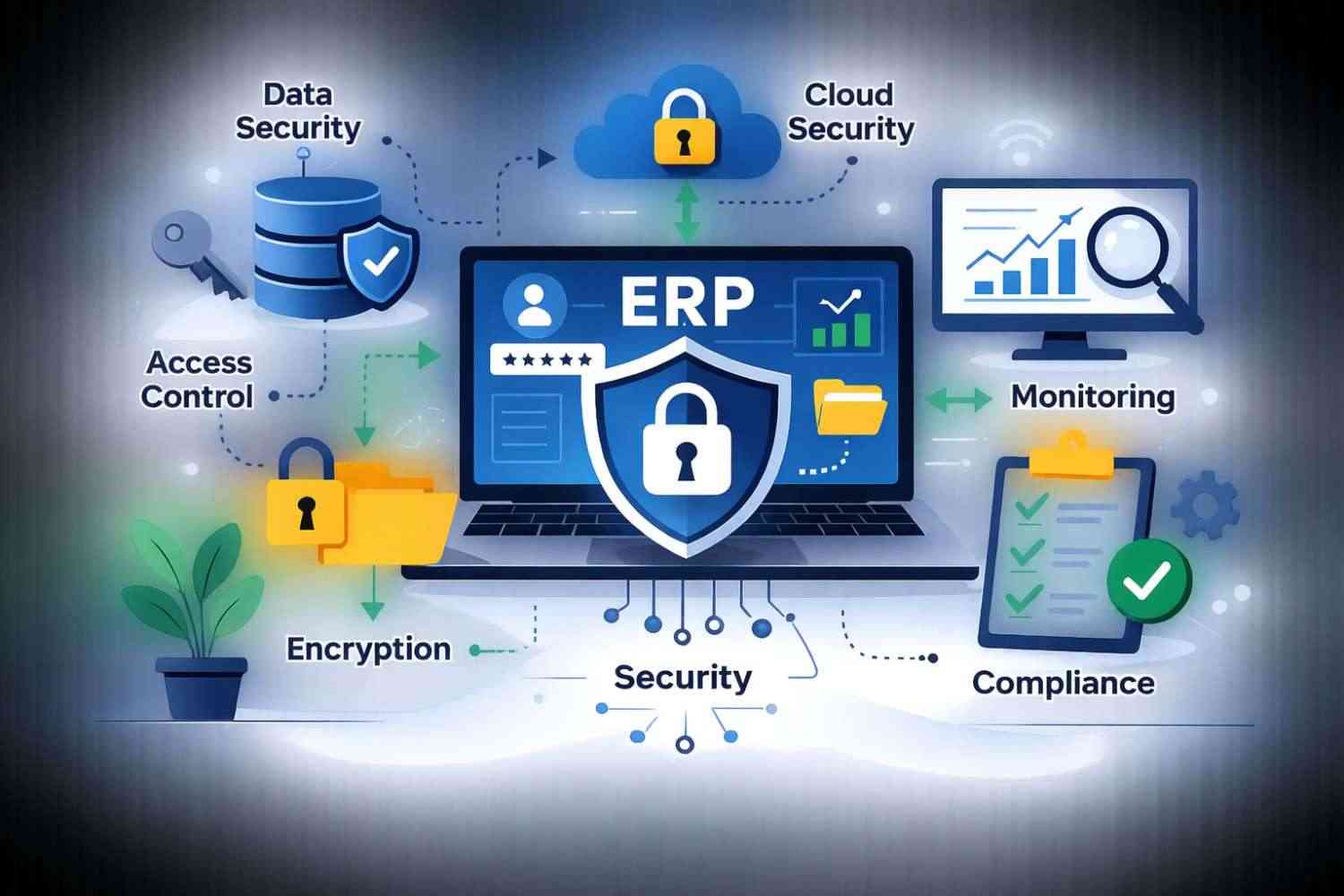
Security, in most organizations, is treated like the office fire extinguisher reassuringly present, rarely examined, and absolutely critical the moment things go sideways. An ERP system, however, is less like a corner fixture and more like the central nervous system of the business touch it, and everything reacts. That’s why layered protection isn’t optional it’s survival strategy. In custom ERP software development, security isn’t sprinkled on top; it’s baked in from the start. So, what exactly needs guarding—and how many locks are enough? As it turns out, more than most expect.
1. Authentication Layer: Who Gets Through the Door?
Authentication is the first checkpoint—think of it as the bouncer who decides who even gets inside. Passwords alone, while nostalgic, are about as reliable as a paper lock. Multi-factor authentication adds depth, combining something known with something owned and occasionally something inherently human, like fingerprints. ERP developers often implement layered login systems to ensure identities aren’t easily mimicked. Because once unauthorized users slip in, the damage is rarely subtle. Getting this layer right isn’t glamorous—but then again, neither is explaining a breach caused by “admin123.”
2. Authorization Layer: Who Gets to Touch What?
Getting inside the system is only half the story; knowing what each user can actually do is where things get interesting. Authorization defines boundaries—who can view, edit, or delete critical data. Role-based access control ensures employees don’t accidentally (or enthusiastically) wander into areas they shouldn’t. There’s always that one organization where “everyone is admin,” and predictably, chaos follows. A well-structured ERP avoids that fate by assigning precise permissions. After all, not everyone needs access to financial records—and frankly, most people are better off without it.
3. Data Encryption Layer: Keeping Secrets Actually Secret
Data without encryption is essentially an open letter—anyone intercepting it gets the full story. Encryption transforms sensitive information into unreadable code, both while stored and during transmission. It’s the difference between sending a locked safe and mailing a postcard. Financial data, employee records, and customer information all demand this level of secrecy. Even if attackers manage to intercept the data, encryption ensures they walk away confused rather than informed. It’s one of those layers that works quietly in the background—until it doesn’t, and then everyone suddenly understands its importance.
4. Application Security Layer: Protecting the Core
The application itself is where vulnerabilities like to hide—quietly, patiently, and often in plain sight. Secure coding practices, regular testing, and vulnerability assessments help prevent common threats such as SQL injection or cross-site scripting. There was once a system that seemed perfectly stable until a minor input field turned into a major security loophole (a humbling reminder that small details matter). Continuous code reviews and updates are essential because threats evolve faster than documentation. A secure ERP isn’t built once—it’s maintained relentlessly, like a garden that refuses to stay weed-free.
5. Network Security Layer: Guarding the Perimeter
If the application is the castle, the network is the surrounding wall—and leaving it unguarded is practically an invitation. Firewalls, intrusion detection systems, and secure VPNs create a defensive perimeter that filters out suspicious activity. Open networks may feel convenient, but they tend to attract the wrong kind of attention. With cloud-based ERP systems becoming more common, securing data in transit is just as important as protecting it internally. Because once the gates are left open, even the strongest internal defenses start to look surprisingly fragile.
6. Monitoring & Logging Layer: Watching Everything (Without Being Creepy)
Monitoring is less about suspicion and more about awareness—though it occasionally feels like both. Real-time tracking and detailed logs provide visibility into who is doing what, and when. These records become invaluable when something unusual happens (and something eventually will). Spotting anomalies early can prevent minor issues from escalating into full-scale problems. It’s like having a security camera that not only records events but quietly alerts you when something doesn’t add up. Because while hindsight explains problems, proactive monitoring often prevents them entirely.
7. Backup & Disaster Recovery Layer: When Things Go Wrong (And They Will)
Despite best efforts, things occasionally break—systems fail, data gets corrupted, or someone clicks something they absolutely shouldn’t have. That’s where backups step in, acting as a safety net when everything else falters. Regular, automated backups ensure that critical data isn’t lost permanently. Disaster recovery plans go a step further, outlining exactly how operations can resume with minimal disruption. It’s not the most exciting part of system design, but it’s often the most appreciated—especially when the alternative is rebuilding everything from scratch.
8. API & Integration Security Layer: The Hidden Risk
Modern ERP systems rarely operate in isolation—they connect with multiple tools, platforms, and services. These integrations, while useful, introduce new vulnerabilities if not properly secured. APIs must be protected with authentication tokens, validation checks, and strict access controls. One weak integration can compromise an otherwise secure system. It’s a bit like locking every door in a house while leaving a window wide open. Careful attention to integration security ensures that convenience doesn’t come at the cost of exposure.
9. Compliance & Governance Layer: Playing by the Rules
Regulations may not inspire excitement, but they exist for a reason—usually because something went wrong somewhere, sometime. Compliance ensures that systems meet legal and industry standards, from data protection to audit requirements. Governance frameworks add structure, defining how security policies are implemented and maintained. Documentation, audits, and procedures may feel tedious, but they provide accountability and consistency. Security isn’t just about technology; it’s also about discipline. And while no one enjoys paperwork, it’s often the difference between preparedness and panic.
10. User Training Layer: The Human Firewall
Even the most advanced security system can be undone by a single careless click. Human error remains one of the biggest vulnerabilities in any organization. Training employees to recognize phishing attempts, use strong passwords, and follow best practices creates an additional layer of defense. It’s less about turning everyone into security experts and more about building awareness. Because sometimes the biggest risk isn’t a sophisticated attack—it’s an innocent mistake. A well-informed team doesn’t just use the system; it actively helps protect it.
Conclusion
Layered security isn’t about paranoia—it’s about preparation. Each layer plays a role, reinforcing the others and creating a system that’s far more resilient than any single measure alone. The reality is that no system is ever completely secure, but a thoughtfully designed ERP comes remarkably close. Security, much like maintenance, is never truly finished—it evolves, adapts, and occasionally surprises. And perhaps that’s the point: staying one step ahead, quietly and consistently, while everything else runs as it should. Because in the end, the best security is the kind nobody notices.
FAQs
1. Why is security essential in ERP systems?
ERP systems store sensitive business data, making them a prime target for cyber threats. Without proper security layers, businesses risk data breaches, financial loss, and operational disruption.
2. How many security layers should an ERP include?
A robust ERP should include multiple layers such as authentication, authorization, encryption, monitoring, and backup to ensure comprehensive protection.
3. What role do ERP developers play in security?
ERP developers design and implement secure architectures, ensuring that vulnerabilities are minimized and best practices are followed throughout the system.
4. What is the most common ERP security risk?
Human error, such as weak passwords or falling for phishing attacks, is one of the most common and impactful risks.
5. How often should ERP security be updated?
Security should be continuously monitored and regularly updated through patches, audits, and system improvements to address evolving threats.

 English
 Arabic
 French
 Portuguese
 Deutsch
 Turkish
 Dutch
Dutch
 Italiano
 Russian
 Romaian
 Portuguese (Brazil)
 Greek
Greek
