


 Downloader
 Free FTP
Why Do Workshops Choose Vertical Metal Band Sawing Machine
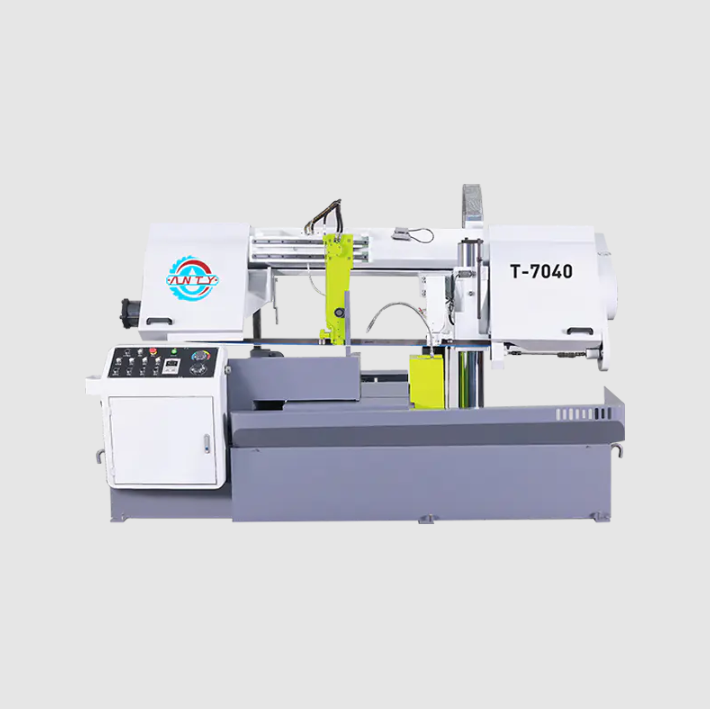
Metal fabrication workshops often depend on reliable cutting equipment to process raw materials into workable components. A band sawing machine remains one of the commonly used tools in this field, especially when precision cutting and steady operation are required. Among different configurations, the vertical metal band sawing machine provides flexibility that allows operators to handle various cutting tasks ranging from straight cuts to more complex shapes.
A vertical design changes how the cutting process is approached. The blade runs continuously between two wheels, forming a loop that moves downward through the workpiece. Operators guide the material along the worktable while the blade performs the cutting motion. This layout makes it easier to follow curved lines or irregular shapes compared with some other cutting methods.
Workshops handling metal sheets, plates, and bars often value the control offered by vertical band saws. The operator maintains a clear view of the cutting path because the blade is positioned directly in front of the work surface. Visibility supports careful positioning, which can reduce mistakes and wasted material.
Blade selection plays an important role when using a band sawing machine. Different tooth profiles and blade materials are designed for specific metals. Carbon steel blades may suit softer metals such as aluminum, while bi-metal blades are often chosen for tougher alloys. Proper blade choice helps maintain cutting efficiency and reduces wear on the equipment.
Another aspect that attracts manufacturers to vertical metal band sawing machines is the ability to manage complex shapes. Components used in mechanical assemblies sometimes require curves, slots, or internal cutouts. With a narrow blade and controlled feed, the machine allows operators to guide materials along these paths without changing equipment.
Modern workshops often combine manual skill with mechanical stability. The band sawing machine supports this balance by providing steady blade motion while allowing the operator to guide the material. This interaction between machine and operator remains useful in prototype work or small production runs.
Cutting accuracy also benefits from the design of the worktable. Many vertical band saws include adjustable tables that can tilt slightly, helping operators produce angled cuts when required. Fabricators working with brackets, frames, or structural elements often rely on this capability.
Safety remains an important consideration in metal cutting environments. Guard systems, blade covers, and emergency stop mechanisms are commonly integrated into vertical metal band sawing machines. These features help reduce risk during operation while maintaining productivity in the workshop.
Cooling and lubrication also contribute to cutting performance. When metals generate heat during cutting, coolant systems may be used to reduce blade temperature and prevent excessive wear. Proper cooling also helps produce smoother cut surfaces.
Manufacturers working with stainless steel or alloy materials sometimes require slower cutting speeds to maintain blade life. Adjustable speed controls allow the band sawing machine to adapt to different metals without changing equipment.
Industrial production continues to evolve as manufacturers explore ways to balance precision, material efficiency, and equipment durability. Vertical band saw technology fits naturally into this environment because it offers mechanical stability along with operational flexibility.

 English
 Arabic
 Spanish
 Portuguese
 Deutsch
 Turkish
 Dutch
Dutch
 Italiano
 Russian
 Romaian
 Portuguese (Brazil)
 Greek
Greek
