


 Downloader
 Free FTP
Promote Your Product
Got a product, service, or story to share? Promote it directly to our active community and boost your brand today.
Create an Ad
Publish Bulk Blog Posts
Boost Your Reach! 📝
Have articles, guest posts, or bulk stories to publish? Send your content directly to our editorial team and feature on our platform.
Email Us Your PostsWhat are Rubber Trailing Cables?
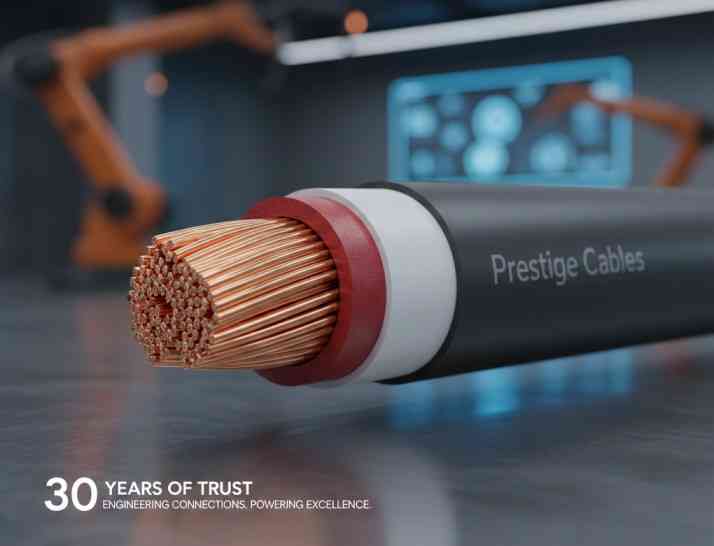
Rubber Trailing Cables are flexible electrical power cables specially developed for moving and heavy-duty machinery. These cables maintain continuous power supply while equipment such as draglines, excavators, stacker-reclaimers, and mobile industrial machines operate and change position.
They are extensively used in industrial environments including:
-
Steel manufacturing units
-
Cement industries
-
Dockyards and ports
-
Power generation plants
-
Automobile manufacturing units
-
Refineries
-
Petrochemical facilities
Types of Rubber Trailing Cables
Different applications require different rubber compounds. Common variants include:
-
Ethylene Propylene Rubber (EPR) cables
-
Chlorosulfonated Polyethylene (CSP) cables
-
Neoprene rubber cables
-
Natural rubber cables
-
Silicone rubber cables
Key Characteristics
Manufacturers design these cables for durability and performance in harsh working environments.
-
EPR cables – High flexibility and resistance to heat, ozone, and weathering (ideal for mining and offshore use)
-
CSP cables – Strong resistance against abrasion, oil, and chemicals (suited for construction and steel plants)
-
Neoprene cables – Multi-purpose industrial usage including welding equipment
-
Natural rubber cables – Excellent bending endurance and fatigue resistance for cranes and conveyors
Additional advantages:
-
Flame retardant construction
-
UV resistance
-
Reliable performance in low temperatures
Important Buying Considerations
When selecting Rubber Trailing Cables, evaluate:
-
Compliance with safety standards
-
Operating environmental conditions
-
Flexibility requirement
-
Electrical load capacity
-
Mechanical stress resistance
-
Overall cost efficiency

 Arabic
 French
 Spanish
 Portuguese
 Deutsch
 Turkish
 Dutch
Dutch
 Italiano
 Russian
 Romaian
 Portuguese (Brazil)
 Greek
Greek
