


 Downloader
 Free FTP
Choosing the Right Aluminum Spot Welder for Industrial Applications
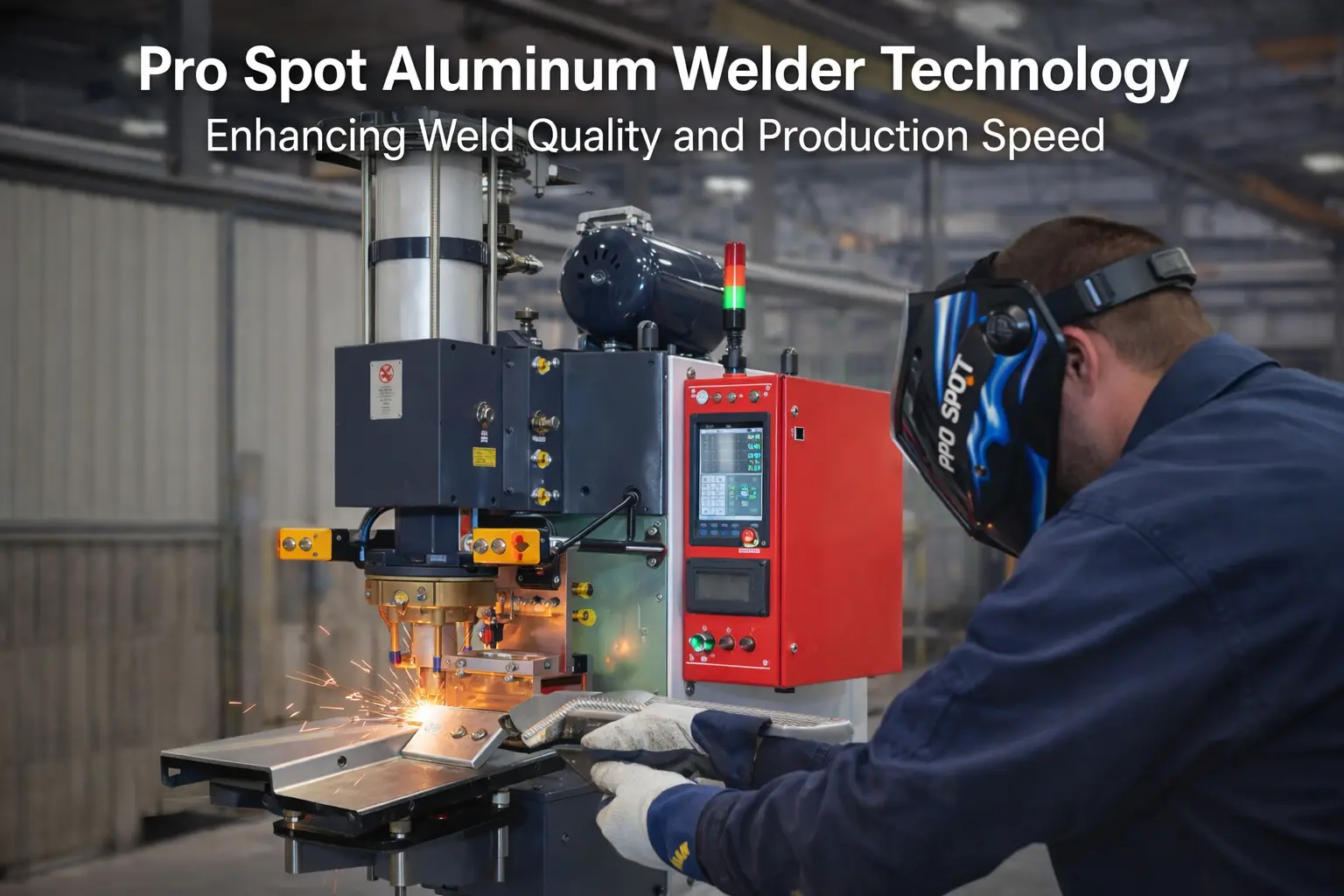
In modern manufacturing, joining aluminum efficiently and reliably has become increasingly critical. Lightweight, corrosion-resistant, and highly conductive, aluminum presents unique welding challenges compared to steel. For manufacturers, OEMs, and automation integrators, selecting the right aluminum spot welder is key to achieving precise, repeatable results while maintaining productivity and minimizing costs. Heron Welder, a global leader in industrial welding solutions, offers advanced spot welding machines designed specifically for aluminum and other lightweight metals.
In this guide, we’ll explore the principles, applications, comparisons, and best practices for aluminum spot welding, helping factory decision-makers choose the right solutions for their operations.
Understanding Aluminum Spot Welding
Spot welding is a resistance-based process that joins metal sheets by applying heat generated from electrical resistance at the contact point. Aluminum, with its high thermal and electrical conductivity, requires specialized equipment to ensure strong welds without defects. Unlike steel, aluminum dissipates heat quickly, meaning that traditional spot welding machines often fail to achieve consistent penetration.
Key technical factors in aluminum spot welding include:
-
Material Thickness: Aluminum sheets typically range from 0.5 mm to 3 mm in automotive and industrial applications.
-
Current Control: High-frequency or MFDC (Medium-Frequency Direct Current) welders provide precise current control, ideal for aluminum.
-
Electrode Design: Copper alloy electrodes with optimized shapes improve heat transfer and extend electrode life.
-
Weld Timing: Short, precise pulses prevent overheating and reduce oxidation at the weld interface.
Heron’s aluminum spot welders leverage advanced MFDC technology, adaptive current control, and automatic electrode force adjustment to produce high-quality, consistent welds on even the most challenging aluminum alloys.
Applications of Aluminum Spot Welding
Aluminum spot welding is widely used across industries where lightweight, strong assemblies are critical. Common applications include:
1. Automotive and EV Manufacturing
Automakers increasingly replace steel with aluminum to reduce vehicle weight and improve efficiency. Aluminum spot welding is essential in assembling body panels, chassis components, battery trays, and EV enclosures.
2. Aerospace and Aviation
Aluminum’s strength-to-weight ratio makes it ideal for aircraft structures. Precision spot welding ensures structural integrity in fuselage panels, interior frames, and support brackets.
3. Electronics and Consumer Goods
Aluminum housings for electronics, appliances, and heat sinks benefit from spot welding, providing strong joints without compromising aesthetics or electrical conductivity.
4. Industrial Fabrication
From HVAC units to industrial machinery panels, aluminum spot welding accelerates production while maintaining consistent quality across high-volume runs.
Comparing Aluminum Spot Welding Technologies
Selecting the right technology depends on material, thickness, and production requirements. Here’s a comparison of common options:
| Technology | Advantages | Best Use Cases |
|---|---|---|
| MFDC Spot Welding | Precise current control, energy-efficient, reduced electrode wear | Automotive, aerospace, thin aluminum sheets |
| Capacitor Discharge (CD) Welding | Very fast welds, minimal heat affected zone | Electronics, small assemblies, battery tabs |
| AC Resistance Welding | Lower cost, robust design | General fabrication, thicker aluminum sheets |
| Automated Welding Lines | High repeatability, integration with robotics | High-volume automotive, industrial assembly |
Heron Welder provides a range of solutions from single MFDC spot welders to fully automated production lines, enabling manufacturers to choose the right system for their workflow and material requirements.
Best Practices for Aluminum Spot Welding
Ensuring consistent weld quality requires more than just advanced machines. Consider these expert best practices:
-
Surface Preparation: Clean and oxide-free surfaces improve weld penetration. Use chemical cleaning or mechanical brushing when necessary.
-
Electrode Maintenance: Regularly dress electrodes to maintain correct contact and reduce spatter.
-
Process Monitoring: Use integrated weld monitors to track current, force, and weld time for real-time quality control.
-
Material Matching: Select electrodes and weld parameters optimized for the specific aluminum alloy and thickness.
-
Automation Integration: Incorporate welding robots or automated gantry systems to improve throughput, consistency, and operator safety.
Heron’s solutions include intelligent monitoring and adaptive controls that automatically adjust welding parameters, reducing errors and increasing uptime.
Why Choose Heron for Aluminum Spot Welding?
With decades of experience in industrial welding, Heron Welder delivers solutions tailored for complex aluminum applications:
-
Advanced MFDC and CD spot welders for precise, high-quality aluminum joints.
-
Custom automation integration for robotic welding lines or hybrid manual-automated systems.
-
Global support and training to ensure teams maximize machine performance and safety.
-
Durable, low-maintenance equipment engineered for continuous industrial operation.
Heron’s expertise extends beyond hardware, offering consultation on process optimization, material compatibility, and line integration for maximum ROI.
FAQs About Aluminum Spot Welding
Q1: Can standard steel spot welders be used for aluminum?
A: No. Aluminum requires specialized equipment like MFDC or capacitor discharge welders due to its high conductivity and low melting point.
Q2: What thickness of aluminum can spot welding handle?
A: Most industrial aluminum spot welders handle sheets from 0.5 mm to 3 mm, with some MFDC systems capable of thicker material.
Q3: How does electrode wear affect weld quality?
A: Worn electrodes reduce contact area, leading to inconsistent welds, higher spatter, and potential failures. Regular maintenance is essential.
Q4: Can aluminum spot welding be automated?
A: Absolutely. Robotic arms or gantry systems integrated with Heron spot welders allow high-volume, repeatable production.
Q5: What industries benefit most from aluminum spot welding?
A: Automotive, aerospace, electronics, consumer goods, and industrial fabrication industries gain the most from reliable, high-speed aluminum welding solutions.
Take the Next Step with Heron Welder
Choosing the right aluminum spot welder is critical for quality, efficiency, and long-term reliability. Heron Welder combines advanced MFDC, capacitor discharge, and automated solutions with global expertise to help manufacturers, OEMs, and integrators meet demanding production goals.
Request a quote or consult with our team today to explore customized aluminum welding and automation solutions tailored to your factory’s needs.

 English
 Arabic
 French
 Spanish
 Portuguese
 Deutsch
 Turkish
 Dutch
Dutch
 Italiano
 Russian
 Portuguese (Brazil)
 Greek
Greek
