


 Downloader
 Free FTP
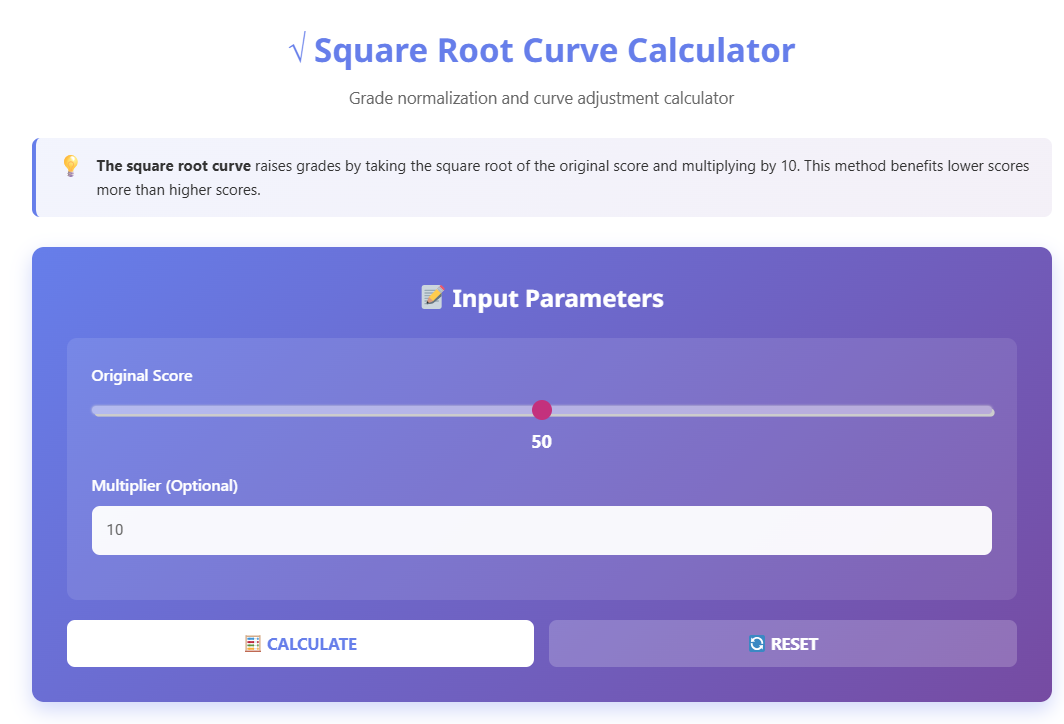
Introduction to the Square Root Curve
A square root curve chart is a simple but powerful way to show how numbers grow at a changing speed. Unlike straight lines that increase at a constant rate, the square root curve rises quickly at the beginning and then slows down as values get larger. This , square root curve chart ,shape makes it useful in mathematics, science, business analysis, and data visualization.
The square root curve comes from the square root function, which answers the question: “What number multiplied by itself equals this value?” For example, the square root of 9 is 3 because 3 × 3 equals 9. When these values are plotted on a chart, they create a smooth curve that is easy to recognize.
Understanding this curve helps students, analysts, and beginners see patterns that are not obvious in normal linear charts.
What Is a Square Root Curve Chart?
A square root curve chart is a graph that displays values based on the square root function. On the horizontal axis (x-axis), you place the input numbers. On the vertical axis (y-axis), you plot the square roots of those numbers.
For example:
- When x = 0, y = 0
- When x = 1, y = 1
- When x = 4, y = 2
- When x = 9, y = 3
- When x = 16, y = 4
When these points are connected, the result is a curve that rises steeply at first and then gradually becomes flatter. This slowing growth is the key characteristic of a square root curve.
Shape and Behavior of the Curve
The square root curve has a unique shape compared to other common graphs.
First, the curve begins at zero because square roots of negative numbers are not shown in basic real-number charts. Second, the curve increases continuously, meaning it never goes downward. Third, the rate of increase slows over time.
At smaller values, even small changes in x create noticeable changes in y. But as numbers grow larger, bigger increases in x are needed to create small changes in y. This creates a gentle bending effect instead of a straight line.
This behavior is called decreasing growth rate, and it appears often in real-world data.
Why the Square Root Curve Matters
The square root curve chart helps explain situations where growth happens quickly at first and then stabilizes. Many natural and human-made systems follow this pattern.
For example, learning a new skill often shows rapid improvement in the beginning. Over time, progress continues but becomes slower. A square root curve can represent this learning pattern visually.
Businesses also use similar curves to understand customer growth, product adoption, or efficiency improvements. Early gains are large, but later improvements require more effort.
How to Create a Square Root Curve Chart
Creating a square root curve chart is simple and does not require advanced tools.
- Choose a range of numbers for the x-axis, such as 0 to 25.
- Calculate the square root of each number.
- Plot each pair of values on a graph.
- Connect the points smoothly to form the curve.
Spreadsheet software or graphing calculators can automatically generate this chart. Even drawing it by hand helps learners understand how the curve develops.
The key is accuracy in plotting points because the smooth curve depends on correct values.
Real-Life Examples of Square Root Curves
Square root curves appear in many real-life situations, even if people do not notice them immediately.
In physics, the distance an object travels under certain conditions can relate to the square root of time. In statistics, data transformations sometimes use square roots to reduce extreme differences between values. In finance, risk measurements and volatility models may also follow square root relationships.
Population density, signal strength, and certain engineering measurements also display patterns similar to square root curves.
These examples show that the chart is not just a classroom concept but a practical analytical tool.
Comparing Square Root Curves with Linear Charts
A linear chart increases at a constant rate. If you add the same amount to x, y increases by the same amount every time. The result is a straight line.
The square root curve behaves differently. Early increases are large, and later increases become smaller. This difference helps analysts choose the right chart depending on the story they want data to tell.
If data shows slowing growth, a square root curve often explains it better than a straight line.
Advantages of Using Square Root Curve Charts
Square root curve charts offer several benefits:
- They simplify complex growth patterns.
- They help reduce the effect of extremely large numbers.
- They make trends easier to understand visually.
- They improve comparison between small and large values.
Because of these advantages, square root transformations are commonly used in data science and research.
Common Mistakes When Reading the Chart
Many beginners assume all upward curves mean rapid growth. However, the square root curve actually represents slowing growth.
Another mistake is expecting the curve to continue into negative numbers. In basic charts, square roots only exist for zero or positive values. Understanding these limits prevents confusion when interpreting graphs.
It is also important not to confuse square root curves with exponential curves, which grow faster and faster instead of slowing down.
Tips for Understanding the Curve Easily
The easiest way to understand a square root curve is to focus on how spacing changes between points. At the start, points move upward quickly. Later, they spread more horizontally than vertically.
Visualizing squares can also help. Since square roots reverse squaring, imagining perfect squares makes the pattern clearer.
Practice plotting small datasets first. Once familiar with the shape, recognizing the curve becomes easy.
Conclusion: Simple Yet Powerful Visualization
The square root curve chart is a valuable visual tool that explains gradual slowing growth in a clear and simple way. Its smooth rising shape helps people understand relationships between numbers that are not linear.
From education to business analysis and scientific research, this curve appears in many areas of life. Learning how to read and create a square root curve chart improves data understanding and decision-making skills.
Although the concept comes from mathematics, the idea behind it is very natural: rapid progress at the beginning followed by steady, slower improvement. This makes the square root curve one of the most useful and easy-to-understand charts for beginners and professionals alike.

 English
 Arabic
 French
 Spanish
 Portuguese
 Deutsch
 Turkish
 Dutch
Dutch
 Italiano
 Russian
 Romaian
 Greek
Greek
