


 Downloader
 Free FTP
The 7 Best Small Business Email Hosting Services in 2026 (Compared & Reviewed)

Professional email is the backbone of brand identity and customer interaction for businesses, eCommerce stores, service providers, and growing startups.
While free accounts like Gmail or Yahoo might work initially, customers often perceive generic email addresses as less trustworthy and less secure. A branded email (e.g., [email protected]) instantly builds credibility.
That’s where small business email hosting becomes a game changer.
In this updated 2026 guide, we compare the 7 best providers, break down pricing, highlight must-have features, and help you confidently choose the right solution.
What Is Email Hosting for Small Business?
Small business email hosting is a service that allows businesses to create professional email addresses using their own domain name (e.g., [email protected]).
Unlike free email services, business email hosting operates on secure, managed servers designed for:
-
High deliverability
-
Data security
-
Reliable uptime
-
Team collaboration
The key difference? Control.
With professional solutions, businesses own their data, manage accounts, and protect their brand identity.
Once MX records are configured, employees can access their domain-based email through webmail, Outlook, or mobile apps.
Why Professional Email Hosting Matters for Small Businesses
Builds Brand Credibility
Customers trust emails that match your company’s domain.
Increases Trust & Security
Secure systems reduce phishing, spoofing, and data breaches.
Improves Deliverability
Support for SPF, DKIM, and DMARC increases inbox placement.
Better Spam & Malware Protection
Advanced filtering and encryption keep data secure.
Team Collaboration
Shared calendars, file storage, and admin controls simplify communication.
In 2026, professional email hosting is a business asset—not just an inbox.
Important Features to Consider
When choosing small business email hosting, prioritize:
1. Custom Domain Email
Essential for branding and professionalism.
2. Storage Capacity
Scalable storage ensures smooth growth.
3. Uptime Guarantee
Look for 99.9% uptime or higher.
4. Spam & Virus Protection
Robust filtering prevents cyber threats.
5. Mobile & Desktop Sync
Seamless access across devices.
6. Backup & Recovery
Automatic backups protect critical data.
7. Integration Support
CRM, cloud storage, and collaboration integrations increase efficiency.
8. 24/7 Customer Support
Fast support minimizes downtime.
Compare the 7 Best Small Business Email Hosting Providers (2026)
1. Google Workspace
Overview: Cloud-based email hosting with powerful collaboration tools.
Key Features:
-
30GB+ storage per user
-
Gmail with custom domain
-
Google Meet & Drive integration
-
Advanced spam filtering
Pricing: From $6 per user/month
Pros:
-
Excellent deliverability
-
Easy to use
-
Strong collaboration tools
Cons:
-
Entry plan storage limits
Best For: Remote teams, eCommerce brands, growing startups
2. Microsoft 365
Overview: Enterprise-grade email with Outlook integration.
Key Features:
-
Outlook desktop & web access
-
Exchange email hosting
-
OneDrive storage
-
Advanced compliance tools
Pricing: $6–$12 per user/month
Pros:
-
Strong security & compliance
-
Ideal for structured environments
Cons:
-
Slight learning curve
Best For: Corporate environments & compliance-heavy industries
3. Zoho Mail
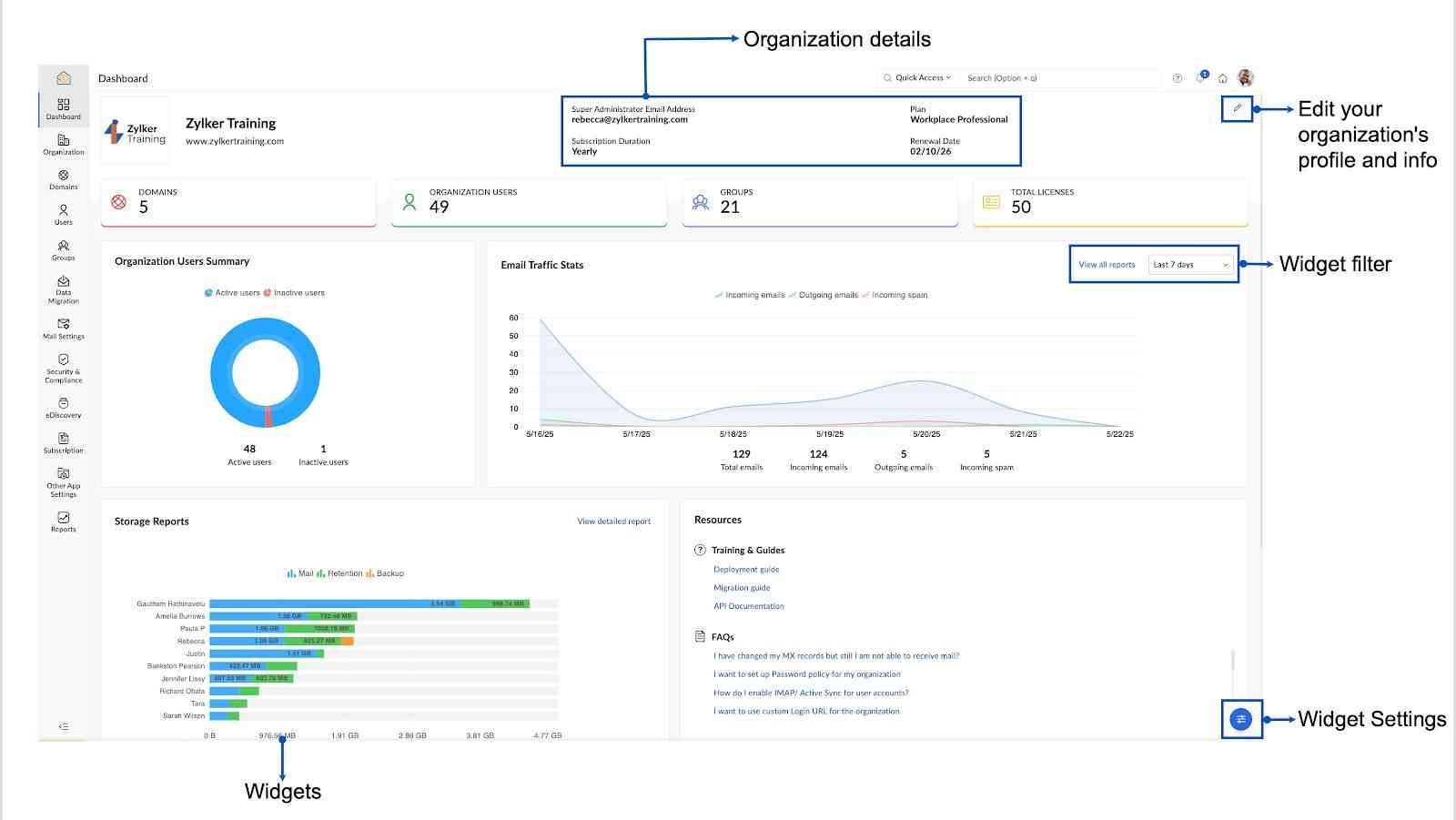
Overview: Budget-friendly, privacy-focused email hosting.
Key Features:
-
Ad-free interface
-
Custom domain support
-
Admin control panel
Pricing: From $1 per user/month
Pros:
-
Very affordable
-
Clean interface
Cons:
-
Limited storage on basic plans
Best For: Startups & small teams on a budget
4. Bluehost Email Hosting
Overview: Email included with web hosting plans.
Key Features:
-
The domain included
-
Easy setup
-
Basic spam filtering
Pricing: Varies by hosting plan
Pros:
-
Convenient bundle
-
Simple configuration
Cons:
-
Fewer advanced tools
Best For: Website owners needing bundled services
5. Hostinger Business Email
Overview: Affordable and scalable email hosting solution.
Key Features:
-
Custom domain support
-
Secure IMAP/POP3
-
Simple admin controls
Pricing: Budget-friendly tiers available
Pros:
-
Cost-effective
-
Easy to manage
Cons:
-
Limited advanced collaboration tools
Best For: Small businesses launching online
6. Namecheap Private Email
Overview: Secure email hosting from a trusted domain registrar.
Key Features:
-
Affordable plans
-
Custom domain
-
Anti-spam protection
Pricing: From around $1–$2 per month
Pros:
-
Great value
-
Easy setup
Cons:
-
Fewer collaboration tools
Best For: Freelancers & small businesses
7. DreamHost Email Hosting
Overview: Reliable standalone and bundled email hosting.
Key Features:
-
Custom domain email
-
Spam filtering
-
Simple admin tools
Pricing: Competitive entry plans
Pros:
-
Reliable uptime
-
Easy configuration
Cons:
-
Limited productivity integrations
Best For: Small service-based businesses
Pricing Comparison (2026 Overview)
|
Provider |
Starting Price |
Best For |
|
Google Workspace |
$6/user/month |
Remote teams |
|
Microsoft 365 |
$6–$12/user/month |
Enterprises |
|
Zoho Mail |
$1/user/month |
Startups |
|
Bluehost |
Bundle pricing |
Website owners |
|
Hostinger |
Budget tiers |
Small online businesses |
|
Namecheap |
~$1–$2/month |
Freelancers |
|
DreamHost |
Competitive plans |
Service providers |
How to Choose the Best Email Hosting
1. Define Your Budget
Calculate cost per employee.
2. Evaluate Team Size
Choose scalable plans.
3. Prioritize Security
If handling payments or sensitive data, prioritize encryption and compliance.
4. Check Integrations
Ensure compatibility with CRM, accounting, and cloud tools.
5. Plan for Growth
Avoid future migration costs by choosing scalable infrastructure.
How to Configure Small Business Email Hosting
-
Register a domain name
-
Choose a provider
-
Update MX records in DNS
-
Create employee accounts
-
Connect devices and apps
Most providers offer guided setup tools, making configuration straightforward.
Common Mistakes to Avoid
-
Choosing only based on price
-
Ignoring security features
-
Overlooking uptime guarantees
-
Failing to plan for scaling
A poor decision can lead to downtime and costly migrations.
Small Business Email Hosting FAQs
What is the best email hosting for small businesses?
Google Workspace and Microsoft 365 lead in reliability and collaboration.
How much does business email hosting cost?
Typically $1–$15 per user per month.
Can I use free Gmail for business?
You can, but a custom domain email builds authority and trust.
Should email be hosted with web hosting?
Bundled services are convenient, but dedicated providers often offer better performance.
Microsoft 365 vs. standard email hosting?
Microsoft 365 includes productivity tools like Word and Excel; standard hosting focuses only on email.
Final Thoughts
Small business email hosting is a strategic investment for modern companies in 2026 and beyond.
It builds trust, improves communication, enhances security, and protects your brand identity.

 English
 Arabic
 French
 Spanish
 Portuguese
 Deutsch
 Turkish
 Italiano
 Russian
 Romaian
 Portuguese (Brazil)
 Greek
Greek
