


 Downloader
 Free FTP
Integrating Regression Testing Tools with Monitoring and Observability
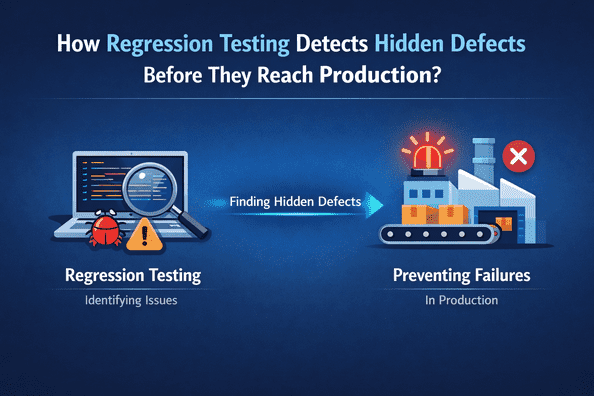
Shipping software is no longer the finish line. Deployment is just the beginning. Modern systems run in distributed environments, interact with multiple services, and evolve daily. In this landscape, relying only on pre-release validation is risky.
This is where integrating regression testing tools with monitoring and observability changes the game.
Regression tests confirm that existing functionality still works after code changes. Monitoring and observability reveal how the system behaves in real-world conditions. When these two operate in isolation, teams miss critical feedback loops. When integrated properly, they create a continuous quality system that spans development and production.
This article explains why that integration matters, how to implement it, and what practical benefits teams can expect.
Why Regression Testing Alone Is Not Enough
Traditional regression testing ensures that:
-
Core workflows remain stable
-
Previously fixed bugs do not reappear
-
New changes do not break old functionality
But most regression testing tools operate in controlled environments. They simulate expected scenarios.
What they often miss:
-
Production-only edge cases
-
Performance degradation under real traffic
-
Environment-specific configuration issues
-
Unexpected user behavior
This gap becomes larger in cloud-native and microservices architectures.
Monitoring and observability close that gap.
Understanding the Difference: Monitoring vs Observability
Before integration, it is important to understand the distinction.
Monitoring
Monitoring answers predefined questions such as:
-
Is CPU usage high?
-
Is response time above threshold?
-
Are error rates increasing?
It relies on dashboards and alerts based on known metrics.
Observability
Observability goes deeper. It helps teams answer unknown questions by analyzing:
-
Logs
-
Metrics
-
Distributed traces
It allows engineers to explore system behavior and uncover hidden failure patterns.
When regression testing tools connect with these insights, testing evolves from static validation to adaptive quality control.
The Practical Benefits of Integration
Integrating regression testing tools with monitoring and observability delivers measurable improvements.
1. Smarter Test Coverage
Production monitoring often reveals:
-
Frequently used user paths
-
High-error modules
-
Latency-sensitive endpoints
These insights help teams:
-
Prioritize regression suites around real usage
-
Remove low-value test cases
-
Add coverage where risk is highest
Instead of testing everything equally, teams test what actually matters.
2. Feedback from Production to Test Design
Observability data can highlight:
-
Recurring failure patterns
-
Performance bottlenecks
-
API timeout behavior
These patterns can be converted into regression scenarios.
For example, if traces show frequent failures under specific payload sizes, that condition should become part of your regression suite.
This transforms regression from assumption-based to evidence-based testing.
3. Reduced Blind Spots in Black Box Testing
Many teams rely on black box testing to validate external behavior without examining internal implementation.
When combined with monitoring data:
-
Real-world request patterns inform test inputs
-
Error logs suggest missing edge cases
-
Latency metrics guide performance thresholds
This strengthens black box validation with real production intelligence.
4. Faster Root Cause Analysis
When regression failures occur, integration with observability allows teams to:
-
Correlate failed tests with recent production metrics
-
Trace requests across services
-
Identify environment-specific anomalies
Instead of rerunning tests blindly, engineers investigate with context.
How to Integrate Regression Testing Tools with Observability Systems
The integration does not require complex architecture. It requires structured feedback loops.
Step 1: Centralize Test and Production Metrics
Ensure that:
-
Test execution data is logged centrally
-
Production metrics are accessible to QA and developers
-
Dashboards combine both test outcomes and system performance
Visibility must not be siloed.
Step 2: Tag Tests to Business-Critical Services
Regression testing tools should:
-
Map test cases to services or modules
-
Identify which endpoints they validate
-
Store metadata for traceability
This makes it easier to correlate test failures with production incidents.
Step 3: Use Production Data to Update Regression Suites
Regularly review:
-
High-traffic endpoints
-
Error-prone modules
-
Performance-sensitive features
Then:
-
Add targeted regression scenarios
-
Remove obsolete test cases
-
Refine performance thresholds
Testing should evolve as system behavior evolves.
Step 4: Close the Incident Loop
After production incidents:
-
Reproduce the issue in staging
-
Add a regression test covering that scenario
-
Link the test to the incident record
This ensures the same defect cannot silently reappear.
Common Mistakes to Avoid
Even experienced teams make integration errors.
1. Treating Monitoring as Separate from QA
If only operations teams access observability dashboards, regression improvements never happen. Quality must be shared.
2. Overloading Regression Suites with Every Production Issue
Not every anomaly requires a permanent regression test. Focus on:
-
High-risk failures
-
Recurring issues
-
Business-critical paths
Balance is essential.
3. Ignoring Performance Signals
Regression testing often focuses only on functional validation. Performance degradation is equally damaging. Integrating latency metrics into validation criteria prevents silent slowdowns.
The Strategic Shift: Continuous Quality Intelligence
When regression testing tools and observability platforms operate together, quality becomes continuous rather than periodic.
Instead of:
-
Testing before release
-
Monitoring after release
You create a loop:
-
Deploy
-
Monitor behavior
-
Extract insights
-
Improve regression coverage
-
Deploy again
This cycle reduces production surprises and strengthens release confidence.
Looking Ahead
As systems grow more distributed and user expectations increase, static regression suites will not be enough. The future lies in intelligent integration.
Regression testing tools will increasingly consume real production data. Observability systems will suggest validation scenarios. Testing will become adaptive, risk-aware, and tightly coupled with system health signals.
The teams that build this connection today will not just prevent bugs. They will build feedback-driven engineering cultures where every deployment strengthens the system rather than gambling with it.
The question is no longer whether regression testing is necessary. The real question is whether your regression process is learning from the system it is meant to protect.

 English
 Arabic
 French
 Spanish
 Portuguese
 Deutsch
 Turkish
 Dutch
Dutch
 Russian
 Romaian
 Portuguese (Brazil)
 Greek
Greek
