


 Downloader
 Free FTP
Precision in the OR: How Supine and Lateral Position Gel Pads Protect Patients
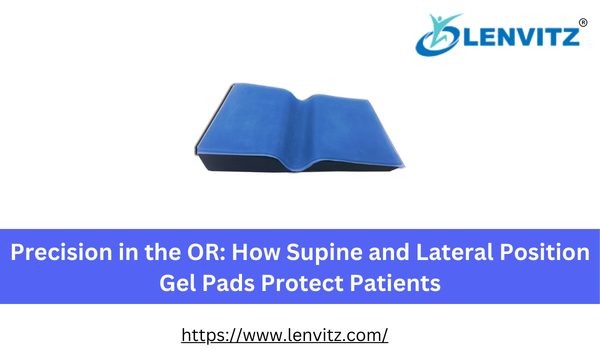
When a patient enters the operating room, their safety is in the hands of a highly skilled surgical team. While the focus is often on the procedure itself, what happens beneath the patient is just as critical. Proper body alignment is essential for preventing long-term nerve damage and skin breakdown. This is why ot table positioning gel pads have become a staple in modern surgical suites.
By using specialized supports like supine position gel pads and a Lateral positioner, medical professionals can ensure that a patient’s body is protected from the physical stress of being immobile for hours.
1. Ensuring Safety in the Standard Setup: Supine Position Gel Pads
The most common surgical orientation is the supine position—where the patient lies flat on their back. While it seems straightforward, lying on a firm surface for an extended duration puts immense pressure on the heels, sacrum, and elbows.
Why Use Supine Position Gel Pads?
Standard hospital mattresses aren't enough to prevent "pressure injuries." Supine position gel pads are engineered to mimic the displacement properties of human tissue. They work by:
-
Distributing Weight: Spreading the pressure across the entire pad rather than letting it concentrate on bony landmarks.
-
Preventing Nerve Compression: Protecting the ulnar and brachial nerves from being pinched against the table.
-
Reducing Shear: Minimizing the friction that can cause skin tears when a patient is slightly moved.
2. Navigating the Challenges of Side-Lying with Lateral Positioners
Certain surgeries, such as those involving the kidneys, hips, or lungs, require the patient to be placed on their side. This is known as the lateral position, and it is one of the most difficult positions to maintain safely.
The Role of the Lateral Positioner
A Lateral positioner is a specialized block or wedge designed to keep the patient’s torso stable and aligned. Without a proper Lateral positioner, the patient could roll, leading to surgical complications or accidental falls.
To complement these stabilizers, lateral position gel pads are used at all contact points. These lateral position gel pads are essential for:
-
Axillary Protection: Protecting the "down-side" armpit to ensure nerves aren't crushed.
-
Bony Prominence Support: Providing a cushion between the knees and ankles to prevent bone-on-bone contact.
-
Hip Stabilization: Reducing the risk of pressure sores on the greater trochanter (the bony part of the outer hip).
3. The Science Behind OT Table Positioning Gel Pads
The technology used in ot table positioning gel pads is a significant upgrade from traditional foam. Medical-grade silicone or polymer gels are fluid-like but stay in a solid form. This "viscoelastic" property means the pad contours perfectly to the patient's unique shape.
Key Benefits for Hospitals:
-
Hygiene: ot table positioning gel pads are non-porous and waterproof, making them easy to disinfect between surgeries.
-
Radiolucency: These pads do not interfere with X-rays or C-arm imaging.
-
Durability: Unlike foam, which loses its "spring" over time, gel maintains its thickness and support for years.
Conclusion: Better Positioning Leads to Better Recovery
A successful surgery is one where the patient wakes up without new, avoidable pains. Whether it is the consistent support of supine position gel pads or the high-stakes stability provided by a Lateral positioner and lateral position gel pads, these tools are vital. Investing in quality ot table positioning gel pads isn't just about comfort—it's about a commitment to "Do No Harm."

 Arabic
 French
 Spanish
 Portuguese
 Deutsch
 Turkish
 Dutch
Dutch
 Italiano
 Russian
 Romaian
 Portuguese (Brazil)
 Greek
Greek
