


 Downloader
 Free FTP
The "Absolute" Offence: Fighting a driving without insurance Charge (Section 143) in the Surveillance Age of 2026
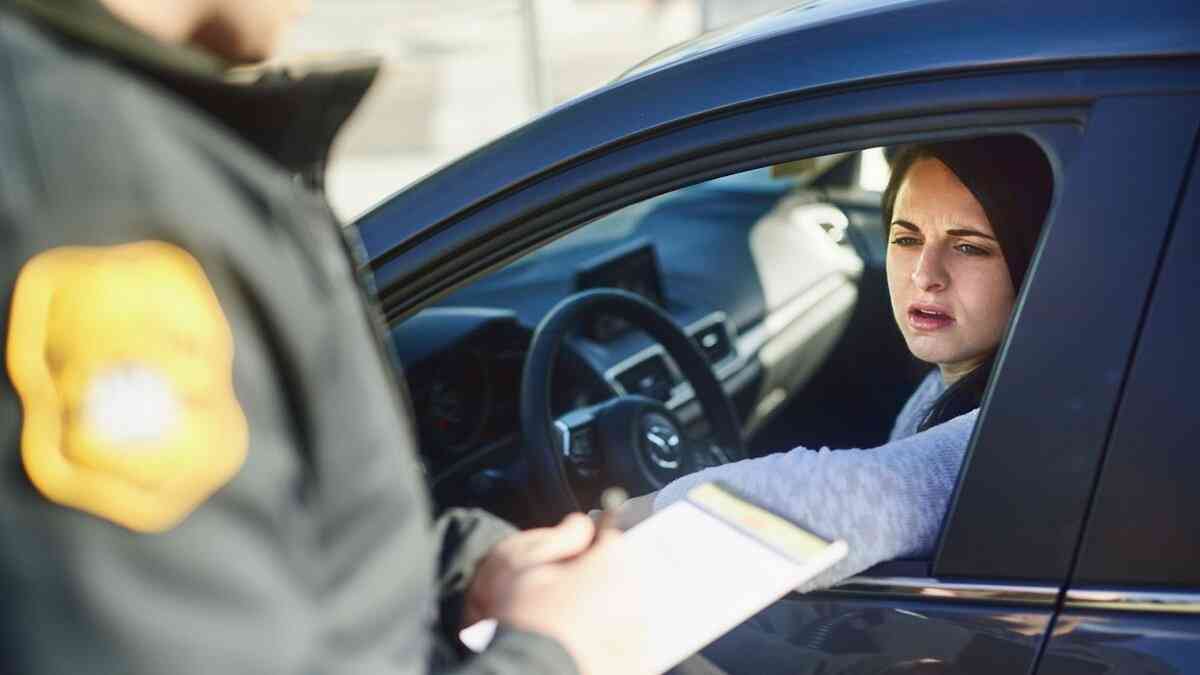
In the hierarchy of motoring offences, driving without insurance (contrary to Section 143 of the Road Traffic Act 1988) occupies a unique and dangerous position. It is known in law as a "strict liability" offence. This means that your intent is irrelevant to the verdict. The court does not need to prove that you intended to drive without insurance, or even that you knew you were uninsured. The prosecution only needs to prove a binary fact: the vehicle was on a road, and no valid policy was in force.
"I thought my auto-renewal had gone through" or "My bank declined the direct debit without telling me" are not defences. In the eyes of the law, you are guilty the moment the wheel turns.
In 2026, the enforcement of this law has moved from the roadside to the cloud. The UK’s camera network, linked instantly to the Motor Insurance Database (MID), scans millions of plates daily. "Operation Tutelage" and other automated police initiatives mean you can be flagged, stopped, and have your vehicle seized within minutes of a policy lapsing.
The consequences are severe. The standard penalty is a Fixed Penalty of £300 and 6 penalty points. However, if the case goes to court (which is necessary to argue for your licence), the fine is unlimited, and the points range from 6 to 8. For a professional driver, the endorsement code IN10 is a "poison pill"—it signals to future insurers that you are a high risk, often tripling premiums or leading to blanket refusals of cover for years.
But while the offence is absolute, the punishment is not. Expert solicitors know that even if you are technically guilty, there are specific legal pathways—"Special Reasons" and Statutory Defences—that can prevent the endorsement of points and save your licence. Here is how we navigate the unforgiving landscape of Section 143.
- The "Special Reasons" Argument: The Honest Mistake
If you are guilty, you are guilty. However, the law recognizes that not all uninsured drivers are criminals. Some are victims of administrative chaos or genuine misunderstandings. In these cases, we do not plead "Not Guilty"; we plead "Guilty with Special Reasons."
If the Magistrates accept "Special Reasons," you remain convicted, but you receive zero penalty points and usually no fine. This is the "Gold Standard" outcome for an insurance case.
- The "Honest and Reasonable Belief" Test:To win, we must prove two things:
- You honestly believed you were insured.
- That belief was reasonablebased on the information you had.
- Case Studies in 2026:
- The "Parental Assurance":You drove a parent’s or partner’s car because they explicitly told you, "You are named on my policy." If we can show you had a history of being insured by them and no reason to doubt their word, the court may find this belief reasonable.
- The "Broker Error":You instructed a broker to renew your policy, and they failed to do so but didn't notify you. We summon the broker or seize the email chain to prove the error was theirs, not yours.
- The "Cancelled Policy":Your insurer cancelled your policy mid-term (perhaps for a missed payment or a 'nondisclosure' issue) but sent the notification to an old address or a junk email folder. If we can prove you never received the notice and continued paying premiums (or attempting to), we can argue Special Reasons.
- The Statutory "Employee Defence" (Section 143(3))
Parliament created a specific shield for employees, recognizing that a delivery driver or sales rep cannot be expected to audit their company’s corporate insurance policies every morning.
- The Shield:Under Section 143(3) of the Act, you have a complete statutory defence if:
- The vehicle did not belong to you.
- You were driving it in the course of your employment.
- You did not know, nor had reason to believe, that it was uninsured.
- The Strategy:This is a full acquittal. You walk away with no conviction. We obtain your employment contract, the company handbook, and the vehicle logs. We prove that the duty to insure lay with the Fleet Manager or Director. Even if the company is prosecuted for "permitting" the offence, you—the driver—are safe.
- The "Causing or Permitting" Trap
A hidden danger in 2026 is that you can be prosecuted for driving without insurance even if you weren't driving. If you are the Registered Keeper and you lend your car to a friend who is uninsured, you are guilty of "Causing or Permitting" the use of the vehicle (Section 143(1)(b)).
- The Outcome:The penalty is the same: 6-8 points and an IN10 endorsement on your
- The Defence:We must prove that you made distinct conditions upon lending the car: "You can only drive it if you have your own insurance." If the borrower lied to you or showed you a fake certificate (which is increasingly common with digital editing tools), we argue that you did not "permit" the uninsured use; you permitted use conditional on insurance. We use text messages and witness statements to prove this conditionality.
- The "New Driver" Revocation (The 6-Point Cliff)
For a driver who passed their test less than two years ago, a Section 143 conviction is fatal.
- The Revocation:The minimum penalty is 6 points. Under the Road Traffic (New Drivers) Act 1995, reaching 6 points results in the immediate revocation of your driving licence. There is no appeal. You are a learner again.
- The "Short Ban" Loophole:In this specific scenario, motoring defence solicitors may make a counter-intuitive submission. We might ask the court to disqualify you for a short period (e.g., 14-28 days) instead of imposing points.
- The Logic:A disqualification does not trigger the New Driver Revocation provisions. Once the 14 days are up, you get your full licence back. Points kill the licence; a short ban merely pauses it. This is a technical legal manoeuvre that relies on skilled advocacy to persuade the Magistrate that a short ban is a "sufficient punishment."
- Police Database Errors (The MID Gap)
While the Motor Insurance Database (MID) is 99% accurate, the 1% error rate accounts for thousands of wrongful stops.
- The "Lag":You buy a policy online at 9:00 AM. You drive at 10:00 AM. The police stop you because the MID hasn't updated yet. They seize your car.
- The Indemnity Letter:The police at the roadside are often unwilling to look at your email confirmation (suspecting a screenshot). We contact the legal department of your insurer immediately to secure a "Letter of Indemnity." This is a formal legal document confirming that, regardless of what the computer said, the insurer would have covered a claim at the time of the stop. With this letter, the prosecution must be withdrawn.
- The "Use" vs. "Keeping" Distinction
Finally, we scrutinize the police evidence of "use."
- The Stationery Car:You can be charged with "keeping" a vehicle without insurance (a lighter offence), but Section 143 requires "use." If you were sitting in the car with the engine off, waiting for a breakdown truck, were you "using" it? Case law varies. We argue the technical definition of "use" on a road to downgrade charges or secure acquittals in ambiguous circumstances.
An IN10 conviction is a financial burden that lasts for five years. It marks you as a reckless driver in the eyes of the industry. Do not accept the fixed penalty without consulting a specialist to see if you have a "Special Reason" to save your record.

 English
 Arabic
 French
 Spanish
 Deutsch
 Turkish
 Dutch
Dutch
 Italiano
 Russian
 Romaian
 Portuguese (Brazil)
 Greek
Greek
