


 Downloader
 Free FTP
Echoes of Heritage The Timeless Power of India’s Artistic Traditions
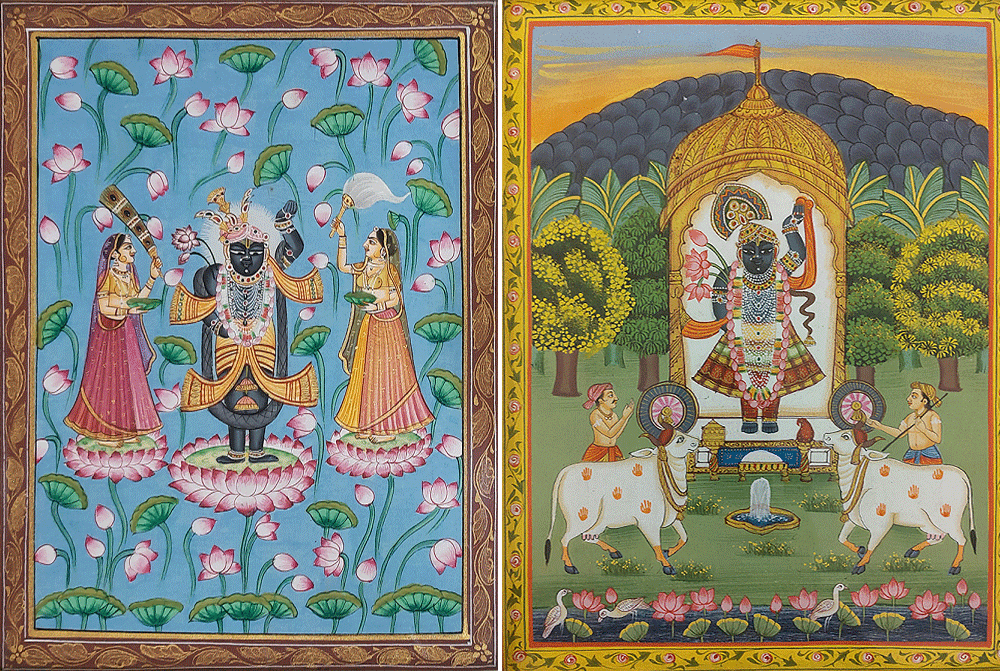
Across centuries, art has served as a silent storyteller—capturing beliefs, rituals, and the everyday lives of people. In India, traditional art forms are not merely decorative expressions; they are living archives of culture, spirituality, and community memory. From the earthy walls of rural homes to the galleries of modern cities, Traditional art painting continues to bridge the past and the present with remarkable grace.
Rooted deeply in regional identities, these art forms emerged from local customs, natural surroundings, and collective experiences. Madhubani from Bihar, Warli from Maharashtra, Gond from Central India, Pattachitra from Odisha, and Kalamkari from Andhra Pradesh are just a few examples of how geography and culture shape artistic language. Each style carries its own symbols, techniques, and color palettes, passed down through generations, often orally and through practice rather than written instruction.
What makes these paintings truly special is their strong connection to daily life and spirituality. Many traditional artworks were created during festivals, weddings, harvests, or religious ceremonies. They were meant to invoke blessings, ward off negativity, or celebrate abundance. Natural pigments derived from plants, minerals, and soil were used, making the process eco-friendly long before sustainability became a global conversation.
In earlier times, these paintings were not created for commercial purposes. Artists were farmers, homemakers, or community members who painted as an extension of their cultural duties. Over time, however, growing appreciation from art lovers, collectors, and scholars brought these forms into the spotlight. Exhibitions, museums, and cultural festivals played a significant role in giving traditional artists a wider platform and a sustainable livelihood.
In the contemporary art world, traditional forms are undergoing a fascinating transformation. Artists today are experimenting with new surfaces such as canvas, paper, textiles, and even digital media, while retaining the essence of age-old motifs. This fusion has helped traditional styles stay relevant, appealing to younger audiences and global markets without losing their authenticity.
Moreover, traditional paintings now play an important role in cultural preservation. As modernization and urbanization reshape lifestyles, these artworks act as visual reminders of indigenous knowledge systems and ancestral wisdom. Educational institutions, NGOs, and art galleries are increasingly supporting workshops, residencies, and documentation projects to ensure these traditions survive and thrive.
Collectors and enthusiasts are also beginning to value the stories behind the art as much as the aesthetics. Owning a traditional artwork today is seen not just as an investment, but as a way of supporting heritage and the artists who keep it alive. In this context, Traditional art painting stands as a symbol of resilience—adapting to changing times while staying rooted in its origins.
Ultimately, traditional paintings remind us that art does not need to be loud to be powerful. Sometimes, it simply needs to be honest. In their lines, dots, and colors lie centuries of shared history, patiently waiting to be seen, understood, and cherished by future generations.
Our Social Media Links
https://www.facebook.com/theartlifegallery
https://www.instagram.com/art.lifegallery.official
https://www.youtube.com/channel/UCa9Ll4wqT2sVyb0Uce0FJ1A
https://www.linkedin.com/company/the-art-life-gallery-noida

 English
 Arabic
 French
 Spanish
 Portuguese
 Deutsch
 Turkish
 Italiano
 Russian
 Romaian
 Portuguese (Brazil)
 Greek
Greek
