


 Downloader
 Free FTP
The High-Stakes Gamble: Can Pakistan Boycott Just One T20 World Cup Match?
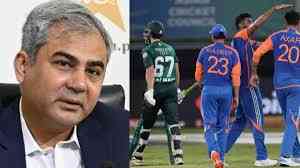
The cricketing world has been sent into a tailspin following the Pakistan government’s shocking announcement: the national team is cleared to play in the 2026 T20 World Cup, with one massive catch—they will not take the field for their high-profile clash against India on February 15 in Colombo.
This move, framed as a show of solidarity with Bangladesh (who were recently replaced in the tournament by Scotland), has raised a burning question: Reddy Anna Club Can a team legally boycott a single match, and what are the consequences?
Technically, the answer is yes—but the "cost of admission" for such a move is astronomically high. Here is a breakdown of what the ICC rules and playing conditions say about a selective boycott.
1. The "Walkover" and the Points Table
Under the ICC Playing Conditions, if a team refuses to take the field, the match is treated as a forfeit.
-
The Procedure: India must physically show up at the R. Premadasa Stadium, complete their pre-match rituals, and have captain Suryakumar Yadav present for the toss.
-
The Result: If Pakistan captain Salman Ali Agha fails to appear, the match referee will officially award 2 points to India.
-
The "Hidden" Penalty: According to Clause 16.10.7, Pakistan wouldn't just lose points; they would be treated as having played a full 20-over innings while scoring 0 runs. This would result in a catastrophic hit to their Net Run Rate (NRR), potentially knocking them out of the tournament even if they win every other group game.
2. Financial Ruin and Broadcaster Lawsuits
While the sporting penalty is harsh, the financial ramifications are terrifying for the Pakistan Cricket Board (PCB).
-
Broadcaster Claims: The India-Pakistan match is the commercial engine of the tournament. Official broadcasters (like JioStar) stand to lose an estimated $25M to $30M in ad revenue.
-
Withholding Revenue: The ICC has the authority to pass these legal claims directly to the PCB. More severely, the ICC could withhold Pakistan’s annual revenue share (roughly $35 million), which constitutes the vast majority of the board's operating budget.
3. The "Government Interference" Trap
The ICC Constitution (Article 2.4 D) is very clear: member boards must manage their affairs autonomously.
-
Because this boycott was explicitly ordered by the Pakistan government rather than being a decision based on venue safety (like the 1996 or 2003 boycotts), the ICC views this as a direct breach of its constitution.
-
The Nuclear Option: Repeated or politically motivated interference can lead to a member board being suspended entirely from the ICC, similar to what happened to Sri Lanka Cricket in late 2023.
Summary of Consequences
| Category | Impact | Result for Pakistan |
| Points | Automatic Loss | 0 Points; 2 Points awarded to India |
| Net Run Rate | Massive Penalty | Calculated as 0 runs in 20 overs |
| Financial | Revenue Freeze | Potential loss of $35M annual ICC share |
| Legal | Broadcaster Lawsuit | PCB may be liable for $25M+ in damages |
| Membership | Constitution Breach | Risk of suspension for government interference |
The Bottom Line
While Pakistan can skip the match, doing so puts the very future of Pakistan cricket at risk. Between a crippled NRR and a bankrupt board, a "one-match boycott" might end up costing them the entire sport's stability.

 English
 Arabic
 French
 Spanish
 Portuguese
 Deutsch
 Dutch
Dutch
 Italiano
 Russian
 Romaian
 Portuguese (Brazil)
 Greek
Greek
