


 Downloader
 Free FTP
Building a Legacy: The C.A.M.P. System as the Heart of Fallout 76
In the vast and often hostile expanses of post-nuclear Appalachia, a lone dweller's greatest creation is rarely a weapon. Instead, it is the humble **C.A.M.P.**, the Construction and Assembly Mobile Platform. This single, ingenious system has evolved from a mere survival tool into the very soul of *Fallout 76*, transforming the multiplayer wasteland into a canvas for personal expression and fostering an unexpected sense of community. It is here, in the act of building, that players truly leave their mark on the world.
The initial purpose was practical: a portable plot to construct a sanctuary. Players could extract resources, purify water, and craft essential gear. Yet, the system's surprising depth quickly became apparent. With an ever-expanding repertoire of plans earned through events, purchased from vendors, or discovered in the wild, the **C.A.M.P.** blossomed. No longer confined to simple shacks, players began constructing elaborate treehouses in the Mire, fortified mansions atop cliffs, cozy pubs by rivers, and even functioning stores filled with wares. Each C.A.M.P. became a direct reflection of its owner—a raider's menacing outpost, a Responder's medical clinic, or a collector's museum of rare junk.
This personalization fundamentally changed how players interact with the world and each other. Unlike traditional MMO housing instanced away from the action, C.A.M.P.s are placed directly into the shared landscape. Stumbling upon another player's creation is one of the game's consistent joys. You might find a player-run diner offering free soup, a intricate puzzle maze, a thrilling roller coaster ride, or a meticulously designed trading post. This turns every server hop into a tour of creative potential, where the silent storytelling of a well-built home can be more captivating than any holotape.
Moreover, the C.A.M.P. system underpins the game's emergent economy and altruism. By vending machines stocked with surplus plans, ammunition, and legendaries, players establish their own economic microcosms. More importantly, these sanctuaries often serve as vital pit stops for weary travelers. A strategically placed C.A.M.P. near a tough event area, complete with workbenches, a stash box, and a decontamination shower, is a public service. New players frequently find their survival eased by the generosity of high-level dwellers who build resource farms and leave the gates unlocked.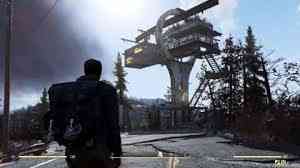
The system is not without its frustrations—budget limits, occasional placement quirks, and the dreaded "Cannot place item: Needs support"—but these constraints often fuel greater ingenuity. The community shares design tips, showcases breathtaking builds, and collectively mourns when a favorite spot is lost to an update. In this way, the **C.A.M.P.** does more than just house a player; it builds connections. It transforms anonymous dwellers into neighbors, architects, and benefactors.
Ultimately, the C.A.M.P. system embodies the core theme of *Fallout 76*: rebuilding. It answers the question of what comes after mere survival. It proves that even in a world defined by destruction, the drive to create, to share, and to build a home is irrepressible. Across Appalachia, these personal bastions stand not just as shelters from the storm, but as beacons of persistent human spirit, one lovingly placed wall and perfectly positioned plushie at a time.
Ultracite Laser Rifle Build in Fallout 76: Off-Meta One-Shot Killer Guide

 English
 Arabic
 French
 Portuguese
 Deutsch
 Turkish
 Dutch
Dutch
 Italiano
 Russian
 Romaian
 Portuguese (Brazil)
 Greek
Greek
