


 Downloader
 Free FTP
How Secure Are RS485 IoT Gateways for Cloud and Remote Monitoring Applications
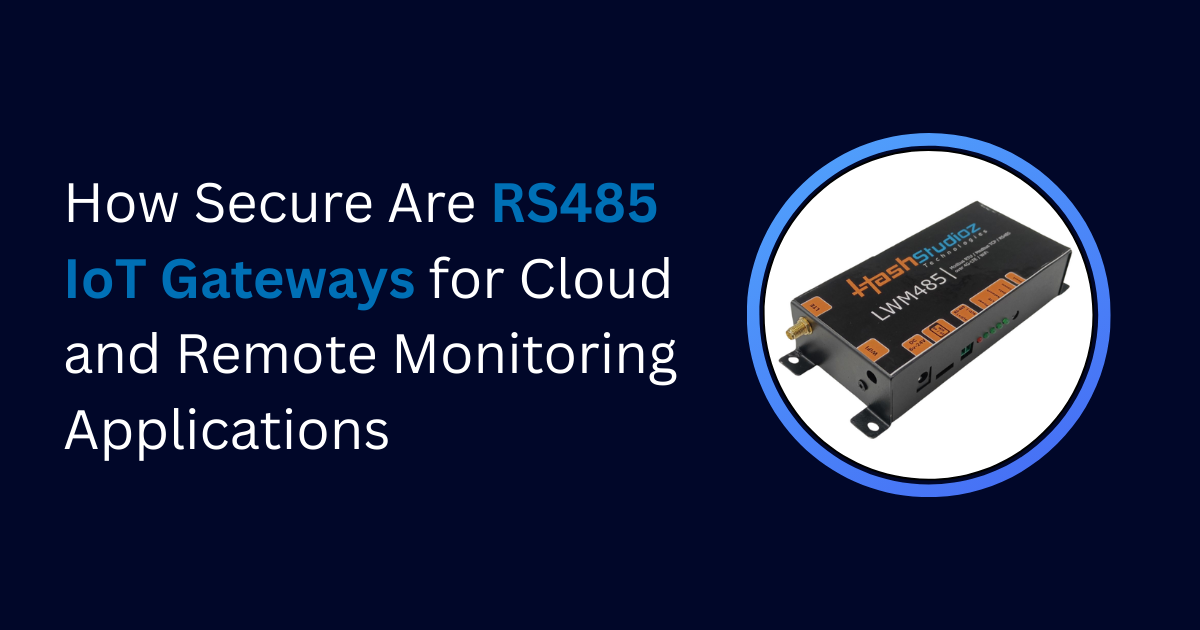
Industrial systems rely on stable communication. Many factories still use RS-485 devices for data exchange. These devices control machines, sensors, and meters. To support cloud and remote monitoring, companies deploy an RS485 IoT Gateway. This gateway connects serial equipment to IP networks and cloud platforms.
Security becomes a key concern once data leaves the local network. Remote access increases visibility, but it also increases risk. This article explains how secure RS485 IoT Gateways are, where risks exist, and how engineers reduce those risks. The discussion stays technical and practical, with facts and examples.
What Is an RS485 IoT Gateway
An RS485 IoT Gateway is a hardware device that collects data from RS-485 networks and sends it to remote systems. These systems include servers, dashboards, and cloud platforms. Most gateways also receive commands from the cloud and forward them to field devices.
From a technical view, the gateway performs four tasks:
-
Serial data acquisition
-
Protocol translation
-
Network communication
-
Device and data management
An Industrial IoT Gateway often supports Modbus RTU, BACnet MS/TP, or custom serial protocols. On the network side, it supports TCP/IP, MQTT, HTTPS, or AMQP.
Why Security Matters in Remote Monitoring
Remote monitoring removes physical boundaries. Engineers can access systems from anywhere. While this improves efficiency, it also creates exposure.
According to industry reports, over 70% of industrial cyber incidents start from exposed edge devices. Gateways often sit at the edge of industrial networks. If compromised, they provide a path into critical systems.
Security failures can cause:
-
Equipment shutdown
-
Data manipulation
-
Safety incidents
-
Production losses
In 2023, the average cost of an industrial cyber incident exceeded USD 4 million. These numbers show why gateway security deserves attention.
Inherent Security Limits of RS-485 Communication
RS-485 is a physical and electrical standard. It focuses on reliable data transmission. It does not define encryption or authentication.
Key Limitations
-
No built-in encryption
-
No device identity verification
-
No message integrity checks
Protocols like Modbus RTU rely on trust within the network. Any node on the bus can send commands. If attackers access the bus, they can inject traffic. An RS485 IoT Gateway cannot change this legacy behavior. It can only protect data after conversion to IP traffic.
Main Threats to RS485 IoT Gateways
1. Unauthorized Access
Gateways often include web or SSH interfaces. Weak credentials create a major risk. Surveys show that over 40% of exposed gateways still use default passwords.
Once logged in, attackers can:
-
Change communication settings
-
Redirect data
-
Upload malicious firmware
2. Network-Based Attacks
When connected to public or corporate networks, gateways face standard IP threats:
-
Port scanning
-
Brute-force login attempts
-
Packet injection
Without proper firewall rules, these attacks succeed quickly.
3. Firmware Vulnerabilities
Gateway firmware contains operating systems, drivers, and protocol stacks. Bugs appear over time. If updates are ignored, known flaws remain open.
A 2024 audit found that 36% of industrial gateways ran firmware older than three years.
4. Man-in-the-Middle Attacks
Unencrypted traffic allows attackers to read or modify data. This risk increases when gateways use plain TCP or HTTP.
Core Security Features in Modern Gateways
Well-designed Industrial IoT Gateway products include multiple protection layers.
1. Encrypted Network Communication
Most modern gateways support TLS encryption. This protects data between the gateway and cloud services.
Encryption prevents:
-
Data interception
-
Command manipulation
-
Credential exposure
TLS 1.2 and TLS 1.3 are common standards. When configured correctly, they meet industrial security requirements.
2. Authentication and Access Control
Gateways now support:
-
Strong password policies
-
Certificate-based authentication
-
Role-based user access
These controls reduce damage if one account is compromised.
3. Secure Boot Process
Secure boot ensures that only trusted firmware runs on the device. During startup, cryptographic checks validate system files.
This feature blocks persistent malware attacks.
4. Firmware Update Protection
Secure gateways verify firmware signatures before installation. This prevents attackers from loading modified firmware.
Many devices also support remote updates. This helps operators patch systems faster.
Security in Cloud Communication
Cloud connectivity adds another layer of responsibility.
1. Device Identity Management
Each gateway should have a unique identity. This often uses X.509 certificates. Cloud platforms reject unknown devices.
This approach stops rogue gateways from sending fake data.
2. API Security
Gateways use APIs to send data. Secure systems apply:
-
Token expiration
-
Rate limits
-
Permission scopes
These controls prevent abuse and data leakage.
3. Data Integrity Checks
Hashes and message signing protect data integrity. The cloud verifies that data arrives unchanged.
This is critical in monitoring and control applications.
Statistics That Matter
Security planning requires real data.
-
82% of industrial attacks involve weak access control
-
60% of breaches target edge or gateway devices
-
Network segmentation reduces attack spread by over 65%
-
Encrypted communication lowers interception risk by over 90%
These figures show that gateway hardening has measurable impact.
Deployment Architecture and Security
Security depends on design choices.
1. Isolated Network Zones
Gateways should sit in a demilitarized zone (DMZ). Firewalls separate them from both IT and OT networks.
This design limits lateral movement during attacks.
2. VPN Usage
Many deployments use VPN tunnels. VPNs encrypt traffic and restrict access to trusted endpoints.
This is common in cellular and remote sites.
3. Monitoring and Logging
Gateways should generate logs for:
-
Login attempts
-
Configuration changes
-
Communication errors
Central log analysis helps detect abnormal behavior early.
Practical Example: Energy Meter Monitoring
A utility company monitors thousands of RS-485 energy meters. Each site uses an RS485 IoT Gateway.
Security measures include:
-
TLS-encrypted MQTT traffic
-
Certificate authentication
-
Firewall-restricted inbound access
When a gateway showed abnormal traffic patterns, alerts triggered. Engineers isolated the device before damage occurred.
This case shows how layered security prevents escalation.
Remaining Security Challenges
Even with strong features, challenges remain.
1. Legacy Device Exposure
RS-485 field devices still trust all commands. If attackers reach the bus, damage remains possible.
Physical security and access control remain essential.
2. Configuration Errors
Security tools fail when misconfigured. Open ports, weak passwords, or expired certificates create gaps.
Regular audits help reduce mistakes.
3. Large-Scale Management
Managing thousands of gateways requires automation. Without proper tools, updates and certificate rotation become difficult.
Best Practices for Secure Deployment
Engineers should follow clear steps.
1. Configuration
-
Change default credentials
-
Disable unused services
-
Limit management access
2. Network Design
-
Use firewalls and VLANs
-
Avoid direct internet exposure
-
Apply VPNs for remote access
3. Maintenance
-
Update firmware regularly
-
Rotate certificates
-
Review logs frequently
4. Policy Enforcement
-
Define access roles
-
Document procedures
-
Train technical staff
These steps reduce risk significantly.
Are RS485 IoT Gateways Secure Enough?
A modern RS485 IoT Gateway can be very secure when:
-
Encryption is enabled
-
Authentication is enforced
-
Network access is restricted
-
Firmware is maintained
Security failures usually result from poor configuration, not hardware limits.
An Industrial IoT Gateway is not a weak link by default. It becomes weak when security practices are ignored.
Conclusion
RS485 IoT Gateways play a critical role in cloud and remote monitoring. They connect proven industrial systems to modern platforms. This connection introduces risk, but it also brings control.
From a technical perspective, modern gateways offer strong security features. Encryption, authentication, secure boot, and controlled access form a solid foundation. Real-world statistics confirm that these measures work.
Security remains a continuous process. Engineers must treat gateways as critical infrastructure. With correct design and maintenance, RS485 IoT Gateways can support remote monitoring without compromising safety or reliability.

 English
 Arabic
 Spanish
 Portuguese
 Deutsch
 Turkish
 Dutch
Dutch
 Italiano
 Russian
 Romaian
 Portuguese (Brazil)
 Greek
Greek
