


 Downloader
 Free FTP
Why Won't My Smart Thermostat's "C-Wire" Adapter Provide Enough Power for an AI-Integrated Air Handler?
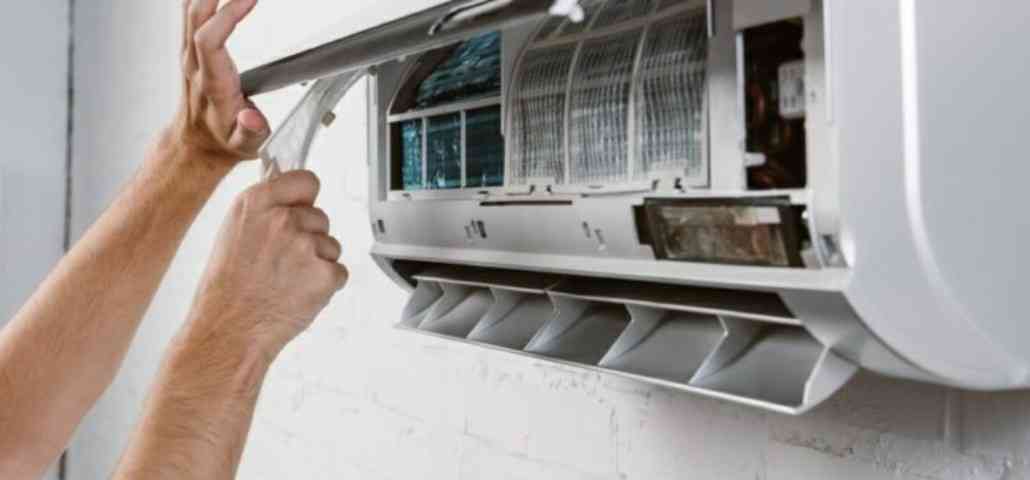
The rapid evolution of smart home technology has transformed the way we manage indoor environments. At the heart of this transformation is the smart thermostat, a device that has evolved from a simple temperature regulator into a sophisticated command center. However, as these devices integrate more deeply with advanced HVAC hardware, specifically AI-integrated air handlers, a common bottleneck has emerged: power delivery. Many homeowners attempting to upgrade older systems find that a standard "C-wire" adapter—a common workaround for homes lacking a dedicated common wire—simply cannot keep up with the electrical demands of modern, high-tech climate control systems. This isn't just a matter of a blank screen; it’s a fundamental mismatch between legacy power solutions and next-generation artificial intelligence.
The Electrical Burden of AI-Driven HVAC Systems
To understand why an adapter might fail, we must first look at what an AI-integrated air handler actually does. Unlike traditional units, these systems use machine learning algorithms to predict thermal load and adjust airflow in real-time. This requires a constant, high-fidelity stream of data between the thermostat and the air handler’s control board. Traditional thermostats were "passive" devices, but modern AI-powered units are "active" computers. They feature high-resolution touchscreens, powerful Wi-Fi radios, and processors that are always running. A C-wire adapter typically works by "stealing" or rerouting power from existing lines, but it often lacks the capacity to deliver the continuous 24V AC power at the wattage levels required by these advanced components.
Furthermore, AI-integrated air handlers often feature proprietary communication protocols that can be sensitive to voltage fluctuations. If the C-wire adapter causes a slight voltage drop when the system tries to engage a high-draw component—like a variable-speed blower motor—the AI module may trigger a safety shutdown or enter a "reboot loop." This is why professionals in the heating ventilation air conditioning industry generally recommend against adapters for high-end installs. A dedicated, physical 18-gauge copper wire provides a clean, low-resistance path for electricity that no adapter can truly replicate. Without this stable foundation, the "smart" features of your system become liabilities rather than assets.
Signal Interference and Communication Breakdowns
Beyond the raw power requirements, there is the issue of signal integrity. In an AI-integrated system, the wires aren't just carrying power; they are often carrying multiplexed data signals. C-wire adapters frequently use a technique called "power stealing" or "phantom power," which involves pulsing current through the cooling (Y) or heating (W) wires. While this might suffice for a basic Wi-Fi thermostat, it can create significant electrical "noise." For an AI system trying to interpret subtle sensor feedback or modulate a digital compressor, this noise is catastrophic. It can lead to "phantom" error codes, where the system reports a mechanical failure that doesn't actually exist, simply because the data packet was corrupted by the power adapter.
This communication breakdown is a frequent topic in advanced heating ventilation air conditioning training. Technicians are taught that AI air handlers require a "Common" wire that is electrically neutral and isolated from the switching signals. When an adapter merges these paths, it creates a feedback loop. You might find that your AC works fine during the day, but as soon as the AI tries to perform a "dehumidification cycle" at night, the system crashes. This is because the power draw changes, the "noise" on the line increases, and the AI's internal logic determines that the power supply is "unclean," forcing a protective lockout to prevent damage to the sensitive onboard inverters.
The Long-Term Impact on Equipment Longevity
Running an AI-integrated air handler on insufficient power isn't just an inconvenience; it can actually shorten the lifespan of your expensive HVAC equipment. Variable-speed motors and electronic expansion valves (EEVs) rely on precise voltage to operate their internal controllers. If the power supply is toggling or dipping because of a weak C-wire adapter, these components can experience "chatter." This is a rapid opening and closing of relays or a stuttering of the motor, which generates excessive heat. Over time, this thermal stress can fry the control board of an air handler that cost thousands of dollars, all because of a twenty-dollar adapter.
This ensures that the AI has the "clean" energy it needs to perform its complex calculations without interference. While pulling a new wire through a finished wall can be a challenge, it is a small price to pay for the efficiency, comfort, and reliability that a modern AI-integrated HVAC system is designed to provide.
Resolving the Power Gap for Smart Comfort
In conclusion, while C-wire adapters were a brilliant temporary solution for the first generation of smart thermostats, they have met their match in the AI era. The intersection of high-wattage hardware and sensitive machine-learning software demands a robust, physical electrical connection. If you are experiencing connectivity drops, "low power" warnings, or inconsistent cooling, the culprit is likely the adapter struggling to bridge the gap between old-world wiring and new-world intelligence. Upgrading your home's wiring isn't just a maintenance task; it’s an essential upgrade that allows your smart home to finally live up to its potential.

 English
 Arabic
 French
 Spanish
 Portuguese
 Deutsch
 Turkish
 Dutch
Dutch
 Italiano
 Russian
 Romaian
 Greek
Greek
