


 Downloader
 Free FTP
Promote Your Product
Got a product, service, or story to share? Promote it directly to our active community and boost your brand today.
Create an Ad
Publish Bulk Blog Posts
Boost Your Reach! 📝
Have articles, guest posts, or bulk stories to publish? Send your content directly to our editorial team and feature on our platform.
Email Us Your PostsNANTE Outdoor Socket Box Procurement Checklist
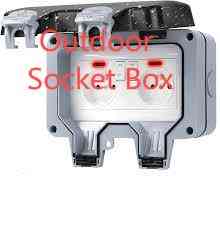
Good planning prevents costly problems: specify the Nante Outdoor Socket Box in the middle of a run only after considering load, exposure, and access patterns — and you’ll avoid premature failures. Proper selection and placement of the Outdoor Socket Box reduce water ingress, limit corrosion, and make routine service faster and safer. This article explains practical selection criteria, mounting and sealing techniques, environmental protection, inspection routines, and procurement tips so installers and facilities teams get reliable exterior power solutions that last.
Match the product to the site: application assessment
Begin by listing how the enclosure will be used and how often. Is it a service outlet for maintenance tools, a permanent feed for landscape lighting, or a washdown-rated point in a food-processing yard? Each case changes the priority order: vandal resistance and IK rating for public areas, IP66/67 and corrosion resistance for washdown or coastal sites, and ergonomic handles for frequently used connections. Also consider human factors—mounting height, accessibility for ladders, and whether locking or tamper-resistant covers are required.
Electrical and mechanical specs that matter
Don’t accept vague datasheets. Demand explicit voltage and current ratings, clear IP and IK classifications, and terminal torque specifications. Verify temperature derating information for continuous loads and check short-circuit withstand values if the socket will be part of industrial power distribution. Mechanically, prefer housings with captive fasteners, reinforced mounting bosses, and gland plates sized for proper strain relief. A well-documented terminal layout makes future changes straightforward and reduces technician errors.
Mounting, sealing, and cable entry techniques
Correct installation is as important as component quality. Mount on solid substrate using corrosion-resistant fixings and torque values recommended by the manufacturer. Tilt the box slightly forward to shed water and avoid low points where debris can accumulate. Use appropriate cable glands sized to retain the box’s IP rating, and install strain relief to prevent conductor movement. Where the mounting surface is uneven, fit a backing plate or gasketed mounting pad to protect the sealing envelope.
Materials, coatings, and corrosion control
Material choice should reflect environmental exposure. UV-stable polymers resist sunlight and offer electrical isolation; aluminum can be a cost-effective option when powder-coated and matched with compatible fasteners; stainless steel or marine alloys are preferred for coastal or chemically aggressive atmospheres. Pay attention to fastener and internal hardware materials to prevent galvanic corrosion. If the site sees salt spray or chemical splashes, request corrosion test data such as salt-spray (ASTM B117) results to validate claimed lifespans.
Thermal management and internal layout
Even simple exterior boxes may contain surge protection devices, small transformers, or switches that produce heat. Leave space for thermal dissipation, and if necessary specify thermostatic vents or low-energy fans. Separate high-current conductors from sensitive electronics and provide clear routing to maintain minimum bend radii. Follow recommended terminal torque values and re-check them after initial commissioning; thermal cycling and vibration can loosen connections, increasing contact resistance and the risk of overheating.
Routine inspection and preventive maintenance
A compact maintenance plan prevents surprises. Inspect gaskets and sealing faces annually, and more frequently in harsh environments. Look for compressed or cracked seals, loose fasteners, paint blistering, or discoloration on contacts that may indicate overheating. Clean drainage paths and vents, and replace worn gaskets before they fail. Keep a simple log of inspection dates, torque checks, and parts replaced — this historical record helps identify recurring issues and supports justified upgrades.
Procurement strategy and spare parts planning
Select suppliers who publish full technical datasheets, torque specifications, and third-party test reports. Confirm the availability and lead times for spare covers, gaskets, and internal mounting plates—modular designs that accept replaceable inserts can significantly reduce lifecycle costs. For large facilities, standardize on a single family of boxes to minimize spare inventory and to help technicians become familiar with one platform. Ask vendors for installation guides and local technical support when possible.
Use-case examples and human-centered design
For public parks and schools, select tamper-resistant covers and low-profile housings to reduce vandalism and trip hazards. For construction or event power, choose robust latches and quick-mating inserts for fast turnover. In washdown or food-processing areas, insist on IP66/67 ratings with drainage and corrosion-resistant hardware. Always consider ergonomics—handle shape, latch force, and mounting height affect both durability and user safety.
Final checklist and next steps
When writing specifications include exact electrical ratings, IP/IK levels, material and finish requirements, cable gland sizes, mounting orientation, and inspection intervals. Require datasheets, test certificates, and spare-part lists from vendors, and document torque values and installation procedures in the handover pack. Thoughtful upfront choices reduce service calls and extend equipment life. For product details, model comparisons, and technical datasheets, see official information at

 English
 Arabic
 French
 Portuguese
 Deutsch
 Turkish
 Dutch
Dutch
 Italiano
 Russian
 Romaian
 Portuguese (Brazil)
 Greek
Greek
