


 Downloader
 Free FTP
Promote Your Product
Got a product, service, or story to share? Promote it directly to our active community and boost your brand today.
Create an Ad
Publish Bulk Blog Posts
Boost Your Reach! 📝
Have articles, guest posts, or bulk stories to publish? Send your content directly to our editorial team and feature on our platform.
Email Us Your PostsHow Steel Pipes Support Infrastructure Development in Saudi Arabia
with experienced steel pipe suppliers in Saudi Arabia is essential for long-term performance and regulatory compliance.
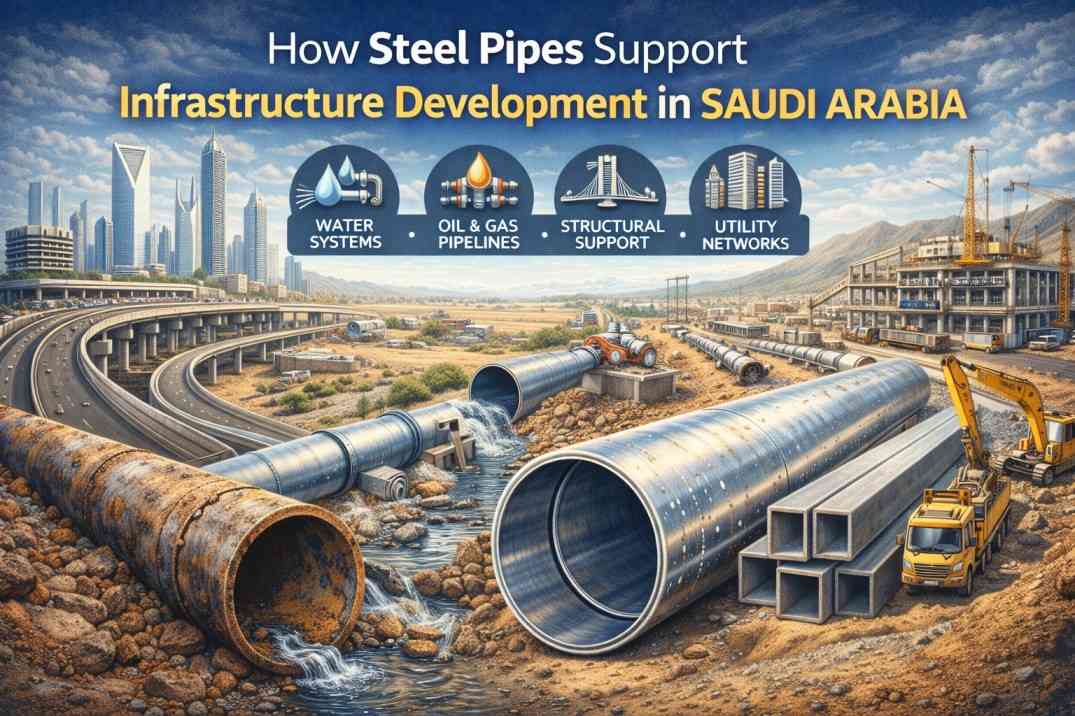
Infrastructure development is a key driver of economic growth in Saudi Arabia. From transportation networks to water systems and commercial developments, construction projects across the Kingdom rely heavily on steel materials. Among these, steel pipes play a critical role in ensuring structural stability, efficient utilities, and long-term durability.
Understanding how steel pipes contribute to infrastructure projects helps planners, engineers, and contractors make better material decisions and improve project outcomes.
Role of Steel Pipes in Infrastructure Projects
Steel pipes are used extensively in infrastructure because they offer a balance of strength, flexibility, and durability. Their ability to withstand pressure, load, and environmental exposure makes them suitable for both underground and above-ground applications.
Common infrastructure uses include:
-
Water transmission and drainage systems
-
Oil and gas pipelines
-
Structural supports and foundations
-
Fire protection and mechanical services
-
Utility and municipal networks
Each application requires pipes with specific properties to ensure safe and efficient operation.
Strength and Load-Bearing Capacity
One of the main reasons steel pipes are preferred in infrastructure projects is their high strength-to-weight ratio. Steel can carry heavy loads without excessive material usage, making it efficient for large-scale construction.
In bridges, industrial facilities, and transport infrastructure, steel pipes are often used as columns, supports, or casings where structural reliability is essential.
Durability in Challenging Environments
Saudi Arabia’s infrastructure projects are exposed to harsh environmental conditions, including high temperatures, humidity in coastal areas, and soil variations. Steel standard pipes, when properly manufactured and protected, perform well under these conditions.
Durable steel pipes help reduce:
-
Premature corrosion
-
Structural degradation
-
Maintenance frequency
-
Service interruptions
This durability is especially important for buried pipelines and long-distance transmission systems.
Importance of Standardization and Quality Control
Infrastructure projects typically require materials that comply with recognized standards. Steel pipes manufactured under approved specifications ensure consistency in dimensions, strength, and performance.
Standardization supports:
-
Easier project approvals
-
Predictable performance
-
Safer construction practices
-
Compatibility with engineering designs
Using standardized materials also simplifies future maintenance and expansion work.
Contribution to Project Efficiency
Steel pipes are relatively easy to transport, fabricate, and install compared to many alternative materials. Their uniform shape and availability in various sizes allow for faster construction and reduced on-site adjustments.
This efficiency helps infrastructure projects:
-
Stay on schedule
-
Control labor costs
-
Reduce construction waste
-
Improve overall productivity
Long-Term Economic Benefits
Although steel pipes may require higher initial investment compared to some materials, their long service life often results in lower total ownership costs. Reduced repair needs and longer replacement cycles provide financial benefits over time.
For public infrastructure, this long-term reliability is critical for protecting investment and minimizing disruption to services.
Sustainability Considerations
Steel is one of the most recyclable construction materials. At the end of its service life, steel pipes can be reused or recycled without losing structural properties.
This supports sustainability goals by:
-
Reducing raw material consumption
-
Lowering environmental impact
-
Supporting circular construction practices
As sustainability becomes a greater focus in infrastructure planning, steel continues to be a practical choice.
Conclusion
Steel pipes are a foundational element in Saudi Arabia’s infrastructure development. Their strength, durability, standardization, and long-term performance make them suitable for a wide range of applications, from utilities to structural systems.
By selecting high-quality steel pipes and using them appropriately, infrastructure projects can achieve safer construction, better efficiency, and lasting value for communities across the Kingdom.

 English
 Arabic
 French
 Spanish
 Portuguese
 Deutsch
 Turkish
 Dutch
Dutch
 Italiano
 Russian
 Romaian
 Portuguese (Brazil)
