


 Downloader
 Free FTP
Can Braided Conductors Improve Current Distribution?
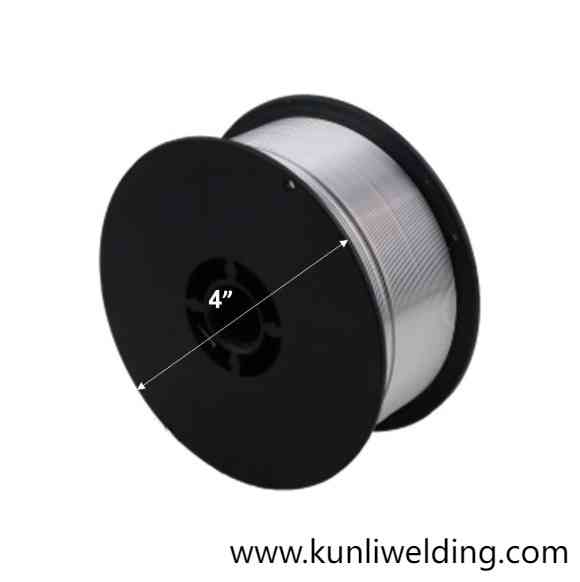
Electrical conductors serve as the backbone of power distribution systems, yet the choice between different conductor configurations often receives insufficient consideration during design phases. Engineers increasingly recognize that braided constructions offer tangible benefits compared to their solid counterparts, prompting many to seek guidance from Kunli Aluminum Braided Wire Manufacturers when specifying components for demanding applications. Understanding these advantages helps designers make informed decisions that balance electrical performance, mechanical durability, and installation practicality.
Flexibility represents one of the primary mechanical advantages that distinguishes braided conductors from solid designs. Solid aluminum wire resists bending and can develop stress fractures when subjected to repeated flexing or vibration. The braided construction distributes mechanical stresses across multiple individual strands, allowing the conductor to bend without concentrating strain in a single location. This characteristic proves valuable in applications where conductors must navigate tight spaces or accommodate movement during operation.
Vibration resistance becomes critical in environments where equipment generates continuous mechanical oscillation. Solid conductors subjected to persistent vibration eventually develop work hardening at stress points, leading to premature failure through fatigue cracking. Braided configurations absorb vibrational energy through the relative movement of individual strands within the overall structure. Each strand shifts slightly during vibration cycles, dissipating energy that would otherwise accumulate as damaging stress in a rigid conductor.
Thermal expansion poses challenges in electrical systems where temperature fluctuations occur regularly. Solid conductors expand and contract as single units, potentially loosening terminal connections or creating mechanical stress on mounting hardware. Braided designs accommodate thermal movement through microscopic adjustments between individual strands, maintaining dimensional stability while allowing thermal expansion to occur without generating harmful stresses. This behavior reduces maintenance requirements and extends service life in thermally dynamic environments.
Current carrying capacity benefits from the increased surface area inherent in braided constructions. Multiple small strands collectively present more surface area than a single solid conductor of equivalent cross sectional dimension. This enhanced surface area facilitates heat dissipation, allowing the conductor to operate at lower temperatures under identical load conditions. Improved thermal management contributes to longevity and reliable performance in sustained high current applications.
Skin effect influences current distribution in alternating current systems, causing current to concentrate near conductor surfaces at higher frequencies. Braided designs naturally counteract this phenomenon by providing numerous current paths near the outer boundary of the conductor bundle. Each strand carries a portion of the total current, effectively utilizing the entire conductor cross section more efficiently than solid conductors where current concentrates in an outer shell while the core remains underutilized.
Installation convenience matters to contractors and maintenance personnel who handle conductors during system assembly or repair. Braided conductors conform to irregular pathways and tolerate manipulation without developing permanent deformation. Solid wire requires careful bending to avoid kinking, and once bent, maintains that shape even when repositioning becomes necessary. The inherent flexibility of braided designs accelerates installation and reduces the risk of damage during handling.
Termination reliability improves when using braided conductors due to enhanced contact surface area at connection points. Terminal hardware engages with multiple strand surfaces rather than a single solid cylinder, creating numerous contact points that distribute electrical and mechanical loads. This distributed contact reduces the likelihood of localized heating or loosening at terminals, common failure modes in systems using solid conductors.
Corrosion resistance characteristics differ between solid and braided configurations in subtle but meaningful ways. While both conductor types require appropriate surface treatments in corrosive environments, braided designs allow protective compounds to penetrate between individual strands, creating a more comprehensive barrier against corrosive agents. Solid conductors present only their outer surface for protection, potentially leaving vulnerable areas where coatings become damaged or wear through.
Weight considerations influence conductor selection in applications where mass affects overall system design. Aluminum Braided Wire Manufacturers produce conductors that achieve favorable strength to weight ratios compared to solid alternatives. The braided structure provides mechanical strength through its woven geometry while maintaining the inherent weight advantages of aluminum as a base material. This combination appeals to designers seeking to minimize system mass without sacrificing electrical or mechanical performance.
Dynamic load capacity becomes relevant in applications involving moving components or environments with significant mechanical activity. Braided conductors withstand repeated bending cycles without degradation, making them suitable for robotic systems, movable equipment, or installations subject to seismic activity. Solid conductors quickly fail under cyclic loading conditions that braided designs handle routinely throughout their service life.
Electromagnetic interference characteristics warrant consideration in sensitive electronic environments. The braided structure can provide inherent shielding properties when properly configured, helping to contain electromagnetic emissions or protect against external interference. Solid conductors lack this capability without additional shielding layers, potentially requiring more complex cable assemblies to achieve equivalent electromagnetic compatibility.
Manufacturing precision affects conductor consistency and performance predictability. Aluminum Braided Wire Manufacturers employ controlled processes that produce uniform strand dimensions and braiding patterns, ensuring consistent electrical and mechanical properties across production runs. This reliability simplifies system design calculations and reduces uncertainty during specification development.
Repair and modification scenarios favor braided conductors when field changes become necessary. The flexible nature of braided designs accommodates routing adjustments without requiring conductor replacement. Solid wire often needs complete replacement when installation paths change, increasing modification costs and complexity. Technical resources and application guidance support informed conductor selection decisions. Visit https://www.kunliwelding.com/ to access comprehensive information about conductor specifications and application recommendations for various industrial and commercial scenarios.

 Arabic
 French
 Spanish
 Portuguese
 Deutsch
 Turkish
 Dutch
Dutch
 Italiano
 Russian
 Romaian
 Portuguese (Brazil)
 Greek
Greek
