


 Downloader
 Free FTP
The "10-Year" Shadow: Why Indefinite Leave to Remain (ILR) Is No Longer a 5-Year Guarantee in 2026
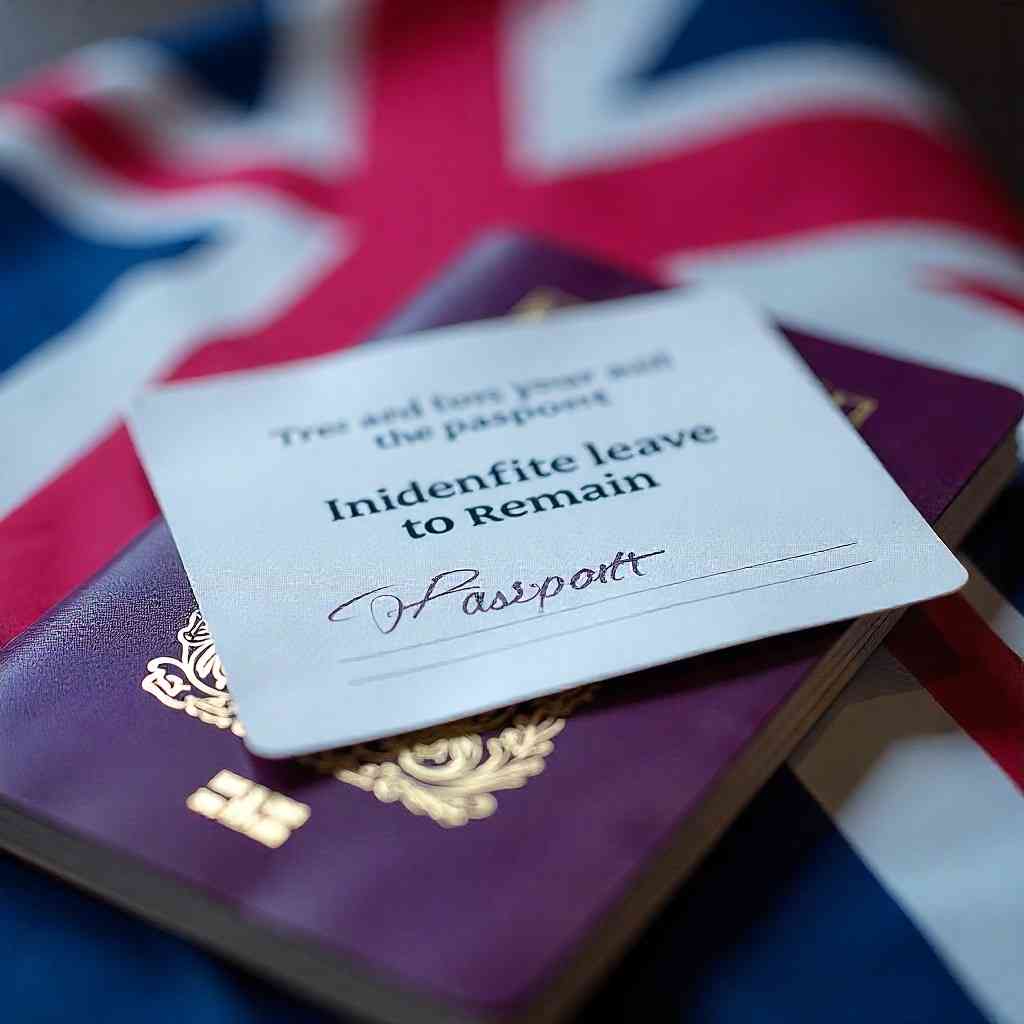
For decades, the "Golden Rule" of UK immigration was simple and predictable: keep your nose clean, work hard, and after five years, you get Indefinite Leave to Remain (ILR). It was the light at the end of the tunnel for Skilled Workers, Spouses, and Ancestry visa holders—a guaranteed finish line that justified the high fees and the stress of temporary status.
But in 2026, that light is flickering. The government’s explosive "Earned Settlement" consultation—which closed in February and is expected to be codified into law later this year—has proposed shifting the standard timeline for settlement from five years to ten years for most visa categories. We are witnessing a fundamental rewriting of the social contract between the migrant and the state. The era of "automatic" settlement based on time served is ending; the era of "merit-based" settlement, contingent on higher earnings and stricter integration, has begun.
If you are approaching your "Year 5" mark this year, you are in a race against time. The criteria for Indefinite Leave to Remain (ILR) are stricter today than they were when you first arrived in the UK. The Home Office is no longer looking for reasons to grant your status; under the new "control" mandate, they are actively looking for reasons to push you onto a longer, more expensive route. Here is why your settlement application is now the most dangerous form you will ever sign, and how to navigate the minefield of 2026.
- The "Salary Inflation" Trap for Skilled Workers
The most brutal shock for Skilled Workers applying for settlement in 2026 is the retroactive impact of salary thresholds. When many current applicants arrived in 2021, the salary threshold for a Skilled Worker was £25,600. They built their lives, took out mortgages, and planned their futures based on the assumption that maintaining this salary was sufficient.
In 2026, that assumption is fatal. To qualify for Indefinite Leave to Remain (ILR), you must generally meet the salary threshold as it stands today. Following the inflationary updates of April 2024 and April 2025, the general threshold has risen to approximately £41,700 (or the current "going rate" for your specific occupation, whichever is higher).
We are seeing thousands of dedicated professionals—nurses, IT support staff, teachers—who earn £35,000 being refused settlement. They are told they no longer "earn enough" to settle, despite working legally for five years. Instead of getting ILR, they are forced to extend their temporary visas, effectively trapping them in a cycle of fees with no permanent security.
- The "Transitional" Defence:Expert solicitors are now using complex "Transitional Arrangements" arguments to protect pre-2024 arrivals. However, these protections are not applied automatically by the caseworking computer. You must explicitly claim them in a legal cover letter, referencing the specific transitional paragraphs of Appendix Skilled Worker. If you rely on the standard form, you will be refused.
- The "B2" English Cliff-Edge
As of January 8, 2026, the government raised the English Language requirement for new Skilled Worker applicants from Level B1 to Level B2 (Upper Intermediate). Crucially, the "Earned Settlement" proposals indicate that this higher standard will also become a mandatory "Integration Pillar" for Indefinite Leave to Remain (ILR).
- The Complacency:Many applicants assume, "I passed a test to get my visa five years ago, so I'm fine." This is dangerous logic. Your entry visa likely required Level B1. The new settlement standard demands Level B2.
- The Refusal:If you submit your old B1 certificate with your SET(O) form in 2026, you risk immediate refusal. You lose your £2,885 application fee and your status.
- The Advice:We are advising all settlement clients to re-sit a Secure English Language Test (SELT) at Level B2 or C1 before applying, regardless of their previous passes. It is an extra cost, but it bulletproofs the application against the new "Integration" criteria.
- The "Absence" Data Audit
In the past, the Home Office relied on applicants to honestly list their holidays in a spreadsheet. Caseworkers would spot-check stamps in passports, but for frequent travellers, it was a loose system. In 2026, under the fully operational "Digital Border" program, the Home Office knows exactly when you left and entered the country. They do not need your spreadsheet; they have your data.
- The 180-Day Rule:You cannot have been outside the UK for more than 180 days in any rolling 12-month period.
- The "Rolling" Check:The computer algorithm does not just check calendar years; it checks every possible 12-month period during your 5-year qualifying period. A 6-month work sabbatical you took three years ago might trigger a refusal today if it pushed you to 181 days in a specific window.
- The "Excessive" Risk:Even if you are technically under the limit (e.g., 170 days absent), caseworkers in 2026 are using discretionary powers to question "commitment to the UK." If you work remotely for an overseas company and spend 5 months a year in Spain, they may argue your "main home" is not the UK and refuse Indefinite Leave to Remain (ILR) on the grounds that your residence is not "habitual."
- The "Tax Mismatch" (Paragraph 9.7.1)
We cannot stress this enough: The Home Office now routinely cross-references your ILR application with your HMRC tax records. This "data-sharing" is the primary weapon used to issue 10-year bans for deception under Paragraph 9.7.1 (General Grounds for Refusal).
- The Self-Employed Danger:This specifically targets Tier 1 Entrepreneurs and self-employed contractors. If you amended a tax return three years ago to correct an error, the Home Office treats this as an admission of "previous deception." They argue you either lied to the taxman then (to save tax) or the immigration officer now (to inflate earnings).
- The Ban:This doesn't just lead to a refusal of Indefinite Leave to Remain (ILR); it leads to a mandatory re-entry ban. You are labelled a person of "bad character."
- The Solution:You must have a solicitor "pre-audit" your tax history before you apply. We compare your SA302s with the figures you declared in every previous visa application. If there is a discrepancy, we must explain it proactively in the legal representations, framing it as a "careless error" rather than "dishonesty" to avoid the ban.
- The "Super Priority" Gamble
With standard processing times for settlement stretching to 6 months due to the backlog of "Earned Settlement" panic applications, most clients want to use the "Super Priority" service (decision in 24 hours) for an extra £1,000.
- The Trap:In 2026, the Home Office retains the £1,000 fee even if they don't decide in 24 hours, provided they deem the case "complex."
- The Trigger:If your application has a single mistake—a missing bank statement, a complex absence calculation, or a minor traffic conviction—caseworkers will tag it as "complex" to remove it from the 24-hour target. You lose your money and wait 6 months anyway.
- The Strategy:Only use Super Priority if your application is "bulletproof." If there are any complexities (traffic convictions, tax amendments, gaps in employment), save your money and use the standard service where a lawyer has time to intervene and clarify issues before a decision is made.
- Why You Need Immigration Solicitors4me
Indefinite Leave to Remain (ILR) is the final hurdle. It is the gate to Citizenship. The Home Office defends this gate vigorously because they know that once you pass it, you are almost impossible to remove.
At Immigration Solicitors4me, we treat every ILR application as a forensic exercise, not a form-filling one.
- Salary Protection:We calculate exactly which "Going Rate" applies to you based on your CoS assignment date, ensuring you are not unfairly judged against the 2026 inflation rates.
- Absence Explanations:We draft "Compelling & Compassionate" arguments to excuse absences over 180 days (e.g., for serious illness, bereavement, or pandemic travel disruption), citing the specific caseworker guidance that allows discretion.
- The "Grandfathering" Shield:Most importantly, we ensure your application is submitted before any new legislation forces you onto the 10-year route. We fight to secure your rights under the current system before the door closes.
Secure your permanent status while you still can. The rules are changing, and they are not changing in your favor. Contact us today to lock in your Indefinite Leave to Remain (ILR).

 English
 Arabic
 French
 Spanish
 Portuguese
 Deutsch
 Dutch
Dutch
 Italiano
 Russian
 Romaian
 Portuguese (Brazil)
 Greek
Greek
