


 Downloader
 Free FTP
Promote Your Product
Got a product, service, or story to share? Promote it directly to our active community and boost your brand today.
Create an Ad
Publish Bulk Blog Posts
Boost Your Reach! 📝
Have articles, guest posts, or bulk stories to publish? Send your content directly to our editorial team and feature on our platform.
Email Us Your PostsSentiment Analysis vs. Emotion Detection: How AI Captures Deeper Customer Insights
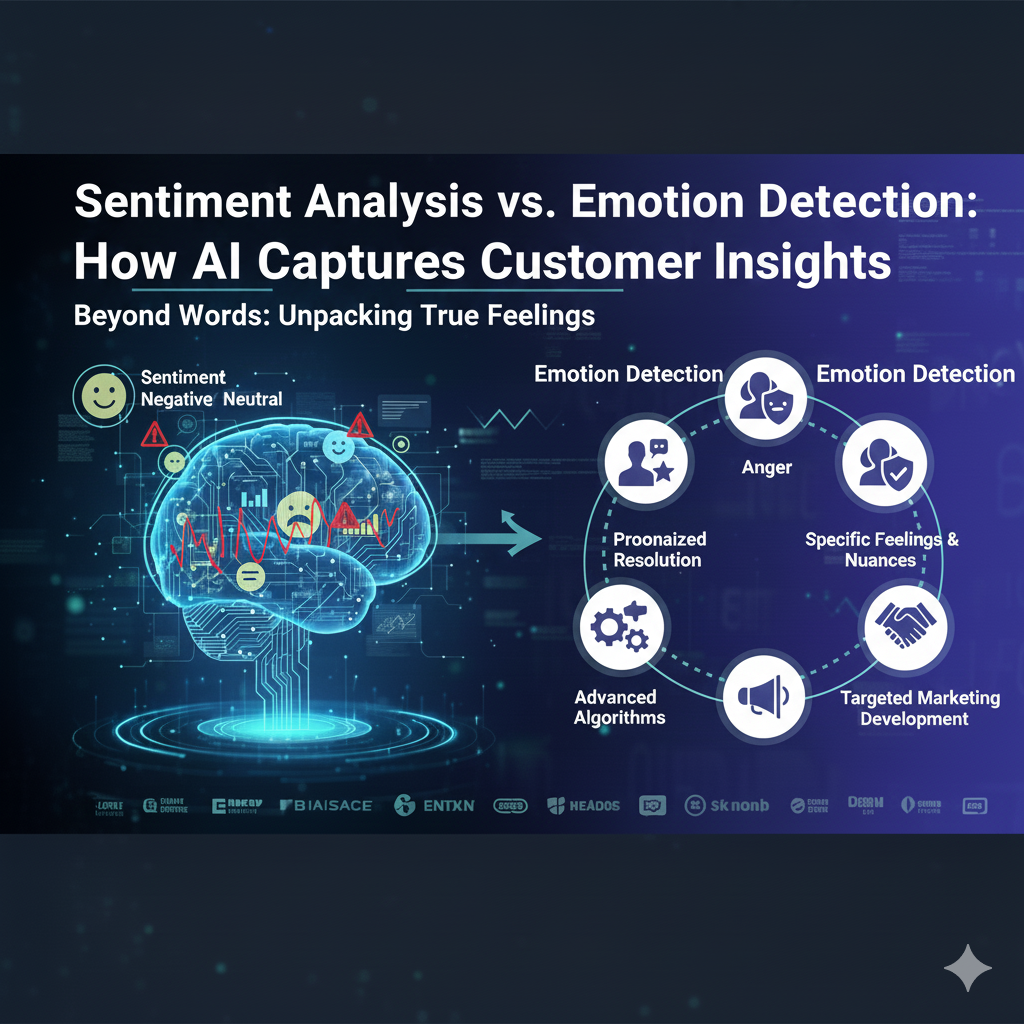
Understanding customers today requires more than knowing whether feedback is positive or negative. Brands are increasingly turning to ai-powered customer sentiment analysis and ai powered sentiment analysis to decode not just opinions, but the emotional drivers behind them. While sentiment analysis and emotion detection are often used interchangeably, they serve different purposes — and together, they unlock much deeper customer insights. This blog explores the differences between sentiment analysis and emotion detection, how AI powers both, and why combining them is critical for modern customer intelligence.
Why Sentiment and Emotion Both Matter
AI has transformed how organizations analyze customer feedback across reviews, surveys, support tickets, chats, and social media. Traditional methods focused on sentiment polarity — positive, negative, or neutral. Today, ai-powered customer sentiment analysis goes further by adding context, intent, and emotional understanding at scale.
At the same time, emotion detection identifies how customers feel — such as frustration, anger, delight, or disappointment. When brands rely only on sentiment, they miss emotional nuance. When they rely only on emotion, they lose clarity around overall perception. AI enables both to work together.
What Is AI Powered Sentiment Analysis?
Definition and Core Function
AI powered sentiment analysis uses natural language processing (NLP) and machine learning to classify customer feedback by sentiment polarity. It answers questions like:
-
Is this feedback positive, negative, or neutral?
-
How does sentiment change over time?
-
Which topics generate the most negative sentiment?
This form of analysis excels at high-level trend detection and benchmarking.
How It Works
AI sentiment models analyze:
-
Word choice and phrasing
-
Linguistic patterns
-
Contextual relationships between words
Modern models go beyond keyword matching, allowing ai-powered customer sentiment analysis to interpret meaning more accurately across large datasets.
What Is Emotion Detection in AI?
Definition and Purpose
Emotion detection identifies specific emotional states expressed in customer language. Instead of broad polarity, it captures emotions such as:
-
Frustration
-
Anger
-
Satisfaction
-
Anxiety
-
Excitement
Emotion detection answers why sentiment exists — not just what it is.
How AI Detects Emotions
Emotion detection models analyze:
-
Sentence structure and tone
-
Emotional cues and intensity
-
Contextual indicators like urgency or repetition
When combined with ai powered sentiment analysis, emotion detection reveals deeper layers of customer experience.
Sentiment Analysis vs. Emotion Detection: Key Differences
Level of Insight
-
Sentiment Analysis: High-level perception (good vs. bad)
-
Emotion Detection: Granular emotional states (how customers feel)
Business Use Case
-
AI powered sentiment analysis is ideal for tracking overall brand health and trends.
-
Emotion detection is best for diagnosing specific experience problems.
Actionability
Sentiment shows where issues exist.
Emotion explains how severe and why those issues matter.
Why Brands Need Both for Deeper Customer Insights
Sentiment Alone Is Not Enough
A “negative” sentiment score doesn’t explain whether a customer is mildly annoyed or deeply frustrated. Without emotional context, brands risk under- or over-reacting.
Emotion Without Sentiment Lacks Direction
Emotion detection without sentiment context can feel fragmented. For example, frustration might exist within an otherwise positive experience.
By combining ai-powered customer sentiment analysis with emotion detection, brands gain clarity and precision.
How AI Captures Deeper Insights at Scale
1. Context-Aware Language Understanding
Modern AI models understand context, sarcasm, and indirect language better than traditional systems. This reduces misclassification and improves reliability.
2. Theme-Based Sentiment and Emotion Mapping
AI groups feedback into themes such as pricing, usability, or support. Within each theme, it applies:
-
AI powered sentiment analysis to measure polarity
-
Emotion detection to assess intensity and emotional drivers
This layered insight enables smarter prioritization.
3. Trend and Pattern Recognition Over Time
Tracking emotional shifts alongside sentiment trends helps brands:
-
Detect early warning signs of churn
-
Measure emotional impact of product changes
-
Monitor long-term experience improvements
Real-World Business Applications
Customer Support Optimization
Emotion detection identifies urgency and frustration in tickets. Ai-powered customer sentiment analysis helps teams prioritize responses and reduce escalation risk.
Product Development and UX
Sentiment reveals feature satisfaction. Emotion highlights pain points. Together, they guide roadmap decisions more effectively.
Brand Reputation Monitoring
Negative sentiment combined with emotions like anger or disappointment signals reputational risk that requires immediate action.
Marketing and Messaging
Emotion-aware insights help brands craft messaging that resonates emotionally, not just logically.
Challenges in Sentiment and Emotion AI — and How to Overcome Them
Language Ambiguity
Human language is complex. Sarcasm and humor remain challenging. Advanced, context-trained models mitigate this issue.
Domain-Specific Language
Generic models may misinterpret industry jargon. Training ai powered sentiment analysis models on domain-specific data improves accuracy.
Data Quality
Noisy or low-quality feedback reduces insight value. Filtering and weighting high-confidence data improves outcomes.
Best Practices for Using AI-Powered Sentiment and Emotion Analysis
-
Combine sentiment and emotion metrics
-
Focus on trends, not isolated data points
-
Validate insights with human review
-
Align insights with business KPIs
-
Continuously retrain models
When applied correctly, ai-powered customer sentiment analysis becomes a strategic intelligence layer, not just an analytics tool.
Conclusion: From Surface-Level Feedback to Emotional Intelligence
The future of customer understanding lies beyond simple sentiment scores. By combining ai powered sentiment analysis with emotion detection, brands gain a deeper, more human understanding of customer experience at scale. This dual approach transforms feedback into actionable intelligence — helping organizations respond with empathy, precision, and confidence.
As AI continues to evolve, businesses that invest in emotionally intelligent analytics will be better equipped to build trust, loyalty, and long-term growth.
FAQ: Sentiment Analysis vs. Emotion Detection
What is the difference between sentiment analysis and emotion detection?
Sentiment analysis classifies feedback as positive, negative, or neutral, while emotion detection identifies specific emotional states like frustration or delight.
Is ai powered sentiment analysis accurate?
Yes, especially when using modern, context-aware AI models trained on relevant data and validated regularly.
Can AI detect multiple emotions in one message?
Advanced models can identify mixed emotions within a single piece of feedback, improving insight depth.
Do businesses need both sentiment and emotion analysis?
Yes. Using both provides a more complete understanding of customer experience and improves decision-making.
Where is ai-powered customer sentiment analysis most useful?
It is widely used in customer support, product development, marketing, brand monitoring, and experience management.

 English
 Arabic
 French
 Spanish
 Portuguese
 Deutsch
 Turkish
 Dutch
Dutch
 Italiano
 Russian
 Romaian
 Greek
Greek
