


 Downloader
 Free FTP
Promote Your Product
Got a product, service, or story to share? Promote it directly to our active community and boost your brand today.
Create an Ad
Publish Bulk Blog Posts
Boost Your Reach! 📝
Have articles, guest posts, or bulk stories to publish? Send your content directly to our editorial team and feature on our platform.
Email Us Your PostsOption Moneyness Explained Simply | Firstock
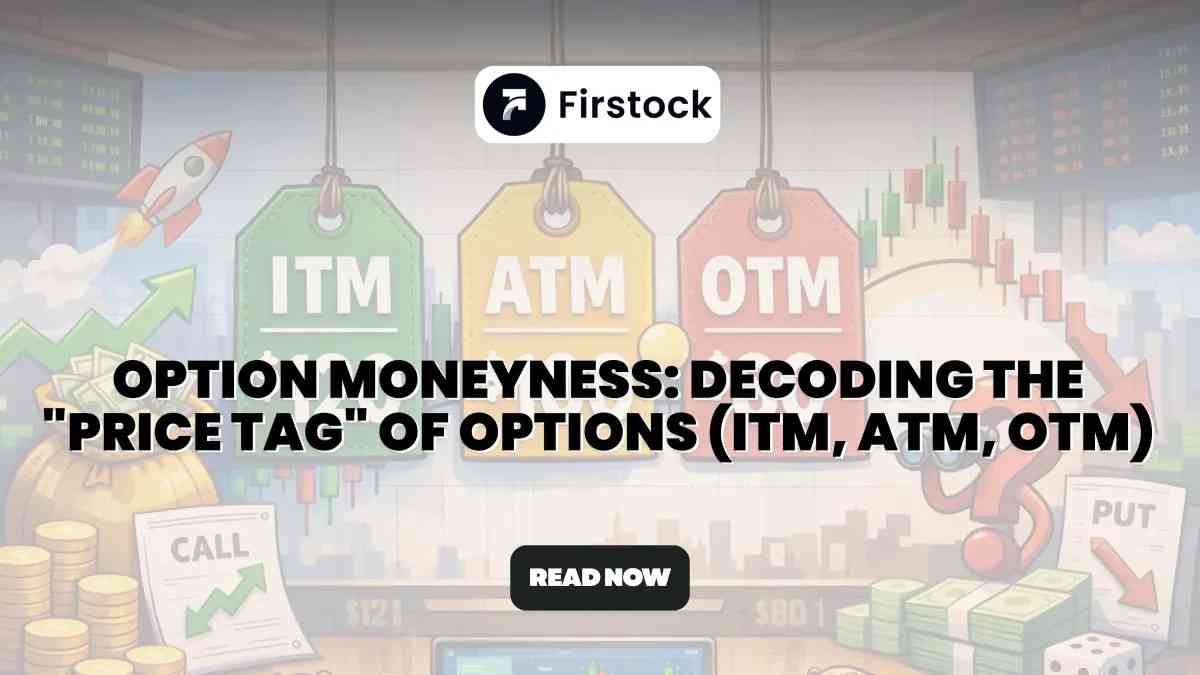
Option Moneyness Explained Simply | Firstock
Introduction
Have you ever looked at options trading and felt it was too complex or only for experts? You’re not alone. Many people step back the moment they hear words like in-the-money or out-of-the-money. But here’s the truth: option moneyness is actually one of the simplest and most practical concepts in options trading—once explained the right way.
Think of option moneyness like checking whether a train ticket is useful today, later, or never. That’s exactly what moneyness tells you—whether an option has value right now or not.
In this guide, we’ll break down option moneyness, explain what is moneyness in options, explore the moneyness of options, and show how a discount broker like Firstock makes learning and trading options easier for everyday people.
No jargon. No heavy math. Just simple, practical explanations you can actually use.
Learn option moneyness, what is moneyness in options, moneyness of options & how a discount broker like Firstock helps beginners trade smarter.
What Is Option Moneyness?
Option moneyness simply tells you whether an option is profitable, break-even, or unprofitable at the current market price.
In other words, it answers one simple question:
If I exercise this option right now, will I make money?
Based on the answer, options fall into three categories:
-
In-the-Money (ITM)
-
At-the-Money (ATM)
-
Out-of-the-Money (OTM)
That’s it. No mystery.
What Is Moneyness in Options Trading?
So, what is moneyness in options trading exactly?
Moneyness compares:
-
Strike Price (the price agreed in the option contract)
-
Current Market Price of the stock or index
If the market price is favorable compared to the strike price, the option has value. If not, it doesn’t.
👉 Moneyness of options helps traders decide:
-
Which option to buy
-
How risky the trade is
-
How much the option may cost
Why Option Moneyness Is Important
You may ask, “Can I trade options without understanding moneyness?”
Technically yes—but practically, it’s like driving with your eyes closed.
Option moneyness matters because it affects:
-
Option price
-
Risk vs reward
-
Probability of profit
-
Trading strategy
Smart traders always check moneyness before placing a trade.
Types of Option Moneyness
Let’s break the three types in the simplest way possible.
The Three Categories
-
In-The-Money (ITM) – Already profitable
-
At-The-Money (ATM) – At break-even point
-
Out-Of-The-Money (OTM) – Needs movement to become profitable
Think of them as ripe, half-ripe, and raw fruit 🍎.
In-The-Money (ITM) Options Explained
An option is In-The-Money when it already has intrinsic value.
For Call Options
-
Market Price > Strike Price
For Put Options
-
Market Price < Strike Price
Why ITM Options Are Popular
-
Higher probability of profit
-
Lower risk
-
More expensive premiums
👉 Best suited for conservative traders.
At-The-Money (ATM) Options Explained
ATM options are right at the sweet spot where:
-
Market Price ≈ Strike Price
They don’t have intrinsic value yet—but they’re closest to becoming ITM.
Why Traders Love ATM Options
-
Balanced risk and reward
-
High liquidity
-
Ideal for beginners
ATM options are like standing at the door—you’re just one step away from profit.
Out-Of-The-Money (OTM) Options Explained
OTM options have no intrinsic value right now.
For Call Options
-
Market Price < Strike Price
For Put Options
-
Market Price > Strike Price
Why People Still Buy OTM Options
-
Very cheap
-
High reward potential
-
Useful for speculative trades
⚠️ But remember: High reward comes with high risk.
Option Moneyness with a Real-Life Example
Let’s say:
-
Stock price = ₹100
-
Call option strike price = ₹90, ₹100, ₹110
|
Strike Price |
Moneyness |
|
₹90 |
In-The-Money |
|
₹100 |
At-The-Money |
|
₹110 |
Out-Of-The-Money |
Simple, right?
Call Option vs Put Option Moneyness
Call Option Moneyness
-
ITM: Price above strike
-
ATM: Price near strike
-
OTM: Price below strike
Put Option Moneyness
-
ITM: Price below strike
-
ATM: Price near strike
-
OTM: Price above strike
Understanding this difference is crucial for correct trade selection.
How Option Moneyness Affects Pricing
Option moneyness directly impacts option premium.
-
ITM options → Expensive
-
ATM options → Moderately priced
-
OTM options → Cheap
Why? Because the closer an option is to profit, the more it costs.
Option Moneyness and Risk Levels
|
Moneyness |
Risk Level |
|
ITM |
Low |
|
ATM |
Medium |
|
OTM |
High |
If you’re new, ATM options are often the safest starting point.
Common Beginner Mistakes with Moneyness
Many beginners:
-
Buy OTM options just because they’re cheap
-
Ignore probability of profit
-
Don’t understand time decay
Cheap options are tempting, but not always smart.
How Discount Brokers Like Firstock Help
A discount broker like Firstock makes learning and trading easier by offering:
-
Low brokerage
-
Simple trading platforms
-
Clear option chains
-
Beginner-friendly tools
When costs are low, beginners can focus on learning option moneyness without pressure.
Choosing the Right Option Moneyness
Ask yourself:
-
How much risk can I take?
-
Do I want safety or high reward?
-
How much capital do I have?
Conservative? Choose ITM
Balanced? Choose ATM
Aggressive? Choose OTM
There’s no “best”—only what suits you.
Final Thoughts on Option Moneyness
Option trading doesn’t have to be scary. Once you understand option moneyness, everything becomes clearer—from pricing to risk to strategy.
Whether you’re trading through a discount broker like Firstock or just learning the basics, moneyness of options is the foundation you must master.
Start simple. Stay patient. Learn step by step.
FAQs
1. What is option moneyness in simple words?
Option moneyness shows whether an option is profitable, break-even, or unprofitable at the current market price.
2. What is moneyness in options trading used for?
It helps traders choose the right option based on risk, price, and probability of profit.
3. Is In-The-Money option better than Out-Of-The-Money?
ITM options are safer but cost more, while OTM options are cheaper but riskier.
4. Which option moneyness is best for beginners?
At-The-Money (ATM) options are generally best for beginners due to balanced risk.
5. How does a discount broker help in options trading?
A discount broker like Firstock reduces trading costs and provides simple tools, making it easier to learn and trade options.

 English
 Arabic
 French
 Spanish
 Portuguese
 Deutsch
 Turkish
 Italiano
 Russian
 Romaian
 Portuguese (Brazil)
 Greek
Greek
