


 Downloader
 Free FTP
From Food Safety to Compliance: Importance of FSSAI in India and the Application Process
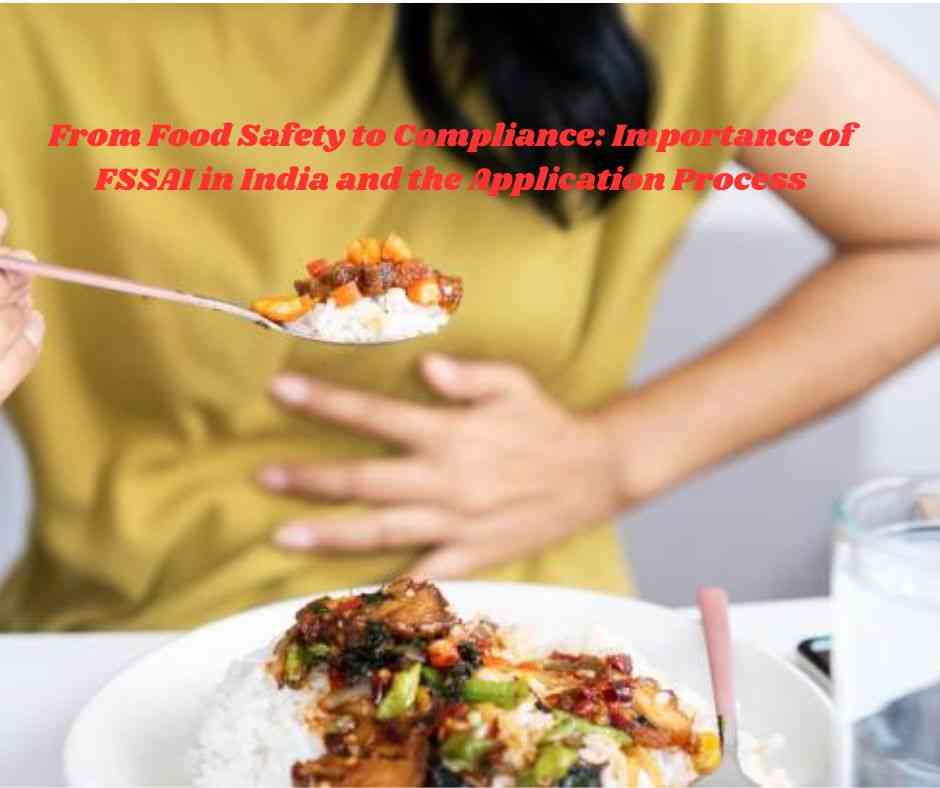
The importance of Food Safety and compliance in INDIA
Food is really a significant thing in India. For a lot of people, food is how they make money to survive. You can find food businesses from a small tea stall on the side of the road to really big companies that make packaged food and ship it to stores all over the country. As important as food is in our lives, it’s important that the food we eat is safe. FSSAI is an acronym for the Food Safety and Standards Authority of India, which is established with the aim of creating a better place as far as food industries in India are concerned. Prior to FSSAI, the laws relating to foods were unorganized and very difficult to manage In fact, it was quite difficult to follow and make sure all the requirements were met.
The rules and regulations made by FSSAI In india
The Food Safety and Standards Authority of India, or FSSAI, is actually very important for a single reason, and that is to ensure the health and safety of people whenever they consume food. Food, whenever we consume it, can actually make people seriously ill or even lead to serious health issues like food poisoning.
The FSSAI ensures that everyone is following the guidelines related to the items that are present in our food, the cleanliness level of the food, the storage of the food, the packaging of the food, and the distribution of the food from one location to another.
These regulations ensure that the food we consume does not contain any contamination and that it is healthful for us to consume.
The Food Safety and Standards Authority of India, or FSSAI, is really important when it comes to following the law. If you want to run a food business in India, you need to get registered with the FSSAI or get an FSSAI license. If you do not do this, it is against the law. The people in charge can fine you, stop your business from operating, or even shut you down for good. As important as food is in our lives, it’s important that the food we eat is safe. The Food Safety and Standards Authority of India, which is also known as FSSAI, has different approval categories.
If you own a food business, such as a street vendor, then you would be required to obtain a basic FSSAI registration.
This is also the case for shops that sell food.
For businesses that are a bit bigger and operate in one state, they need to get a state FSSAI license.
If you have a big business like a manufacturer, or if you import or export food, or if your business is in more than one state, then you need to apply for a Central FSSAI license.
It is really important to choose the category for your Food Safety and Standards Authority of India registration so that you are doing everything correctly and following all the rules of the FSSAI.
First you need to figure out what kind of approval you need for your FSSAI registration or FSSAI license.
This depends on how much you sell, how big your business is, and where your business is located.
After you do this, you have to get all the necessary papers ready for your FSSAI registration or FSSAI license.
You will probably need to show who you are, where you live, and that your business is registered.
You also need to give details about the food products you sell for your FSSAI registration or FSSAI license.
Some businesses may also need a plan to keep food safe for their FSSAI registration or FSSAI license.
When the people in charge look at the application and say it is okay, they give you the FSSAI registration certificate or the FSSAI license. The FSSAI registration certificate has a 14-digit FSSAI number on it. You have to put this FSSAI number on the packaging of your food, on bills, on invoices, and at your place of business. The FSSAI number shows that your business is following all the rules, and the FSSAI registration is really important for this.
The Food Safety and Standards Authority of India approval is not forever.
You get a registration and a license for an amount of time.
After that you have to renew the FSSAI before they expire.
It is also provided that food businesses must continue to comply continuously with the food safety regulations even after being granted registration or license by the Food Safety and Standards Authority of India.
In case of failure in timely renewal or non-compliance with the regulations, one may have to face a fine, or the FSSAI may cancel one's license.
Conclusion
FSSAI plays a very important role in linking the aspect of food safety with the aspect of legal compliance. FSSAI ensures the safety of the consumer, helps genuine organizations, and establishes order in the disordered food sector. FSSAI registration, or the FSSAI license, is not only mandatory but also portrays a sense of responsibility and dedication toward health. For every food business owner, the FSSAI regulation cell is a crucial step toward success. You can read many articles like this from the FSSAI blog.

 English
 Arabic
 French
 Spanish
 Portuguese
 Deutsch
 Turkish
 Dutch
Dutch
 Italiano
 Russian
 Portuguese (Brazil)
 Greek
Greek
