


 Downloader
 Free FTP
The Art of Dual Weaving: Why Pitambari Sarees Are Considered a Masterpiece by Global Designers
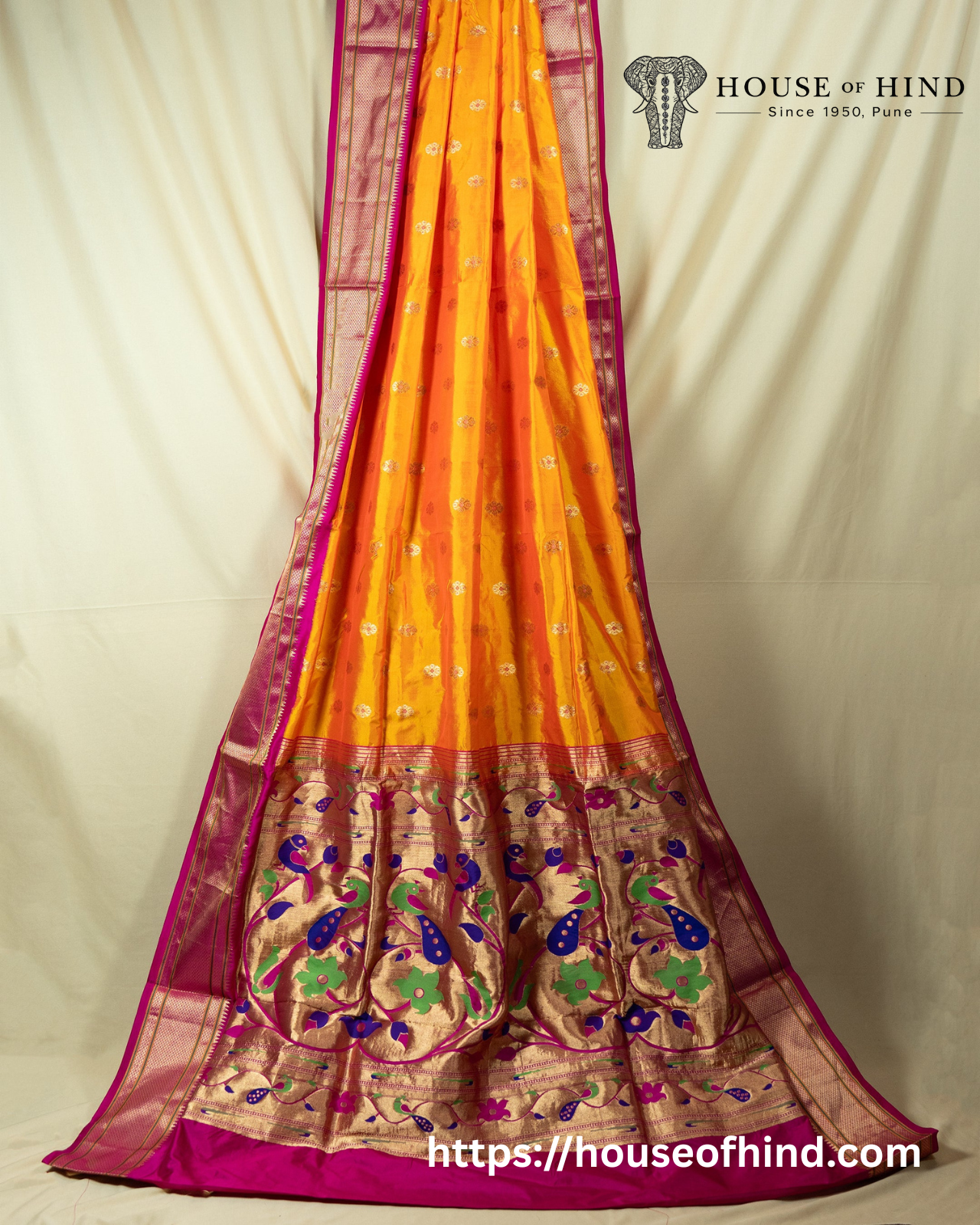
he world of Indian textiles is rich, intricate, and filled with stories woven into every thread. Among its many treasures, the pitambari saree holds a special place. Known for its yellow–gold radiance and iconic two-tone charm, this saree stands as a symbol of traditional craftsmanship and artistic depth. But what truly sets Pitambari apart is the remarkable technique behind it—the art of dual weaving.
Today, global designers, textile experts, and fashion stylists admire Pitambari not just as a garment but as a masterpiece of engineering and culture. With contemporary brands like House of Hind reinventing this classic weave into a modern luxury saree, Pitambari has become an international creative inspiration.
Understanding Dual Weaving: The Heart of Pitambari Craftsmanship
Dual weaving, or double-toned weaving, is a technique that merges two distinct colors through a unique interplay of warp and weft threads. In a Pitambari saree, this generally involves yellow and gold, though subtle variations exist.
The magic of dual weaving lies in how the colors shift beautifully as the saree moves. The saree doesn’t rely on heavy embellishment; instead, the weave itself creates depth, glow, and elegance.
Why Dual Weaving Is a Global Designers’ Favourite
When international designers explore Indian textiles, they are often drawn first to weaving techniques that combine both science and artistry. Pitambari’s dual weaving stands out because it beautifully balances craftsmanship with visual storytelling.
Global designers appreciate the technique because:
• it creates a natural gradient without artificial dyes
• it enhances fabric movement, making it perfect for runways
• it produces a gentle shimmer ideal for photoshoots
• it reflects light differently from every angle
This makes the saree appear alive—almost like it is glowing from within.
The Technical Strength Behind Pitambari Weaving
Creating a dual-tone Pitambari saree requires precision, patience, and generational skill. The artisan must align warp threads of one colour with weft threads of another to achieve the perfect two-tone effect.
A single mistake can disrupt the balance of colour and light. This is why Pitambari weaving is considered one of the most respected crafts in Indian handloom traditions.
The technique involves:
• controlling thread tension for consistent colour flow
• selecting high-quality silk or cotton–silk blends
• matching shades that complement each other naturally
• weaving with symmetry so the drape falls cleanly
The end result is a saree that is smooth, radiant, and full of character.
Dual Weaving in International Fashion Context
Runway stylists and global magazine editors adore Pitambari for its visual drama. The saree’s soft shimmer catches studio lighting beautifully, making it perfect for editorial visuals.
Whether draped traditionally or styled with modern elements like jackets, belts, or boots, the pitambari saree maintains its elegance. Its two-tone effect adds depth even in minimalist settings.
For fusion fashion shoots, stylists pair Pitambari with metallic accessories, pearl jewellery, or structured silhouettes, highlighting how effortlessly Indian craftsmanship blends with contemporary global aesthetics.
The Emotional Chemistry of Yellow–Gold
Apart from technical brilliance, the colour psychology of Pitambari plays a major role in its global appeal. Yellow–gold represents warmth, clarity, and celebration. It is associated with divine energy in India, but it also carries universal meaning across cultures.
Designers find Pitambari emotionally compelling because it evokes:
• positivity and confidence
• festive energy
• cultural richness
• timeless sophistication
This emotional resonance makes Pitambari ideal for bridal couture, festive wear, and luxury editorial styling.
House of Hind: Bringing Dual Weaving to Modern Luxury
Contemporary Indian brands like House of Hind are reintroducing Pitambari weaving with modern finesse. Their collections highlight the rich two-tone glow while ensuring the sarees remain light, wearable, and perfectly draped.
House of Hind achieves this by:
• using refined yarns for smoother texture
• balancing colour tones for global appeal
• designing elegant borders that enhance the dual weaving
• blending tradition with luxe minimalism
Their Pitambari sarees appeal to NRIs, fashion-forward brides, and stylists who want heritage with a modern identity.
Why Global Designers Call Pitambari a Masterpiece
To global designers, Pitambari represents the ideal combination of technique, tradition, and visual magic. Its dual weaving is admired for being both technically challenging and artistically rich.
Designers often describe Pitambari as:
• a natural light sculpture
• a heritage fabric with futuristic appeal
• a textile that breathes with movement
• a colour story woven into fabric
This poetic interpretation shows how deeply the saree resonates beyond cultural borders.
The Rise of Two-Tone Fashion
Modern fashion is welcoming two-tone fabrics in jackets, gowns, and couture pieces. The world is recognising the charm of layered colours that shift gently with light.
Pitambari is one of the oldest and purest examples of two-tone fashion. As global designers experiment with dual-toned silk and metallic blends, they often refer back to Indian weaving techniques for inspiration.
Wearing Pitambari Today: A Blend of Culture & Style
For modern women, the dual-weave Pitambari saree offers versatility. It suits festive events, traditional ceremonies, destination weddings, and modern parties. Its glow adapts to different jewellery styles and lighting environments.
Paired simply with a stylish blouse, soft wave hair, and minimal gold jewellery, the saree creates an effortless luxury statement.
Final Thought: A Weave That Connects India to the World
The pitambari saree is much more than fabric—it is a living art form. Dual weaving transforms it into a masterpiece that speaks through colour, movement, and craftsmanship. Global designers admire it because it represents a balance between heritage and innovation, something few textiles achieve so naturally.
With brands like House of Hind shaping the future of this traditional weave, Pitambari is not just surviving—it is thriving as a global fashion icon, admired for its technical brilliance and artistic soul.

 English
 Arabic
 French
 Spanish
 Portuguese
 Turkish
 Dutch
Dutch
 Italiano
 Russian
 Romaian
 Portuguese (Brazil)
 Greek
Greek
