


 Downloader
 Free FTP
SPARK Matrix™: Edge Colocation Leaders Redefining the Future of Low-Latency Computing
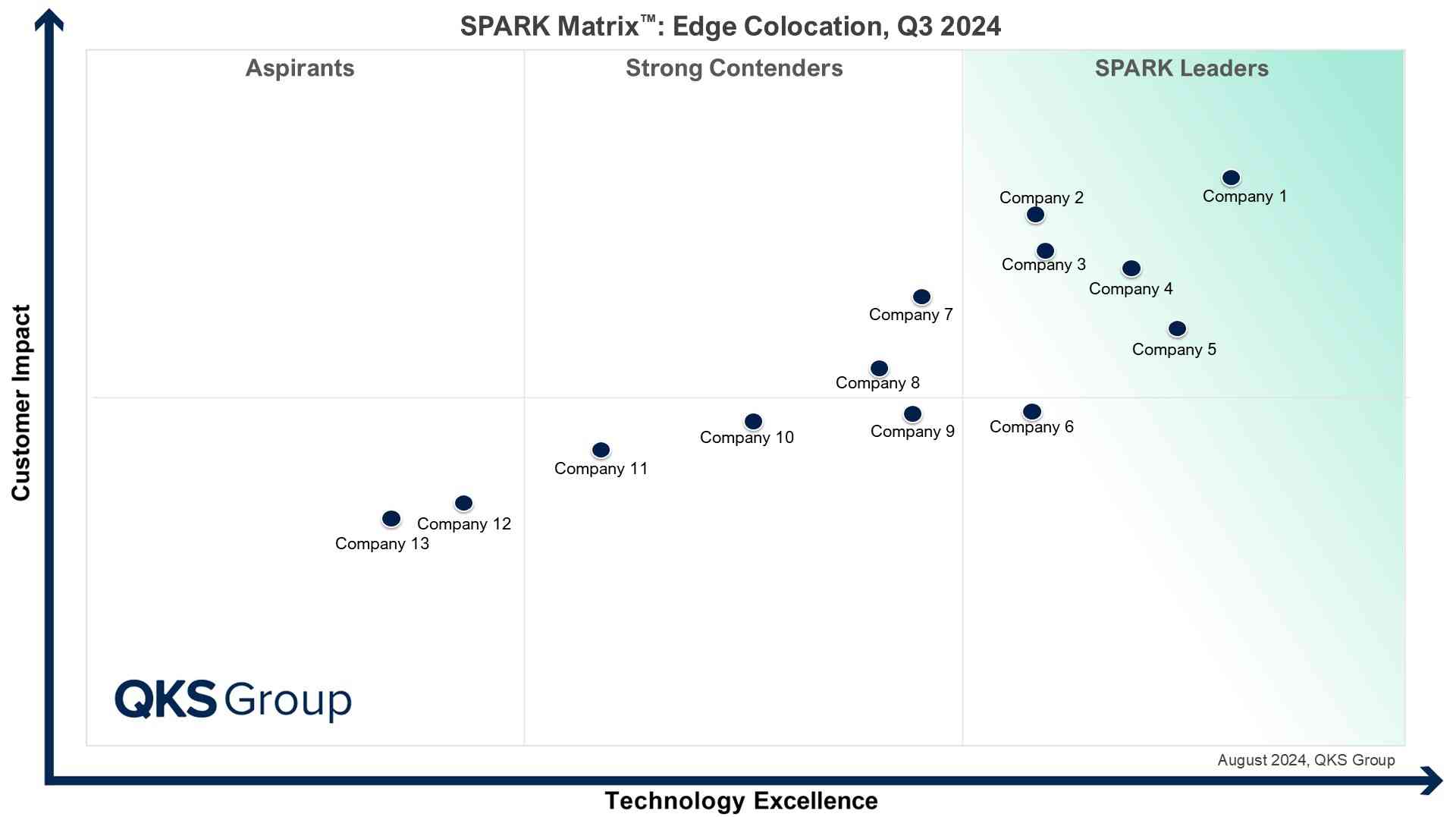
In today’s fast-paced digital world, where applications must respond instantly and data must be processed the moment it is generated, traditional centralized cloud models are beginning to show their limitations. As enterprises increasingly rely on data-intensive technologies—such as IoT, AI, machine learning, and immersive digital experiences—the need for infrastructure that reduces latency and enables real-time decision-making has become critical. This is where edge colocation is rapidly emerging as a transformative force.
Edge colocation brings compute, storage, and networking resources physically closer to users, devices, and data sources. Instead of routing all data back to distant centralized data centers, it enables processing at geographically distributed edge facilities. The result is significantly lower latency, improved reliability, and faster response times—exactly what modern digital ecosystems demand.
Why Edge Colocation Matters in the Modern Digital Era
Latency is the new competitive differentiator. In industries where milliseconds drive outcomes—autonomous vehicles, remote healthcare, industrial automation, and financial trading—every microsecond lost can impact performance, safety, and productivity. Even consumer experiences like online gaming, AR/VR, streaming, and e-commerce thrive on instant responsiveness.
Traditional cloud architectures are powerful, scalable, and cost-efficient, but they often sit hundreds or thousands of miles away from where data is created. This physical distance naturally introduces delays. Edge colocation solves this by placing processing capabilities nearer to the point of data origination. Companies gain the best of both worlds: the speed of local processing with the scalability of the cloud.
Key Benefits of Edge Colocation
1. Ultra-Low Latency for Real-Time Processing
At its core, edge colocation minimizes the distance data travels. By reducing physical proximity between the device and the data center, organizations achieve near-instant processing—essential for IoT, automation, AR/VR, robotics, and smart city applications.
2. Bandwidth Optimization and Reduced Cloud Traffic
With massive volumes of data being generated at the edge—smart sensors, surveillance systems, autonomous systems—sending everything to the cloud is expensive and inefficient. Edge colocation allows initial filtering, analysis, and decision-making to happen locally, reducing unnecessary backhaul traffic and significantly optimizing bandwidth.
3. Enhanced Data Sovereignty and Compliance
Data privacy regulations like GDPR, CCPA, and other local data protection laws increasingly require that certain data remain within specific geographic boundaries. Edge colocation facilities located regionally help enterprises remain compliant by ensuring sensitive data is processed and stored locally.
4. Improved Reliability and Business Continuity
Edge data centers provide localized redundancy. Even if the cloud or central systems face disruptions, edge facilities can continue operating independently. This is crucial in sectors like healthcare, finance, manufacturing, and public safety.
5. Better User Experiences
Consumers expect seamless digital interactions anytime, anywhere. Whether it’s a mobile app loading instantly, a self-checkout system validating purchases in real time, or a connected vehicle receiving updates without delay, edge colocation drastically improves front-end performance.
Driving Innovation Across Industries
Edge colocation is not just a technology upgrade—it is reshaping industries and unlocking new possibilities:
• Manufacturing and Industry 4.0
Smart factories use edge colocation to process sensor data instantly, enabling predictive maintenance, automated quality control, robotics coordination, and real-time supply chain visibility.
• Autonomous Vehicles and Transportation
Self-driving cars cannot rely on distant data centers for split-second decisions. Edge nodes placed across urban and highway infrastructure deliver hyper-local processing needed for safe mobility.
• Healthcare and Telemedicine
From real-time patient monitoring to connected medical devices, edge facilities help reduce delays that could impact health outcomes.
• Retail and eCommerce
Edge colocation empowers retailers with real-time analytics, inventory updates, customer behavior insights, and smoother omnichannel experiences.
• Smart Cities and Utilities
Traffic systems, energy grids, public safety networks, and smart infrastructure depend heavily on distributed, low-latency processing.
• Gaming, AR/VR, and Immersive Tech
Next-generation gaming and virtual reality require latency lower than 20 milliseconds. Edge colocation makes these high-performance environments possible at scale.
Edge Colocation as the Bridge Between Cloud and the Real World
As organizations accelerate digital transformation, edge colocation becomes the key integrator between centralized cloud architectures and geographically dispersed operations. Instead of replacing the cloud, it complements it.
Hybrid Edge-Cloud Environment
Enterprises gain flexibility and resilience by intelligently distributing workloads:
- Latency-sensitive tasks → processed at the edge
- High-volume analytics, storage, and long-term processing → handled by the cloud
This hybrid approach ensures optimal performance, cost efficiency, and scalability.
The Future: A Distributed, Intelligent, Real-Time Digital Ecosystem
The global adoption of edge colocation is rising as emerging technologies demand instantaneous insights. With 5G expansion, IoT proliferation, and AI embedded across business functions, edge colocation will become the backbone of future digital infrastructure.
In the coming years, we can expect:
- Greater integration of AI-driven automation at the edge
- Micro data centers deployed globally
- Enhanced energy-efficient, sustainable edge facilities
- Stronger security and decentralized architectures
- Wider enterprise adoption across small and large businesses
Ultimately, edge colocation represents the next phase in digital infrastructure evolution—one where speed, agility, compliance, and user experience define competitive advantage.
Conclusion
Edge colocation is not just a technological trend—it is a foundational shift toward faster, smarter, and more responsive digital ecosystems. By moving critical compute and storage resources closer to where data is created, organizations unlock real-time innovation, improve operational efficiency, and deliver exceptional user experiences.
As the digital landscape becomes more distributed and interconnected, edge colocation will play a central role in enabling sustainable scalability, fueling advanced applications, and shaping the next decade of digital transformation.

 English
 Arabic
 Spanish
 Portuguese
 Deutsch
 Turkish
 Dutch
Dutch
 Italiano
 Russian
 Romaian
 Portuguese (Brazil)
 Greek
Greek
