


 Downloader
 Free FTP
Promote Your Product
Got a product, service, or story to share? Promote it directly to our active community and boost your brand today.
Create an Ad
Publish Bulk Blog Posts
Boost Your Reach! 📝
Have articles, guest posts, or bulk stories to publish? Send your content directly to our editorial team and feature on our platform.
Email Us Your PostsBio-Digital Twins: The Future of Precision Technology in Everyday Life
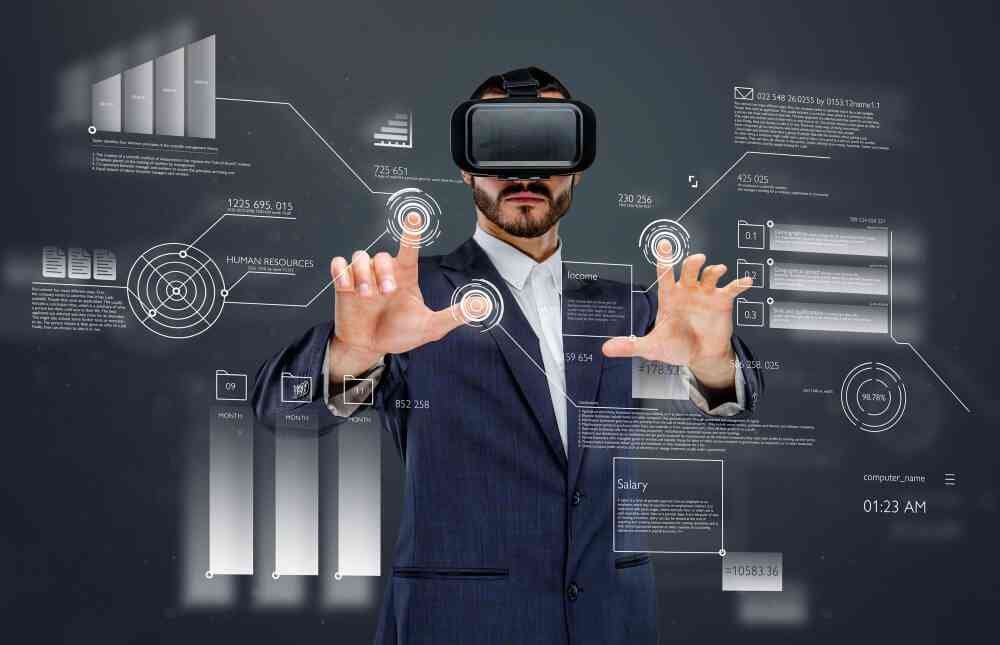
Technology has entered an age where digital simulations can mirror the real world with remarkable accuracy. One of the most groundbreaking concepts emerging from this evolution is the bio-digital twin, a virtual replica of a physical human, biological system, or environment. Originally designed for aerospace and industrial machinery, digital twin technology is now expanding into healthcare, agriculture, smart cities, and consumer tech. With advancements in AI, sensor engineering, cloud computing, and edge analytics, Bio-Digital Twins are set to revolutionize how humans interact with technology in the coming decade.
What Are Bio-Digital Twins?
A Bio-Digital Twin is a virtual model that reflects a real, living biological entity such as a human body, an organ, a plant ecosystem, or even a complete agricultural farm. This digital counterpart receives continuous data from sensors embedded in the physical counterpart and uses advanced simulation algorithms to predict behavior, detect anomalies, and personalize decisions. It is similar to having a dynamic, real-time model that grows and adapts as the biological system evolves.
The Technology Behind Bio-Digital Twins
At the heart of this innovation lies the integration of several advanced technologies. High-resolution biosensors monitor subtle changes in biological systems, while AI and machine learning interpret this data to learn patterns and forecast future conditions. Cloud computing stores and processes vast datasets, whereas edge devices handle time-sensitive tasks in real time.
In many modern systems, companies rely heavily on embedded software development services to build reliable, optimized, and secure firmware capable of handling complex data streams. Without efficient embedded software, the sensors and devices powering Bio-Digital Twins would struggle to synchronize with simulation platforms, making real-time analysis impossible.
Applications in Modern Healthcare
The healthcare industry is rapidly adopting Bio-Digital Twins to improve diagnosis, treatment, and preventive care. Imagine a future where a patient has a personalized virtual replica that simulates how they will react to medication before they actually take it. Doctors could predict the likelihood of heart failure, cancer progression, or neurological disorders long before symptoms appear.
Remote monitoring also becomes significantly more powerful. Patients recovering from surgery can be continuously tracked using wearable sensors, which feed data to their digital twin. If an abnormal pattern appears—such as an irregular heartbeat or respiratory changes—the system sends alerts to clinicians instantly.
Enhancing Industrial and Manufacturing Efficiency
Factories are adopting bio-digital twins to simulate production lines, machine performance, and workforce dynamics. This helps companies detect equipment failures before they occur, optimize production scheduling, and reduce downtime. With the rise of Industry 4.0, factories are becoming smarter, more automated, and increasingly autonomous. A Bio-Digital Twin acts like an intelligent dashboard that predicts issues, suggests improvements, and continuously learns as conditions change.
Powering Smart Cities
Urban planners are now using bio-digital twins of entire cities to simulate traffic patterns, energy consumption, infrastructure load, and public safety scenarios. These simulations help governments make smarter decisions about transport systems, emergency response strategies, and sustainable development. In the future, citizens may have personal digital twins integrated into smart city ecosystems for enhanced health, safety, and mobility.
Transforming Smart Agriculture
Agriculture is another area that stands to benefit immensely. Farms equipped with sensors, drones, and autonomous machinery can generate digital replicas of soil, crops, water flow, and weather patterns. These agricultural Bio-Digital Twins help farmers manage resources more efficiently, reduce crop wastage, and predict yield with exceptional accuracy.
A key enabler in this system is Agriculture IoT. It forms the backbone of farm-level data collection by connecting soil moisture sensors, aerial imaging drones, livestock trackers, and irrigation systems into a unified digital architecture. When combined with simulation models, farmers gain real-time insights that were previously impossible using traditional farming methods.
Consumer Applications on the Horizon
Beyond industry and healthcare, bio-digital twins could become part of everyday consumer life. Fitness brands may offer personalized digital twins that track body performance, metabolic changes, and workout responses. Smart home systems may create digital replicas of households to optimize energy use, predict appliance failures, and enhance home security.
Wearables will play a big role in this evolution. As sensors become more compact and more accurate, consumers will carry continuous sources of bio-data that feed into personal digital twins, enabling hyper-personalized services across apps, devices, and home environments.
Conclusion
Bio-digital twins represent a paradigm shift in how technology interacts with biological systems. By creating a real-time, adaptive digital mirror of complex living environments, we gain unprecedented capabilities to predict, analyze, and optimize outcomes. Whether improving patient care, enhancing agricultural productivity, or powering smart cities, this emerging technology holds immense potential.

 English
 Arabic
 French
 Spanish
 Portuguese
 Deutsch
 Turkish
 Dutch
Dutch
 Italiano
 Russian
 Romaian
 Portuguese (Brazil)
