


 Downloader
 Free FTP
Outdoor Socket Box Supplier Solutions by Nante For Scalable Outdoor Power
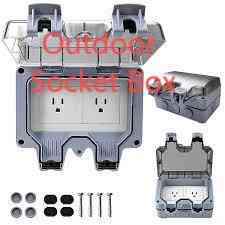
Specifying the right Electrical Outdoor Box Supplier during project planning prevents costly surprises in the field, because early procurement secures correct IP ratings, material choices, and mounting footprints; similarly, choosing a reliable Electrical Outdoor Box Supplier up front helps ensure consistent documentation, certified test reports, and spare-part availability that simplify installation and long-term maintenance. This article explains how specifiers, installers, and facility owners can evaluate suppliers and products to deliver resilient outdoor power installations.
Match Product Families to the Site Environment
The environmental profile of a site dictates enclosure choices. Urban plazas, coastal parks, industrial yards, and residential patios each present different corrosion, UV, and impact challenges. Choose housings and finishes accordingly—UV-stable thermoplastics for long sun exposure, powder-coated aluminum for a balance of weight and corrosion resistance, and 316 stainless steel for the harshest marine or chemical atmospheres. Don’t forget to align fastener metallurgy with the cabinet body to avoid galvanic corrosion that shortens service life.
Understand Ratings, Seals, and Mechanical Protection
Ingress and mechanical ratings provide objective comparators. IP classifications describe protection against dust and water; IP65 is a common baseline for many outdoor uses, while IP66/IP67 is required where jet washing or temporary immersion may occur. IK ratings quantify impact resistance and matter in public or high-traffic locations. Request independent test certificates and check that seals—gaskets, cable glands, and backshells—are specified with compounds (EPDM, silicone) suited to your temperature range and chemical exposure.
Installer-Centered Design Features Save Time and Risk
Small design details make big differences on site. Removable mounting plates and captive screws reduce the time technicians spend inside an enclosure and avoid lost hardware. Pre-configured gland plates that accept multiple cable diameters cut field modifications; positive-locking covers and keyed feed-throughs reduce the chance of accidental disconnection or mismating. DIN-rail compatibility, label zones, and adjustable mounting bosses streamline wiring and future retrofits, keeping lifecycle costs manageable.
Thermal Strategy and Internal Layout Considerations
Outdoor cabinets often host heat-generating devices—transformers, drives, or communications equipment—plus solar gain from direct sunlight. Plan for thermal management with passive approaches first: conductive mounting plates, proper component spacing, and reflective finishes. If forced ventilation is necessary, use filtered fans or heat exchangers that retain the enclosure’s protective rating. Separate high-current pathways from sensitive electronics to limit electromagnetic interference and simplify troubleshooting.
Modularity, Accessories, and Future-Proofing
Expect systems to evolve. Choose product families that allow accessory additions—surge protection trays, monitoring modules, or communications gateways—without requiring a full cabinet replacement. Standardized mounting footprints and spare-part kits reduce inventory complexity. Vendors who publish accessory compatibility charts and offer pre-cut accessory trays make it easier to plan upgrades and avoid expensive retrofits as monitoring and connectivity needs grow.
Procurement, Testing, and Documentation Checklist
When qualifying suppliers, require complete datasheets, independent IP/IK test reports, and material data sheets for coatings and gaskets. Ask for batch traceability and factory QC summaries to reduce approval friction. Verify recommended torque values for fasteners and request installation guides that include gland sizing charts and wiring zone diagrams. Suppliers who supply warranty terms, maintenance checklists, and spare-part lists reduce procurement risk and accelerate commissioning.
Maintenance, Training, and Lifecycle Support
A straightforward maintenance routine preserves sealing integrity and prolongs service life. Regular checks should include gasket condition, fastener torque, and visual inspection for ingress after storms. Keep a small on-site spares kit—gaskets, gland seals, and standard fasteners—to enable rapid repairs. Train field crews on correct opening procedures and torque settings; simple human factors work prevents common causes of seal failure and helps maintain warranty coverage.
Selecting the right outdoor socket box solution is a systems decision that balances environment, thermal needs, installer practicality, and upgrade paths. Prioritize verified ratings, material transparency, and supplier documentation to reduce downtime and total lifecycle cost. For configurable products, certified test reports, and accessory options suited to diverse outdoor applications, visit www.nante.com/product/

 English
 French
 Spanish
 Portuguese
 Deutsch
 Turkish
 Dutch
Dutch
 Italiano
 Russian
 Romaian
 Portuguese (Brazil)
 Greek
Greek
