


 Downloader
 Free FTP
How Carbide Brazed Tips and Indexable Insert Improve Cutting Accuracy
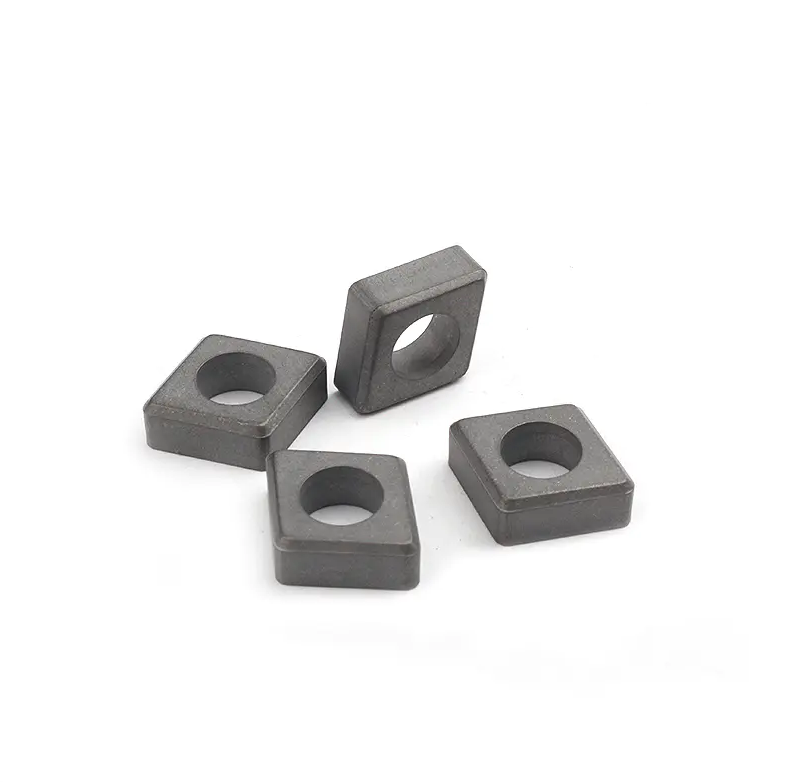
Both Carbide Brazed Tips and Indexable Insert have become essential tools in the manufacturing world, providing the balance between durability, adaptability, and precision that modern machining requires. These two types of cutting tools, while differing in design and method of attachment, share the same purpose—to enhance efficiency, minimize downtime, and maintain a consistent level of accuracy during prolonged operations.
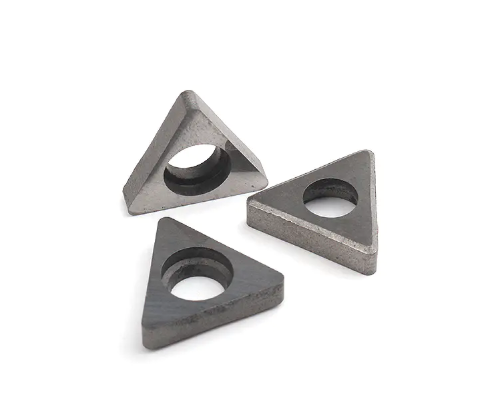
A Carbide Brazed Tip is produced by joining a tungsten carbide insert to a steel shank through brazing, which uses a filler metal that melts below the carbide’s melting point but still forms a strong metallurgical bond. This structure allows the tool to withstand intense pressure and heat generated during cutting. Its combination of a tough steel body and a wear-resistant carbide tip provides rigidity for heavy-duty cutting while keeping edges sharp for extended periods. The brazing process itself must be carefully controlled; the temperature, filler alloy composition, and cooling rate all influence the final joint strength.
Indexable Inserts, however, take a modular approach. Instead of a permanent bond, inserts are secured mechanically to a toolholder. Once an edge wears out, the operator can index or replace the insert in seconds, restoring performance without regrinding. This approach significantly reduces waste and maintenance time. In high-volume production environments, where machines run continuously, this flexibility contributes directly to cost savings and higher throughput.
The geometry of these inserts is critical. Different shapes—square, triangular, diamond, or round—affect cutting forces and chip control. A well-designed insert also features chipbreakers and coatings such as titanium nitride (TiN) or aluminum oxide (Al₂O₃) to resist wear, oxidation, and adhesion. Coatings also lower friction, allowing for smoother finishes even at high cutting speeds.
When comparing Carbide Brazed Tips and Indexable Inserts, it becomes clear that each suits distinct applications. Brazed tips are often preferred for continuous cutting, roughing heavy stock, or machining hard materials that demand structural integrity. Inserts excel in automated systems or batch production lines, where repeatability and quick tool changes are more valuable.
Maintenance practices further highlight their differences. Brazed tips can be resharpened multiple times using a diamond wheel, extending their service life. Inserts, on the other hand, are disposable but standardized, making them compatible with a wide range of toolholders. Both support energy-efficient machining by reducing scrap and optimizing cutting parameters.

 English
 Arabic
 French
 Spanish
 Deutsch
 Turkish
 Dutch
Dutch
 Italiano
 Russian
 Romaian
 Portuguese (Brazil)
 Greek
Greek
