


 Downloader
 Free FTP
How Double Seven Replaced Coca-Cola Across India
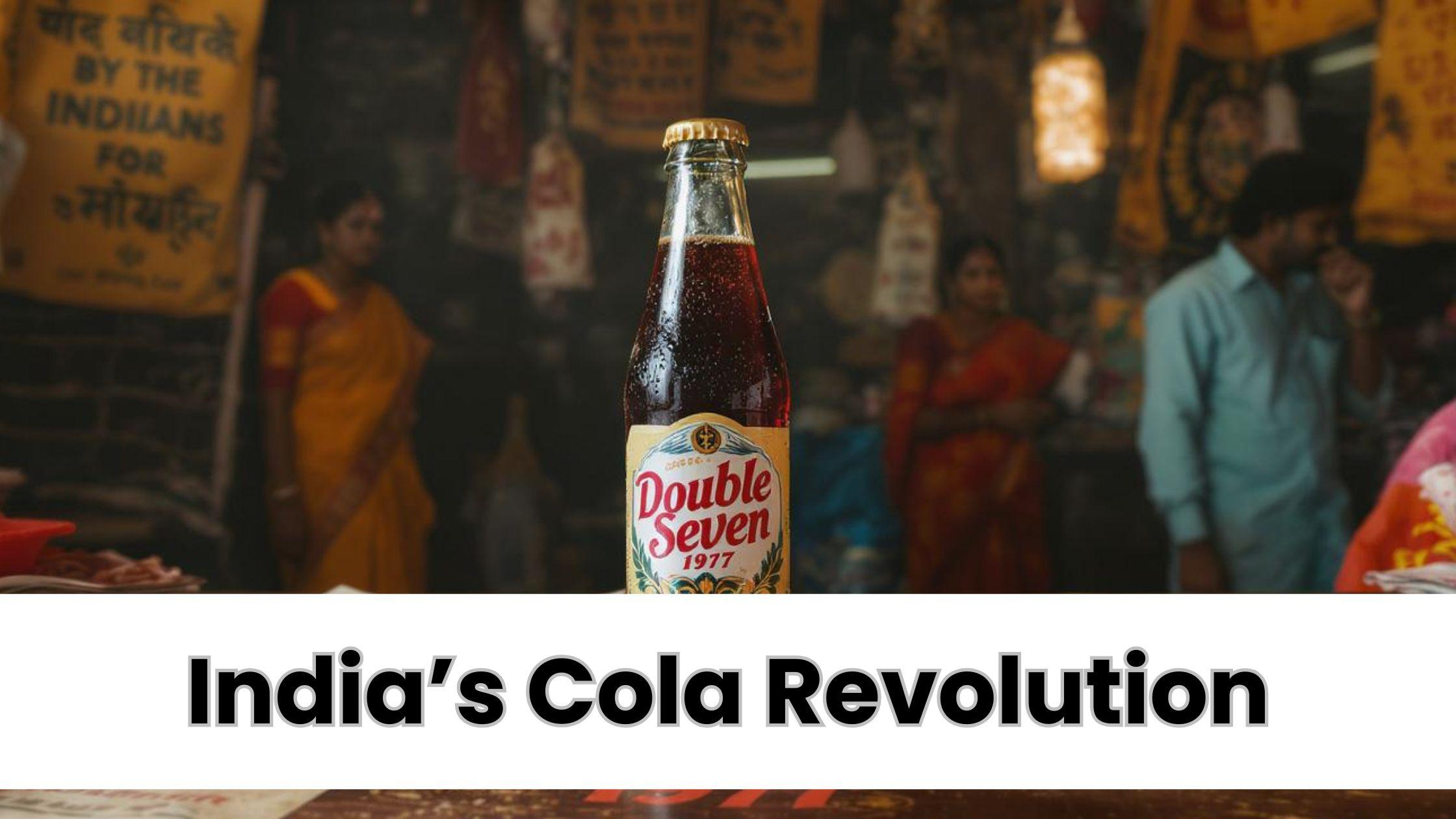
India’s Cola Revolution highlights a defining chapter in India’s consumer beverage industry. In 1977, Coca-Cola exited India due to regulatory pressures under the Foreign Exchange Regulation Act (FERA), creating a significant gap in the cola market. The government introduced Double Seven, a domestic cola brand, to fill this void. Beyond being a commercial product, Double Seven represented nationalism, self-reliance, and the broader swadeshi movement, making it a pivotal milestone in India’s industrial and consumer history.
Coca-Cola’s Exit and Its Market Impact
Coca-Cola had long been the leading cola brand in India, representing international quality, urban sophistication, and aspirational lifestyles. The FERA regulations required foreign companies to reduce equity stakes and disclose proprietary formulas. Coca-Cola’s refusal to comply led to its voluntary exit in 1977, leaving millions of consumers without their preferred cola and creating an opportunity for domestic brands to capture the market.
Launch of Double Seven
Double Seven was launched by Modern Food Industries in 1977, its name reflecting the year of its debut. The cola was designed using locally sourced ingredients and aimed to replicate Coca-Cola’s taste while projecting a distinctly Indian identity. Its introduction marked a key milestone in India’s Cola Revolution, showcasing how government-backed initiatives could leverage nationalism and consumer sentiment to compete with multinational brands.
Marketing and Branding Approach
Double Seven’s marketing strategy emphasized patriotism and self-reliance. Campaigns promoted the brand as “India’s Own Cola,” encouraging citizens to support domestic enterprise. Advertisements used swadeshi imagery and slogans linking cola consumption with national pride. This approach generated early trial purchases, particularly through government institutions, public-sector outlets, and local distribution networks.
Competing with Private Brands
Despite government backing, Double Seven faced strong competition from private cola brands such as Thums Up and Campa Cola. Thums Up gained popularity with a bold, spicy taste tailored to Indian preferences, while Campa Cola targeted younger consumers with vibrant marketing and youth-focused campaigns. These private brands were agile, quickly innovating in packaging, promotions, and distribution to capture market share, putting Double Seven at a competitive disadvantage.
Operational and Logistical Challenges
Being a state-supported initiative, Double Seven experienced bureaucratic delays that hindered swift decision-making and innovation. Production relied heavily on government-controlled supply chains, limiting responsiveness to market trends. Private competitors leveraged flexible operations and efficient logistics, allowing them to respond rapidly to consumer demand and regional preferences.
Political Factors Affecting the Brand
Double Seven’s performance was closely tied to political support. Under the Janata Party, the brand enjoyed institutional backing and broad promotional support. However, with the return of Congress leadership in 1980, government focus shifted away from Double Seven. Reduced marketing budgets, limited distribution incentives, and declining institutional attention contributed to the brand’s gradual loss of consumer awareness and market share.
Lessons from India’s Cola Revolution
The story of Double Seven offers several insights:
-
Patriotism drives early adoption – Nationalist branding can attract initial consumer attention.
-
Operational efficiency ensures sustainability – Effective supply chains, marketing, and innovation are crucial for long-term success.
-
Consumer preferences dominate loyalty – Taste, packaging, and engagement outweigh symbolic messaging.
-
Political support is temporary – State-backed brands may struggle when government priorities shift.
Legacy of Double Seven
Although Double Seven eventually lost market share to Thums Up and Campa Cola, its legacy in India’s Cola Revolution remains significant. The brand demonstrated that domestic enterprises could challenge multinational dominance using cultural identity and patriotic branding. Coca-Cola’s reentry into India in the 1990s, along with the acquisition of Thums Up, underscored the competitive advantage of private enterprise and market agility. Double Seven continues to be remembered as a key milestone in India’s industrial, cultural, and consumer history.
Read Full Article : https://bizinfopro.com/news/marketing-news/indias-cola-revolution-how-double-seven-replaced-coca-cola/
About Us : BizInfoPro is a modern business publication designed to inform, inspire, and empower decision-makers, entrepreneurs, and forward-thinking professionals. With a focus on practical insights and in‑depth analysis, it explores the evolving landscape of global business—covering emerging markets, industry innovations, strategic growth opportunities, and actionable content that supports smarter decision‑making.

 English
 Arabic
 Spanish
 Portuguese
 Deutsch
 Turkish
 Dutch
Dutch
 Italiano
 Russian
 Romaian
 Portuguese (Brazil)
 Greek
Greek
