


 Downloader
 Free FTP
The Cola That Never Was: Double Seven's Impact on India's Beverage Market
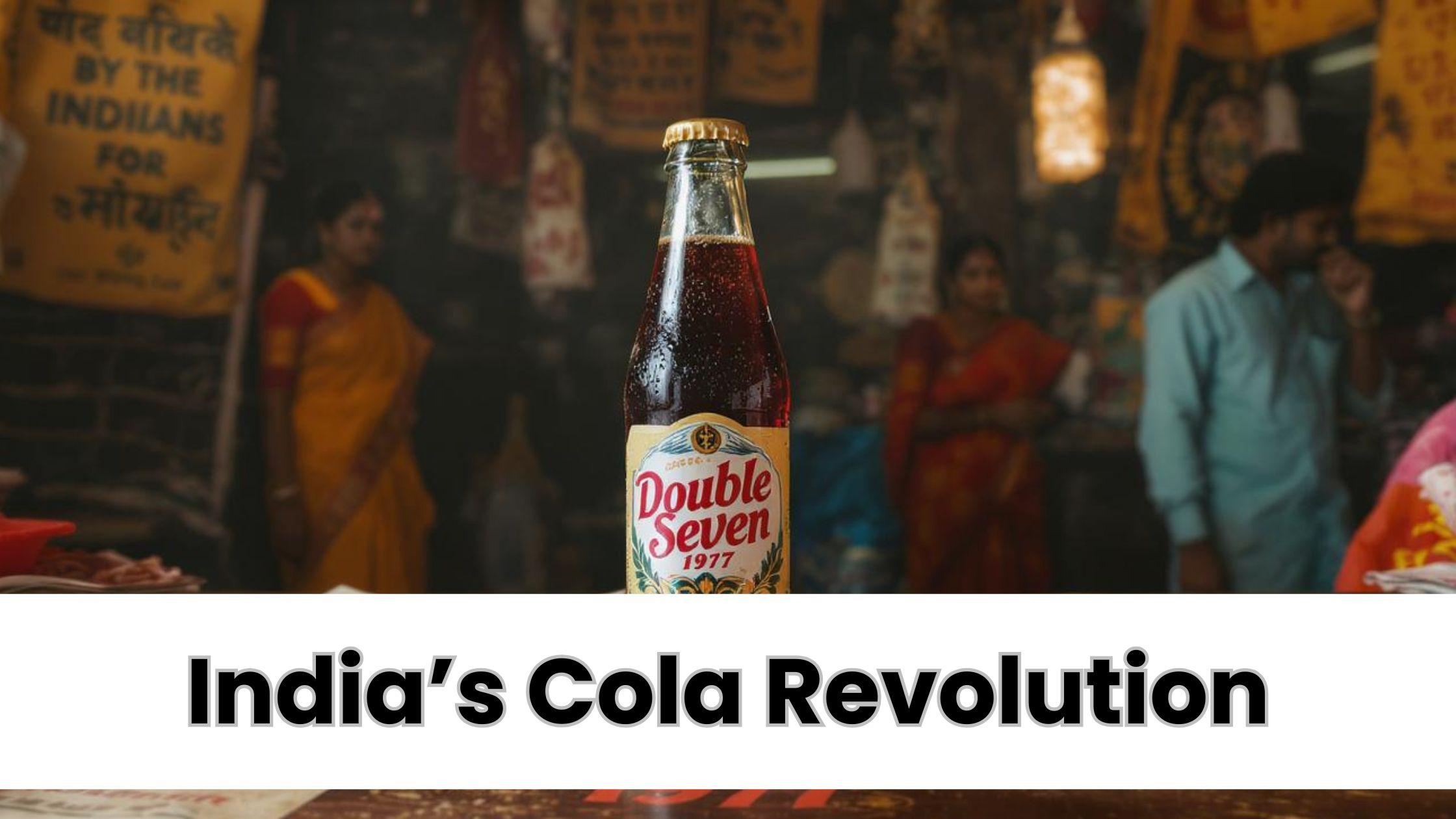
In 1977, India saw a unique attempt to create a homegrown cola with the launch of Double Seven, a government-backed brand. This initiative was a significant part of India’s Cola Revolution, aimed at reducing reliance on multinational corporations and promoting indigenous alternatives. Coca-Cola’s exit created a market gap, providing an opportunity for the government to introduce a cola representing patriotism and economic self-reliance.
Coca-Cola’s Exit and the Market Opportunity
Coca-Cola withdrew from India in 1977 due to government regulations requiring foreign companies to reduce equity stakes and disclose proprietary technology. By choosing to exit rather than comply, Coca-Cola left millions of consumers without their preferred soft drink. The Janata Party capitalized on this vacuum, launching Double Seven as a patriotic alternative to foreign brands while promoting India’s industrial self-reliance.
Development and Launch of Double Seven
Modern Food Industries, a government-owned company, spearheaded the production of Double Seven. The brand name commemorated the year 1977, marking the end of the Emergency period. Double Seven debuted at Pragati Maidan, New Delhi, with extensive government promotions highlighting it as a homegrown cola representing national pride and independence from foreign corporations.
Marketing Strategy and Nationalistic Messaging
The marketing of Double Seven focused on patriotism and government support. Posters, advertisements, and public fairs emphasized its status as a domestic alternative to foreign soft drinks. While this approach generated attention, it did not fully appeal to consumers seeking taste, flavor consistency, and brand experience, limiting its market reach.
Consumer Reception and Taste Challenges
Despite its patriotic branding, Double Seven faced challenges in consumer acceptance. Many consumers found its taste inferior compared to Coca-Cola and local competitors like Thums Up. The cola’s political associations reinforced perceptions that it was more of a government initiative than a beverage designed for consumer enjoyment, slowing adoption across both urban and rural areas.
Political Changes and Decline
With Indira Gandhi’s return to power in 1980, government backing for products associated with the Janata Party, including Double Seven, declined. Reduced promotion, combined with criticisms of flavor and brand identity, led to the cola’s gradual disappearance from the market.
Competition from Indian Brands
While Double Seven struggled, Indian cola brands such as Thums Up and Campa Cola captured consumer attention. Thums Up, with its strong taste and aggressive marketing targeting youth, became increasingly popular, while Campa Cola retained loyalty in northern and central India. These brands demonstrated that consumer preference often outweighs patriotic or political messaging in determining market success.
Cultural and Historical Significance
Although commercially short-lived, Double Seven remains a symbol of India’s attempts to assert economic independence during a politically transformative era. It reflects the intersection of politics, consumer culture, and commerce, illustrating how homegrown products face challenges when competing with established brands in taste and branding.
Lessons from Double Seven
Double Seven’s journey shows that patriotism and government backing alone cannot ensure market success. Consumer taste, branding, and marketing are critical for long-term viability. The story of Double Seven influenced future strategies for Indian brands competing with multinational corporations.
Read Full Article : https://bizinfopro.com/news/marketing-news/indias-cola-revolution-how-double-seven-replaced-coca-cola/
About Us : BizInfoPro is a modern business publication designed to inform, inspire, and empower decision-makers, entrepreneurs, and forward-thinking professionals. With a focus on practical insights and in‑depth analysis, it explores the evolving landscape of global business—covering emerging markets, industry innovations, strategic growth opportunities, and actionable content that supports smarter decision‑making.

 English
 Arabic
 French
 Spanish
 Portuguese
 Deutsch
 Turkish
 Dutch
Dutch
 Italiano
 Romaian
 Portuguese (Brazil)
 Greek
Greek
