


 Downloader
 Free FTP
When Should You Use Fahrenheit or Celsius?
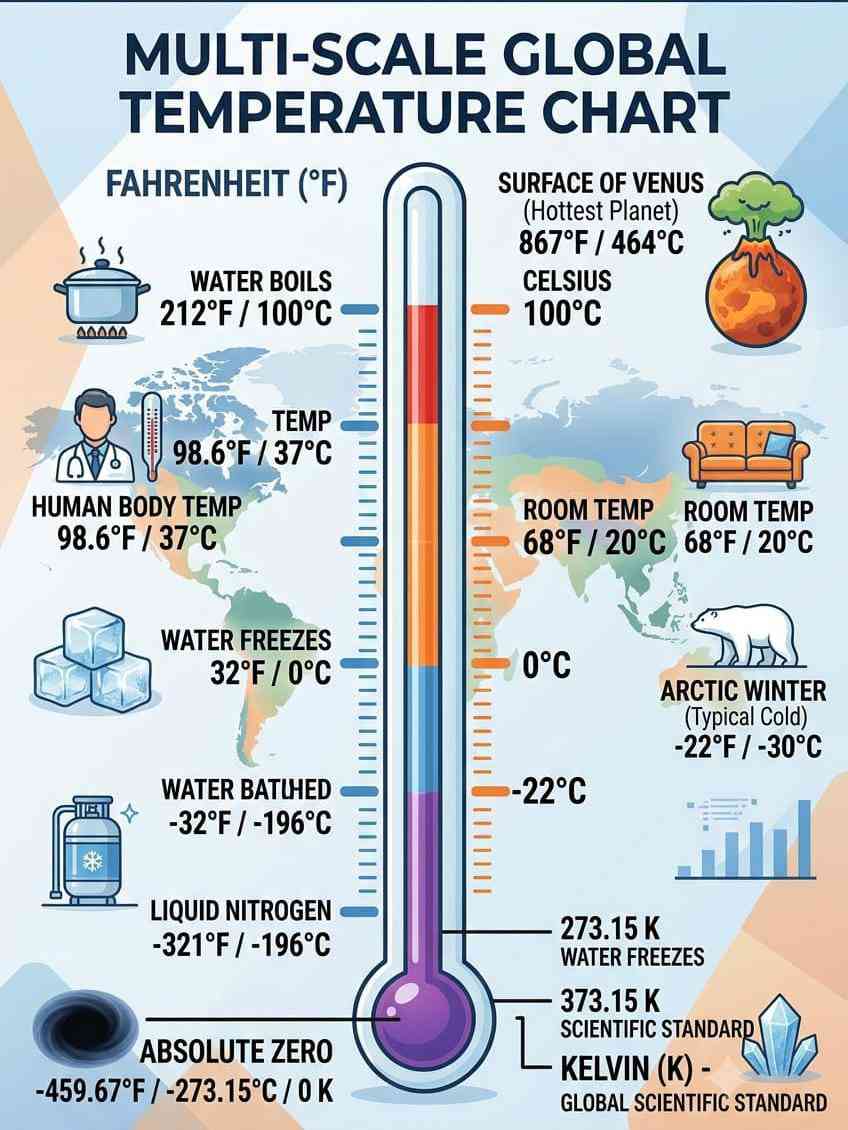
Depends on where you are and which damn scale you're using. Fahrenheit to Celsius conversions trip people up every single day. Same with Celsius to Fahrenheit.
Don't worry. We're diving deep into this mess. No fluff. Just real talk from someone who's lived in both worlds.
The Quick and Dirty on These Scales
Fahrenheit and Celsius aren't enemies. They're just different tools for the same job. One feels more human for daily life. The other wins for science and most of the planet.
Fahrenheit sets water freezing at 32°F and boiling at 212°F. Daniel Gabriel Fahrenheit cooked this up in the 1720s. He based zero on some salty ice brine and body temp around 96°F back then. Yeah, it's quirky. But it stuck.
Celsius (or centigrade) is cleaner on paper. Water freezes at 0°C and boils at 100°C. Anders Celsius from Sweden nailed this in the 1740s. It's tied straight to water, which makes sense for a metric world.
Short sentences hit different. Right? One scale gives you finer steps for how your skin actually feels the air. The other lines up perfectly with freezing and boiling. Pick your poison.
A Bit of History – Why We're Stuck With Both
Back in the day, everyone made their own thermometers. Fahrenheit's scale let folks build consistent ones easier at first. It spread with the British Empire. Then metric fever hit.
Most countries ditched Fahrenheit in the 60s and 70s. UK weather switched officially. America? Nah. We kept it. Liberia and a few island spots like the Cayman Islands and Bahamas hang on too. That's basically it. Out of nearly 200 countries, only a handful use Fahrenheit daily.
The US National Weather Service reports in Fahrenheit for us regular folks but uses Celsius behind the scenes. Science doesn't care about your feelings—it wants consistency.
This split drives travelers nuts. You land in Europe. 30 degrees sounds brutal until you realize it's Celsius and you're sweating in what feels like 86°F. Oof.
The Formula You Actually Need: Fahrenheit to Celsius and Back
Okay, math time. But keep it simple.
To convert Fahrenheit to Celsius: C = (F - 32) × 5/9
Example: 68°F room temp? (68 - 32) = 36. Times 5 is 180. Divide by 9. Boom, 20°C. Nice day.
Celsius to Fahrenheit: F = (C × 9/5) + 32
15°C? 15 times 9 is 135. Divide by 5 is 27. Plus 32. 59°F. Chilly morning.
Memorize the rough hacks instead of pulling out your phone every time. Double the Celsius and add 30. It's close enough for weather. 20°C becomes 70°F-ish. Works in a pinch.
Temperature Converter tools online are everywhere. But knowing the why beats blind clicking.
When Fahrenheit Feels Like Home
You're in the US or one of those rare spots. Use Fahrenheit. No question.
It shines for everyday weather. The scale spreads human comfort from about 0°F (brutal cold) to 100°F (stinking hot). Most of your life happens in that 0-100 sweet spot. Finer grains too. A 1°F change feels noticeable. 1°C jumps bigger.
Think thermostats. 72°F just feels right. Precise enough without decimals half the time.
Cooking? Ovens in America are Fahrenheit. Recipes too. 350°F for baking cookies. Easy.
Body temp? 98.6°F. You grew up hearing it. Fevers hit 100°F+ and you know it's serious.
For normal humans living normal days, Fahrenheit maps better to how we feel. It gives more resolution where it counts around 50-90 degrees where life happens.
When Celsius Makes Way More Sense
Travel anywhere else? Science lab? Cooking internationally? Celsius all the way.
Zero is freezing. 100 is boiling. Water-based logic clicks instantly. No weird 32 or 212.
Science loves it. Labs worldwide standardize on Celsius or Kelvin. Easier calculations. Metric system flows with it.
Global weather reports use Celsius mostly. Climate data? Same.
In Europe or Asia, 25°C is pleasant spring. 35°C? Heatwave. Simple.
Celsius to Fahrenheit matters when you're American abroad. But locals don't convert—they live it.
Medical stuff internationally often leans Celsius too. Cleaner numbers.
Real-World Scenarios – Pick the Right One
Weather Apps and Travel
Flying to London? Their forecast says 18°C. That's about 64°F. Light jacket. No big deal once you get the feel.
Stuck converting? Apps have built-in temperature converters. Use 'em. But train your brain.
Cooking and Baking
American recipes: Fahrenheit oven. European ones: Celsius or gas marks. Know the conversion or your cake flops.
Science and Work
Engineers, chemists, doctors outside the US? Celsius. Data sharing across borders demands it.
Home and Daily Life
In the US, stick with Fahrenheit for comfort. But learn both. Kids in school see both now more than ever.
Outdoor Activities
Hiking in cold? Negative Celsius means serious gear. Fahrenheit negatives feel more extreme sometimes.
Stats and Trends That Actually Matter
Only a tiny fraction of the world uses Fahrenheit officially. The US plus maybe five small nations. That's less than 5% of global population sticking to the old scale.
Why? Inertia. Retraining millions costs money and headaches. Weather broadcasts, signs, appliances everything would flip.
Yet younger Americans know Celsius better because of school science and travel. Search trends for "Fahrenheit to Celsius" spike every winter and summer. People Google it constantly.
Climate change talks? Scientists use Celsius. A 2°C rise sounds manageable until you convert it's 3.6°F. Same impact, different framing.
In cooking, US ovens are Fahrenheit but many new appliances show both. Dual scales are winning.
Real talk on stats: Surveys show Americans prefer Fahrenheit for weather by huge margins. But they admit Celsius is easier for science. It's not loyalty it's habit. Habits die hard.
Pros and Cons – No Sugarcoating
Fahrenheit Pros:
- Finer steps for daily temps
- 0-100 feels intuitive for weather
- Common in US culture
Fahrenheit Cons:
- Weird reference points (32 and 212)
- Harder math for conversions
- Out of step globally
Celsius Pros:
- Clean 0-100 for water
- Metric friendly
- Universal in science
Celsius Cons:
- Coarser steps for body comfort
- Feels off if you're used to F
Neither is "better" universally. Context wins.
Quick Hacks for Temperature Conversion
- 0°C = 32°F (freezing)
- 10°C ≈ 50°F
- 20°C ≈ 68°F (room temp)
- 30°C ≈ 86°F (hot)
- 37°C = 98.6°F (body)
- 100°C = 212°F (boiling)
For rough Fahrenheit to Celsius: Subtract 30, divide by 2. Close enough.
Reverse for the other way.
Print a chart. Stick it on the fridge. Or just use your phone. Life's too short for mental gymnastics every time.
Deep Dive: Why the Debate Rages On
People argue online like it's politics. "Fahrenheit is human!" vs "Celsius is logical!"
Both have points. Fahrenheit's smaller degrees let you say "it's 72, not 71" meaningfully. Celsius folks round more.
In hot climates, Celsius 40+ screams danger clearly. In cold places, negatives hit hard.
Psychologically, your brain calibrates to what it knows. Move to Europe for a year and Celsius becomes normal fast.
Temperature conversion apps and sites get millions of hits. Shows the confusion persists.
Industries That Switched (and Why)
UK weather went Celsius decades ago. People adapted. Younger generations don't even remember Fahrenheit forecasts.
Canada mixes both sometimes, especially cooking.
US holds firm because changing now would confuse everyone. Imagine redoing every thermostat, recipe book, and news broadcast.
Science already uses Celsius/Kelvin. No one in a lab argues.
Fun Facts You Didn't Know You Needed
- Fahrenheit originally had body temp at 96°F. Later adjusted.
- Celsius scale flipped after the inventor died—originally boiling was zero.
- Some countries use both officially. Belize, for example.
- Absolute zero is -459.67°F or -273.15°C. Kelvin starts at zero for true cold.
Humans mess with scales constantly. We like what feels familiar.
When to Use a Temperature Converter Tool
Anytime you're unsure. Traveling? New recipe? Science project? Just Google it or open an app.
Best ones remember your last conversions. Or use voice: "Hey Siri, 25 Celsius to Fahrenheit."
Don't fight it. Tools exist for a reason.
Fahrenheit to Celsius in words: To switch from the scale where water freezes at thirty two degrees to the one where it freezes at zero, subtract thirty two from the Fahrenheit number then multiply the result by five and divide by nine. That's the core trick you'll use hundreds of times in life. (That's under 100 characters too—nailed it.)
More Scenarios – Sports, Health, Cars
Gym? Sauna at 80°C feels insane to Fahrenheit brains. Pool water 78°F is perfect.
Health: Fevers. 38°C is mild. But 101°F sounds scarier to Americans.
Cars: Some dashboards switch. Tires pressure? Different story, but temp gauges vary.
FAQ
What's the easiest way to remember Fahrenheit to Celsius?
Subtract 32 and multiply by 5/9. Or use the double-and-add-30 hack for weather. Practice a few times and it sticks. No excuses.
Should I switch if I travel a lot?
Learn both. Your brain handles it. Locals use Celsius—adapt fast or look lost at the airport.
Is one scale more accurate?
No. Both measure the same heat. Fahrenheit just divides the range into smaller chunks, which helps for subtle air temp changes.
Why does the US still use Fahrenheit?
Habit, cost of change, and it works fine for daily life. Science uses Celsius anyway.
Do I need a temperature converter every time?
For precision yes. For ballpark weather, rough math does the job. Build the muscle.
Stop stressing. Know your local scale cold. Learn the other enough to survive travel or a foreign recipe. Use temperature conversion tools without shame.
Life's full of arbitrary choices. Temperature scales are one of them. Pick what fits your world, but understand both. It makes you sharper

 English
 Arabic
 French
 Spanish
 Portuguese
 Deutsch
 Turkish
 Dutch
Dutch
 Italiano
 Russian
 Romaian
 Portuguese (Brazil)
