


 Downloader
 Free FTP
Data Analytics Career Roadmap for Freshers
Introduction
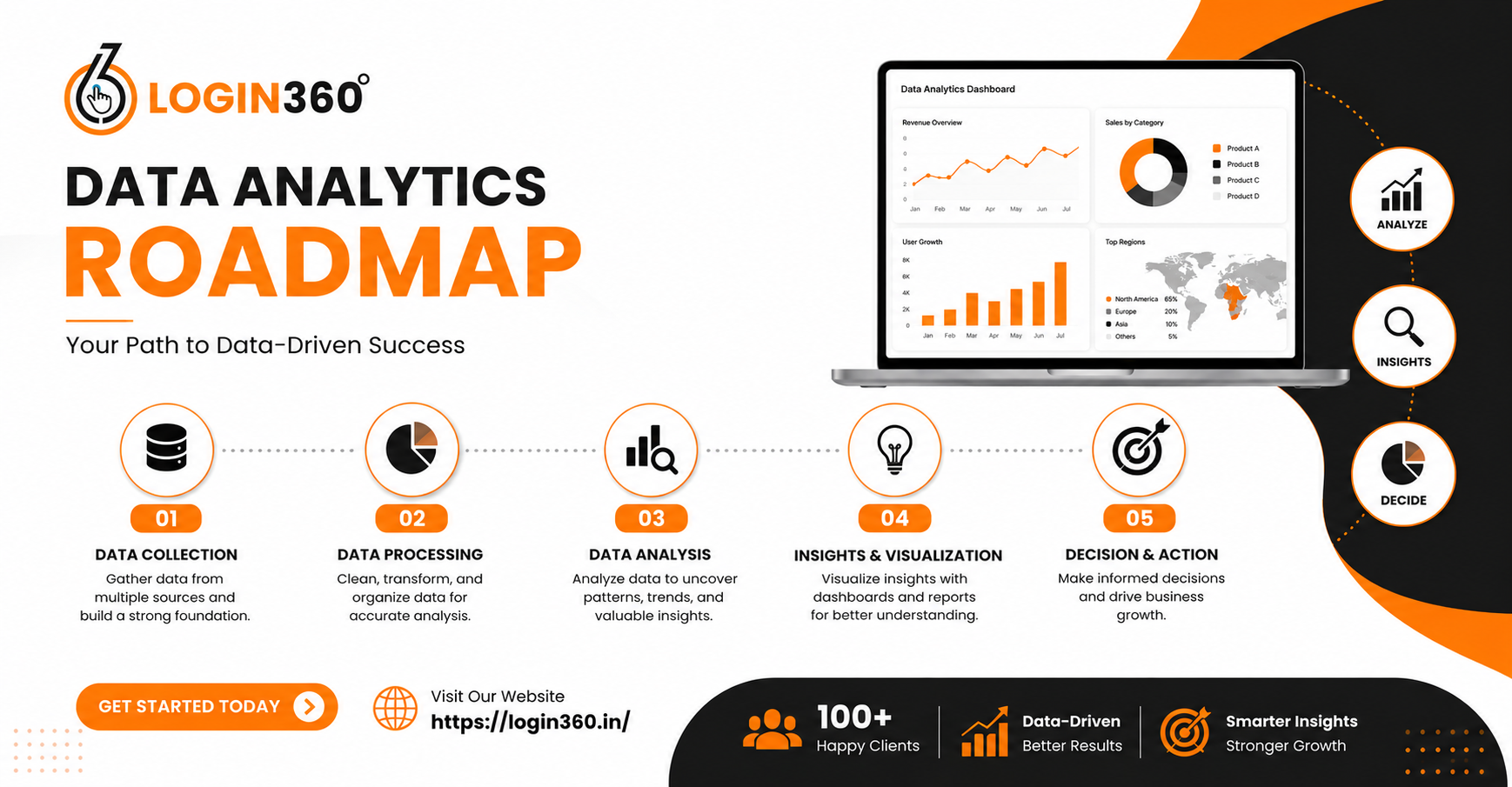
Data analytics has become one of the most exciting career opportunities for fresh graduates who want to enter the world of technology and business intelligence. Every organization today relies on data to understand customer preferences, improve operational efficiency, increase revenue, and make strategic decisions. From small startups to multinational corporations, companies are actively hiring professionals who can transform raw data into meaningful business insights. This growing demand has opened countless opportunities for freshers who are willing to learn the right skills and gain practical experience. Although the field may appear challenging at first, following a structured career roadmap helps beginners progress step by step and become industry-ready. With dedication, continuous learning, and hands-on practice, freshers can build a successful and rewarding career in data analytics.
Understand How Data Analytics Works
The first stage of the roadmap is understanding the complete process of data analytics. Freshers should learn how businesses gather information from different sources, organize large datasets, clean inaccurate records, analyze trends, and generate reports for decision-making. Understanding the purpose of analytics helps beginners recognize how data influences business growth and operational success. It is equally important to study the four major types of analytics: descriptive analytics, which explains past events; diagnostic analytics, which identifies reasons behind outcomes; predictive analytics, which forecasts future trends; and prescriptive analytics, which recommends the best possible actions. A clear understanding of these concepts creates a strong foundation for advanced learning.
Master the Essential Software and Programming Skills
Once the basics are clear, freshers should focus on acquiring technical skills that are commonly required in the industry. Microsoft Excel is an excellent starting point because it introduces data organization, formulas, functions, charts, and reporting techniques. After Excel, SQL becomes essential since it is the primary language used to access and manage information stored in databases. Learning Python further enhances analytical capabilities by enabling automation, data processing, statistical analysis, and visualization. Becoming comfortable with these tools not only improves technical confidence but also prepares freshers to handle real business datasets efficiently.
Build a Strong Understanding of Statistics
Statistics forms the backbone of data analytics because it helps professionals interpret numerical information accurately. Freshers should develop a solid understanding of concepts such as mean, median, mode, probability, standard deviation, correlation, regression, and hypothesis testing. These statistical techniques help analysts identify meaningful patterns, compare business performance, and make data-driven decisions. Strong statistical knowledge also improves logical reasoning and allows professionals to solve business problems using objective analysis rather than assumptions.
Learn to Visualize Business Insights
One of the most valuable responsibilities of a data analyst is presenting information in a clear and visually appealing manner. Business executives often rely on dashboards and graphical reports to monitor organizational performance and make informed decisions. Learning visualization tools such as Power BI or Tableau helps freshers convert complex datasets into interactive dashboards that are easy to understand. Effective visual communication enables organizations to identify trends, monitor key performance indicators, and discover growth opportunities quickly. Strong visualization skills also improve storytelling, making analytical findings more impactful during presentations.
Gain Hands-On Experience Through Practical Projects
Practical experience is one of the biggest advantages for freshers entering the job market. Working on projects allows students to apply theoretical concepts to real-world business scenarios while improving technical and problem-solving abilities. Freshers should practice analyzing datasets related to sales, finance, customer behavior, healthcare, marketing, or supply chain management. Creating dashboards, identifying business insights, and presenting recommendations help build confidence and strengthen professional portfolios. Recruiters often give preference to candidates who can demonstrate practical skills through well-documented projects rather than relying solely on academic qualifications.
Develop Professional Skills for Workplace Success
Technical knowledge alone is not sufficient for a successful career in data analytics. Professionals must also possess excellent communication, collaboration, and critical-thinking abilities. Freshers should learn how to explain complex analytical findings in simple language that business stakeholders can understand. Developing presentation skills, teamwork, adaptability, and business awareness enables analysts to work effectively across departments. Understanding how organizations operate and aligning analytical recommendations with business goals significantly increases professional value and career growth opportunities.
Continue Learning and Stay Updated
The analytics industry is constantly evolving with innovations in artificial intelligence, machine learning, cloud computing, and business intelligence. Freshers should cultivate a habit of continuous learning by completing professional certifications, attending industry seminars, participating in webinars, and exploring emerging technologies. Staying updated with the latest trends helps professionals remain competitive and prepares them for advanced career opportunities. Continuous improvement demonstrates dedication, adaptability, and a willingness to grow—qualities that employers highly appreciate.
Conclusion
A successful career in data analytics begins with a commitment to learning, consistent practice, and a clear development plan. Freshers who focus on understanding the fundamentals, mastering essential tools, strengthening statistical knowledge, building practical projects, and improving communication skills create a solid foundation for long-term success. As businesses increasingly depend on data-driven decision-making, the demand for qualified data analysts will continue to expand across industries. By following a structured roadmap and embracing lifelong learning, freshers can confidently build a stable, rewarding, and future-ready career in the dynamic field of data analytics.

 English
 Arabic
 French
 Spanish
 Portuguese
 Deutsch
 Turkish
 Dutch
Dutch
 Italiano
 Russian
 Romaian
 Greek
Greek
