


 Downloader
 Free FTP
Promote Your Product
Got a product, service, or story to share? Promote it directly to our active community and boost your brand today.
Create an Ad
Publish Bulk Blog Posts
Boost Your Reach! 📝
Have articles, guest posts, or bulk stories to publish? Send your content directly to our editorial team and feature on our platform.
Email Us Your PostsFull Stack Development for Startups: Building Faster and Smarter
Introduction
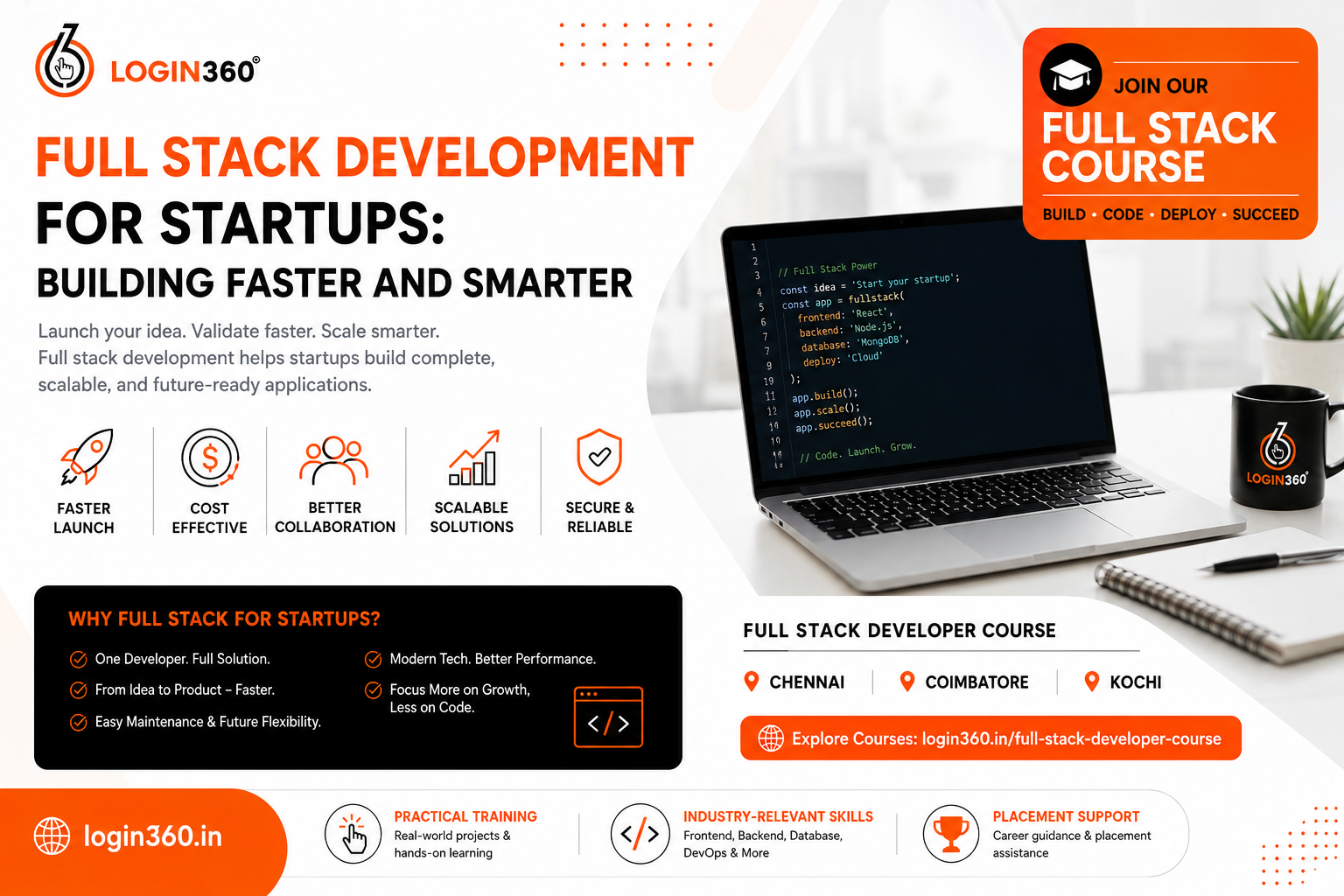
Launching a startup is exciting, but it also comes with several challenges. Founders need to build products quickly, manage limited budgets, and respond to customer feedback without wasting time or resources. In today's fast-moving digital world, businesses cannot afford long development cycles or complex workflows. They need a development approach that is flexible, efficient, and capable of delivering quality applications in a short period. This is why full stack development has become the preferred choice for many startups. Full stack development refers to building both the front-end and back-end of a web application. A full stack developer has the skills to design user interfaces, write server-side logic, manage databases, integrate APIs, and deploy applications. Instead of dividing work among multiple specialists, startups can rely on a smaller team that understands the complete development process. This approach helps businesses save time, reduce costs, and bring innovative ideas to market much faster.
The Growing Importance of Full Stack Development
The startup ecosystem is becoming increasingly competitive. Every day, new companies introduce products and services that aim to solve real-world problems. To stay ahead, startups must release products quickly while maintaining high quality and excellent user experiences. Full stack development supports this goal by enabling faster development without sacrificing performance or scalability. Because full stack developers understand the complete architecture of an application, they can move between different parts of a project with ease. Whether it is designing responsive web pages, building secure APIs, or optimizing databases, they can manage every stage of development efficiently. This versatility allows startups to adapt quickly whenever business requirements change.
Faster Product Development
One of the biggest reasons startups invest in full stack development is speed. Time plays a crucial role in determining whether a business succeeds or falls behind competitors. Releasing a Minimum Viable Product (MVP) early allows startups to validate their ideas, gather customer feedback, and improve the product before making larger investments. A full stack developer can build both the client side and server side of an application, reducing the delays that often occur when multiple teams work separately. Since communication barriers are minimized, features can be developed, tested, and deployed much faster. This faster workflow enables startups to respond quickly to market demands and continuously improve their products.
Reducing Development Costs
Budget constraints are common for startups, especially during the early stages of business growth. Hiring separate experts for front-end development, back-end development, database management, and deployment can significantly increase project expenses. Full stack development offers a practical solution because one developer can contribute across multiple areas of the application. While larger organizations may still require specialized teams, startups benefit from having professionals who can perform diverse technical tasks. Lower development costs allow businesses to invest more in marketing, customer support, product research, and business expansion.
Better Communication and Team Efficiency
Successful software development depends on effective communication. When different teams handle separate parts of a project, misunderstandings and delays can occur. Full stack developers reduce this problem because they understand how every component of the application works together. They can quickly identify technical issues, coordinate changes across the system, and ensure consistent coding practices throughout the project. This leads to better productivity, fewer development errors, and smoother collaboration among team members. As a result, startups can complete projects more efficiently while maintaining high software quality.
Technologies Behind Full Stack Development
Modern full stack development combines several powerful technologies that work together to build secure and scalable applications. These technologies continue to evolve, helping developers create faster, smarter, and more reliable digital products.
Some commonly used technologies include:
-
HTML, CSS, and JavaScript for creating responsive user interfaces
-
React, Angular, or Vue.js for modern front-end development
-
Node.js and Express.js for building fast back-end applications
-
MongoDB, MySQL, and PostgreSQL for efficient data management
-
Git, Docker, and cloud platforms for deployment, collaboration, and version control
Learning these technologies enables developers to build complete applications capable of serving businesses of every size.
Building Scalable Applications
Every successful startup hopes to grow its customer base over time. As more users begin using an application, the software must continue delivering a smooth and reliable experience. Full stack development supports scalability by allowing developers to improve both the front-end and back-end whenever required. Developers can optimize database performance, strengthen server infrastructure, improve application security, and integrate additional services without rebuilding the entire project. This flexibility ensures that startups remain prepared for future growth while minimizing technical challenges.
Improved Security and Performance
Security is no longer optional in software development. Customers expect businesses to protect their personal information and maintain reliable online services. Full stack developers understand the security requirements of both client-side and server-side applications, making it easier to implement comprehensive protection measures. From secure authentication systems and encrypted communication to API security and input validation, full stack developers help reduce security risks across the application. They also improve performance by optimizing code, reducing loading times, and enhancing server efficiency. Better security and performance contribute to higher customer satisfaction and stronger business credibility.
Preparing Startups for the Future
Technology continues to change rapidly with the adoption of artificial intelligence, cloud computing, automation, and advanced analytics. Startups that build flexible applications today will find it much easier to adopt these emerging technologies in the future. Full stack development creates a strong technical foundation that supports continuous innovation. Businesses can introduce new features, improve user experiences, integrate third-party services, and expand into new markets without completely redesigning their software. This adaptability allows startups to remain competitive in an ever-changing digital landscape.
Conclusion
Full stack development has transformed the way startups build and launch digital products. By combining front-end and back-end expertise into a single development approach, startups can reduce costs, accelerate product launches, improve collaboration, strengthen application security, and prepare for long-term growth. These advantages make full stack development one of the most practical solutions for businesses looking to innovate quickly and compete effectively. As the demand for modern web applications continues to increase, companies are actively seeking professionals who can manage complete software development projects from beginning to end. For aspiring developers and startup founders alike, understanding full stack development is a valuable investment that opens the door to exciting career opportunities and successful digital products. With the right skills, tools, and practical experience, building faster and smarter applications becomes not only achievable but also a significant competitive advantage.

 Arabic
 French
 Spanish
 Portuguese
 Deutsch
 Turkish
 Dutch
Dutch
 Italiano
 Russian
 Romaian
 Portuguese (Brazil)
 Greek
Greek
