


 Downloader
 Free FTP
Career Opportunities After Learning Data Analytics
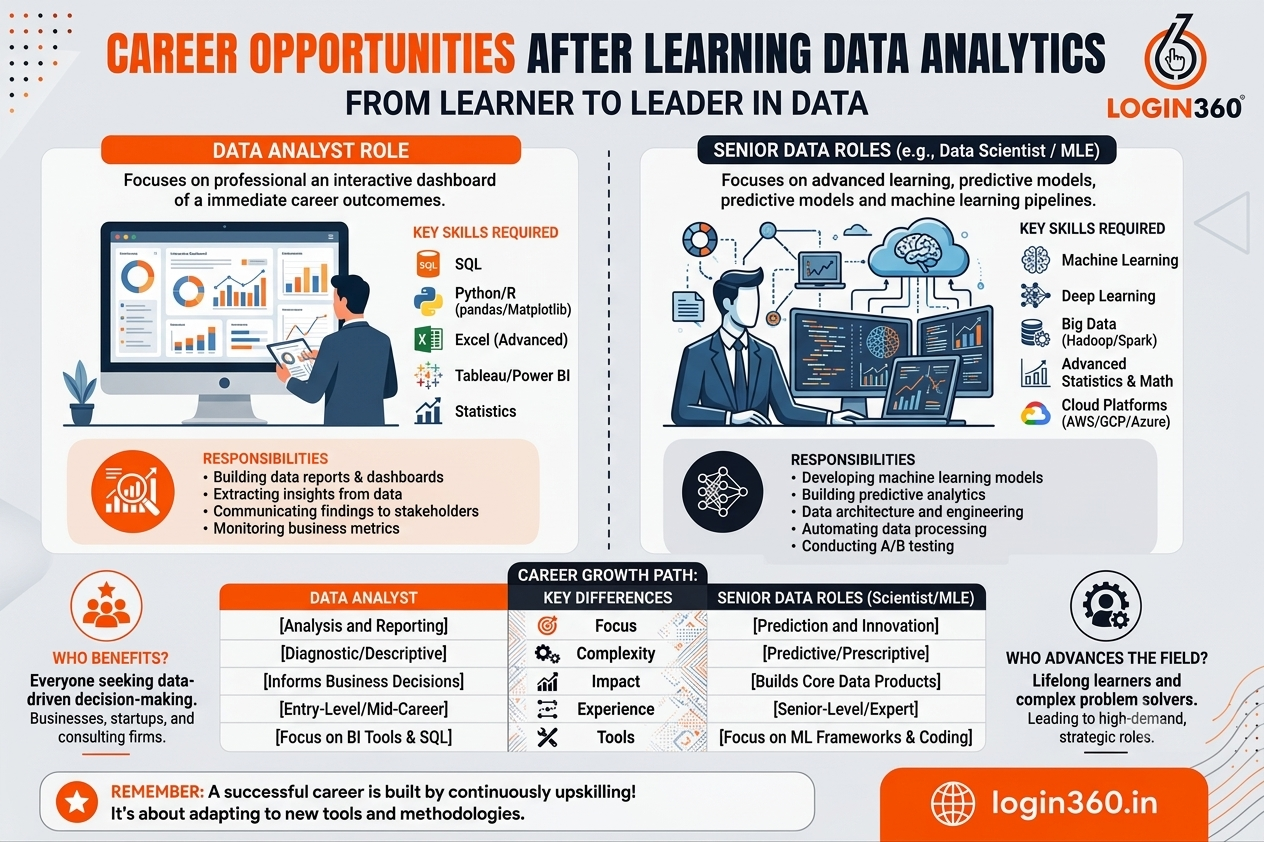
Introduction
The world is producing more data than ever before. Every online purchase, social media interaction, mobile app usage, and business transaction creates valuable information. Companies use this data to understand customer preferences, improve products, reduce operational costs, and make smarter business decisions. However, turning raw data into meaningful insights requires skilled professionals who understand data analytics. This growing dependence on data has created exciting career opportunities for individuals with analytical skills. Whether you're a recent graduate, an IT professional looking to upskill, or someone planning a career change, learning data analytics can help you enter one of the fastest-growing fields in today's job market. In this blog, we'll explore the career opportunities after learning data analytics, the skills you need to succeed, and how this field can lead to long-term professional growth.
Why Choose a Career in Data Analytics?
Organizations across every industry are embracing data-driven decision-making. Instead of relying on assumptions, businesses now use data to solve problems, improve customer satisfaction, and increase profitability. This shift has made data analytics an essential function in almost every organization. Companies are actively looking for professionals who can collect, process, analyze, and present data in a way that supports strategic decision-making. Unlike many specialized careers, data analytics offers opportunities in multiple sectors, making it an attractive option for professionals with different educational backgrounds.
1. Data Analyst
A Data Analyst is responsible for transforming raw information into useful business insights. They gather data, clean datasets, perform analysis, and create reports that help organizations make informed decisions.
Primary Responsibilities
-
Collect and organize data
-
Analyze business trends
-
Prepare reports and dashboards
-
Support decision-making with data insights
2. Business Intelligence (BI) Analyst
Business Intelligence Analysts focus on helping organizations monitor performance through interactive dashboards and reporting systems. They convert complex datasets into easy-to-understand visual reports for business leaders.
Common tools include:
-
Power BI
-
Tableau
-
SQL
-
Microsoft Excel
3. Business Analyst
Business Analysts identify business challenges and recommend solutions using data. They communicate with stakeholders, gather requirements, and help organizations improve efficiency through informed decision-making. Professionals with strong analytical and communication skills often excel in this position.
4. Data Visualization Specialist
Not everyone can understand spreadsheets filled with numbers. Data Visualization Specialists simplify complex information by creating charts, graphs, and interactive dashboards. Their work helps executives quickly understand business performance and identify trends.
5. Marketing Analyst
Marketing teams rely heavily on customer data to measure campaign performance and understand consumer behavior. Marketing Analysts evaluate this information to improve digital marketing strategies and increase customer engagement.
-
Website traffic analysis
-
Campaign performance tracking
-
Customer segmentation
-
Conversion optimization
6. Financial Data Analyst
Financial Data Analysts examine financial information to support investment decisions, budgeting, forecasting, and risk management. Banks, insurance companies, investment firms, and corporate finance departments regularly recruit professionals for these positions.
7. Operations Analyst
Operations Analysts use data to improve business processes, reduce costs, and increase productivity. They identify inefficiencies and recommend solutions that help organizations operate more effectively. This role is especially valuable in manufacturing, logistics, and supply chain industries.
8. Product Analyst
Technology companies hire Product Analysts to evaluate how customers interact with digital products. They analyze user behavior, monitor product performance, and provide recommendations for future improvements. Product Analysts play a significant role in enhancing customer experience and increasing product success. Essential Skills for a Successful Data Analytics Career Building a successful career requires more than learning software tools. Employers look for candidates who can solve problems, communicate effectively, and make data-driven recommendations.
Some of the most valuable skills include:
-
SQL
-
Microsoft Excel
-
Python
-
Power BI
-
Tableau
-
Data Cleaning
-
Data Visualization
-
Statistics
-
Critical Thinking
-
Business Communication
Industries That Offer Data Analytics Jobs
One of the greatest advantages of learning data analytics is the wide range of industries that require these skills.
Some of the top hiring industries include:
-
Information Technology
-
Banking and Financial Services
-
Healthcare
-
Retail
-
E-commerce
-
Manufacturing
-
Telecommunications
-
Education
-
Logistics
-
Digital Marketing
-
Consulting
Career Growth and Advancement
Data analytics is an excellent starting point for professionals who want to build long-term careers in technology and business.
-
Junior Data Analyst
-
Data Analyst
-
Senior Data Analyst
-
Analytics Consultant
-
Business Intelligence Developer
-
Data Scientist
-
Machine Learning Engineer
-
Analytics Manager
-
Chief Data Officer
Tips to Increase Your Employability
Completing a data analytics course is just the beginning. To stand out during job interviews, focus on developing practical skills alongside theoretical knowledge.
Here are a few effective tips:
-
Practice SQL queries daily.
-
Build real-world analytics projects.
-
Learn Power BI and Tableau.
-
Create a professional portfolio.
-
Earn industry-recognized certifications.
-
Participate in data analytics competitions.
-
Stay updated with the latest industry trends.
-
Improve communication and presentation skills.
A strong portfolio often makes a greater impression than simply listing certifications on a resume.
Conclusion
The career opportunities after learning data analytics continue to grow as businesses increasingly rely on data to drive innovation and make informed decisions. From Data Analyst and Business Intelligence Analyst to Marketing Analyst, Product Analyst, and Data Scientist, the field offers diverse roles with excellent career prospects. As organizations continue their digital transformation, professionals with data analytics expertise will remain in high demand. By mastering industry-standard tools, working on practical projects, and continuously expanding your skills, you can build a rewarding and future-ready career in this dynamic field. Whether you're starting your professional journey or planning a career transition, investing in data analytics today can unlock countless opportunities tomorrow.

 English
 Arabic
 French
 Spanish
 Portuguese
 Deutsch
 Turkish
 Dutch
Dutch
 Italiano
 Russian
 Portuguese (Brazil)
 Greek
Greek
