


 Downloader
 Free FTP
Paint Industry Set Up: Required Licenses, Factory Registration & Pollution Control Approvals
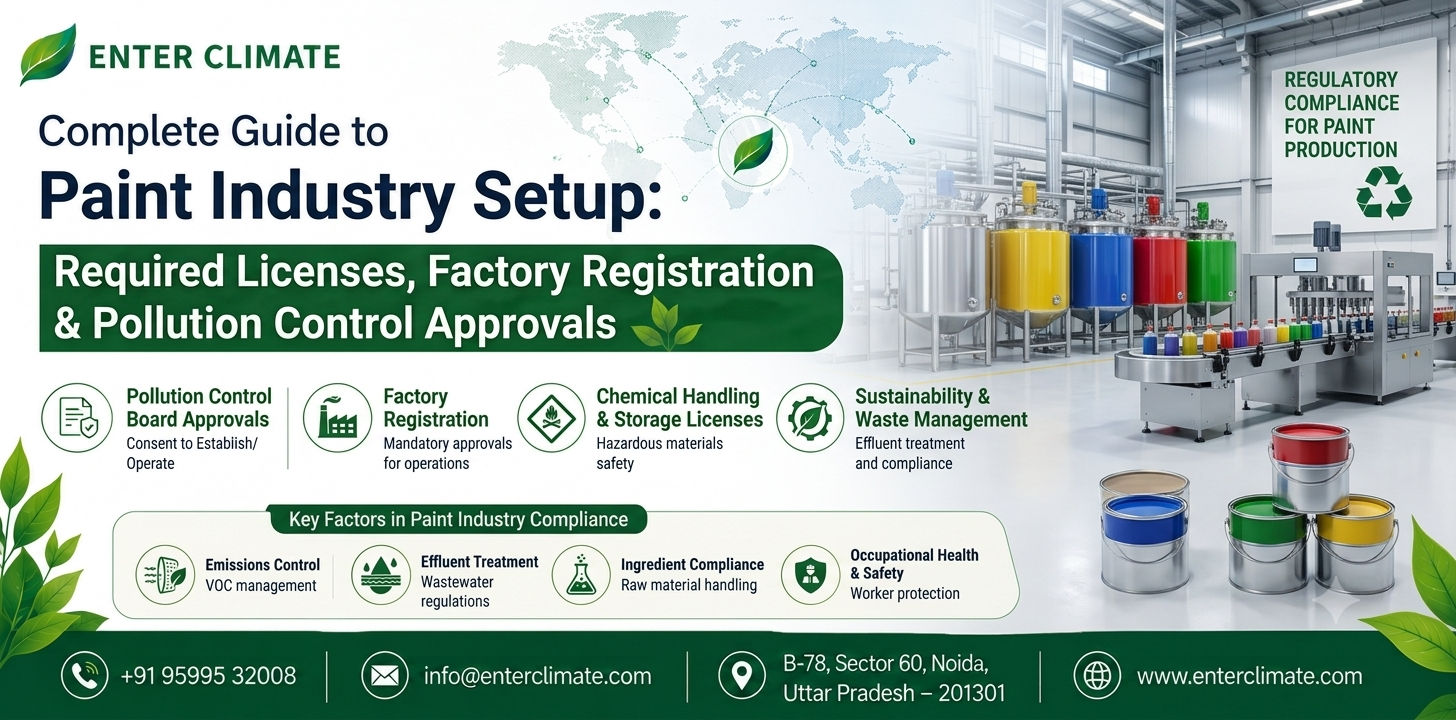
Starting a paint industry set up in India is a great business idea because paints are used in homes, offices, factories, schools, and many other places. As construction and infrastructure projects continue to grow, the demand for quality paints is also increasing.
However, setting up a paint manufacturing unit is not only about buying machines and hiring workers. You also need to complete several legal approvals and environmental compliances before production begins.
Why Are Licenses Important?
Paint manufacturing involves the use of chemicals, solvents, pigments, and other raw materials. These materials can affect the environment if they are not handled properly.
The Government of India requires manufacturers to obtain various approvals to ensure that the factory follows safety, pollution control, and environmental regulations.
Having the right licenses also helps businesses avoid penalties, production delays, and legal issues.
Essential Licenses for Paint Industry Set Up
1. Business Registration
The first step is registering your business as a Proprietorship, Partnership, LLP, or Private Limited Company. This gives your business legal recognition.
2. Factory License
If your manufacturing unit comes under the provisions of the Factories Act, you must obtain a Factory License from the concerned authority before starting operations.
3. Pollution Control Board Consent
One of the most important approvals for a paint industry set up is obtaining Consent to Establish (CTE) and Consent to Operate (CTO) from the State Pollution Control Board.
These approvals ensure that your factory follows environmental standards for:
-
Air pollution control
-
Water pollution management
-
Waste disposal
-
Noise control
Without these approvals, production cannot legally begin.
4. Fire Safety Approval
Since paints often contain flammable chemicals, obtaining Fire Department approval is essential. Proper fire protection systems help keep workers and the factory safe.
5. Hazardous Waste Authorization
Paint manufacturing generates hazardous waste. Businesses must obtain authorization for proper storage, transportation, and disposal of hazardous waste according to environmental regulations.
6. GST Registration
GST registration is required for tax compliance and smooth business operations across India.
Factory Registration Process
The factory registration process generally includes:
-
Choosing a suitable industrial location
-
Preparing the factory layout
-
Installing pollution control systems
-
Applying for Factory License
-
Obtaining Pollution Control Board approvals
-
Completing fire safety compliance
-
Starting commercial production after receiving all required permissions
Following the correct process helps avoid unnecessary delays.
Importance of Pollution Control
Environmental compliance is an important part of every manufacturing business today.
For a paint factory, pollution control measures may include:
-
Air filtration systems
-
Effluent treatment facilities
-
Safe chemical storage
-
Hazardous waste management
-
Employee safety measures
Proper environmental management not only protects nature but also improves the company's reputation.
Similar Manufacturing Projects
Many industrial projects require environmental approvals similar to a paint industry set up.
For example, businesses planning a chlor alkali plant Set Up must obtain environmental clearances, pollution control approvals, and factory registrations because chemical manufacturing involves strict compliance requirements.
Likewise, a Cement manufacturing plant set up requires multiple government approvals due to dust emissions, mining regulations, and environmental management obligations.
Similarly, entrepreneurs planning a Calcium Carbide Manufacturing unit set up must comply with pollution control norms, factory licensing, hazardous chemical handling regulations, and worker safety standards before production begins.
Although every industry has different manufacturing processes, the basic compliance framework remains almost the same.
Why Professional Compliance Support Helps
Government approvals involve documentation, technical reports, inspections, and regulatory procedures. Missing even a single document can delay your project.
Working with experienced environmental compliance professionals helps businesses complete registrations correctly and start operations faster.
Companies like Enterclimate provide end-to-end assistance for industrial project setup, pollution control approvals, factory licensing, environmental clearances, and various statutory registrations across India.
Conclusion
A successful paint industry set up requires more than just investment in machinery. Businesses must also obtain the required licenses, factory registration, pollution control approvals, and environmental clearances before starting production.
By completing all legal compliances on time and following environmental regulations, manufacturers can build a safe, sustainable, and successful business for the future.
Author Profile
Upendra Sharma is an Environmental Compliance Consultant with extensive experience in industrial licensing, pollution control approvals, factory registration, environmental clearances, and regulatory compliance for manufacturing industries across India. He regularly writes informative articles to help entrepreneurs understand government approvals in simple language. Through his association with Enterclimate, he supports businesses in obtaining timely environmental and industrial approvals for smooth project execution.

 English
 Arabic
 French
 Spanish
 Portuguese
 Deutsch
 Turkish
 Italiano
 Russian
 Romaian
 Portuguese (Brazil)
 Greek
Greek
