


 Downloader
 Free FTP
Launching a Digital Property Marketplace with Real Estate Tokenization Platform Development
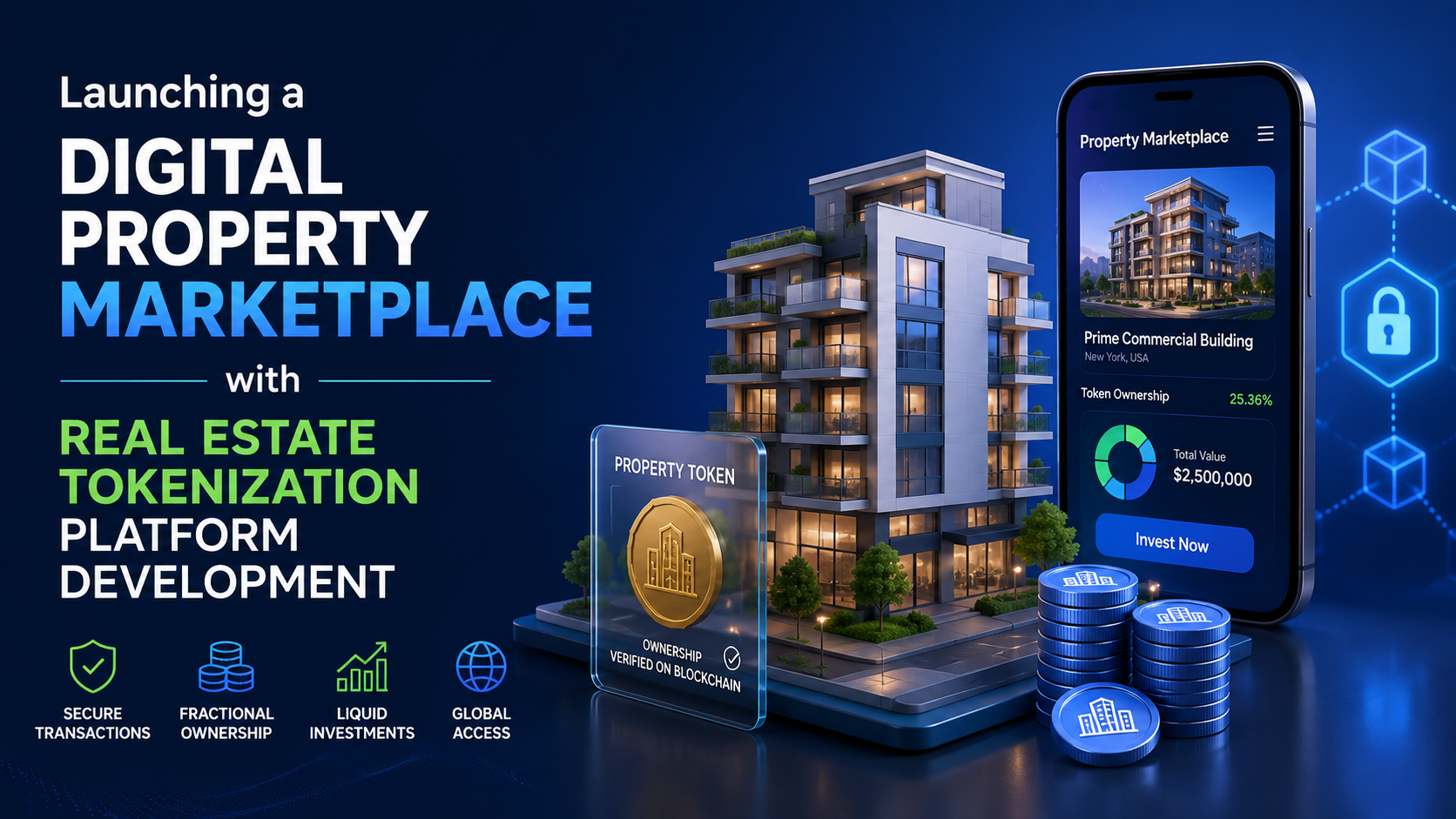
The real estate sector has always attracted investors seeking long-term value and stable returns. However, traditional property investment often comes with high entry costs, lengthy transactions, limited liquidity, and complicated ownership structures. Digital property marketplaces are changing this situation by connecting property owners and investors through blockchain-backed platforms where real estate assets can be divided into digital shares.
A well-planned marketplace allows investors to access commercial, residential, industrial, and mixed-use properties from different regions without purchasing an entire asset. Property owners also gain new funding opportunities while expanding their investor base. This growing demand has increased interest in Real Estate Tokenization across global markets.
The success of such a marketplace depends heavily on Real Estate Tokenization Platform Development. A carefully planned platform combines blockchain technology, smart contracts, compliance procedures, digital wallets, investor management, and asset administration into a single ecosystem that supports property investment from listing to ownership transfer.
Understanding a Digital Property Marketplace
A digital property marketplace is an online platform where tokenized real estate assets are listed for investment. Instead of purchasing an entire property, investors buy fractional ownership represented by blockchain-based tokens.
Each property undergoes legal verification, valuation, documentation, and token issuance before becoming available on the marketplace. Investors can review asset information, expected returns, ownership percentages, legal documents, and investment history before making decisions.
Unlike conventional real estate transactions that may take several weeks or months, digital marketplaces reduce administrative complexity by organizing property information and investor participation through automated blockchain processes.
As investment opportunities become more global, digital marketplaces continue attracting developers, investment firms, property managers, and institutional investors looking for modern ownership models.
Why Businesses Are Investing in Real Estate Tokenization
Businesses across the property industry are recognizing the value of digital ownership models. Developers can raise capital from a larger audience, while investors gain access to properties that were previously beyond their financial reach.
Real Estate Tokenization allows commercial buildings, apartment complexes, warehouses, hotels, and rental properties to be divided into fractional ownership units. This approach encourages participation from retail investors alongside institutional buyers.
Organizations working with a Real Estate Tokenization company often seek to modernize fundraising methods while reducing paperwork involved in traditional property transactions.
Businesses also benefit from faster investor onboarding, digital ownership records, automated revenue distribution, and simplified asset management throughout the investment lifecycle.
Planning the Marketplace Before Development
Every successful digital marketplace begins with detailed planning rather than software development alone.
The first step involves identifying the target audience. Some platforms focus on commercial real estate, while others specialize in residential properties, luxury villas, vacation rentals, industrial buildings, or mixed-use developments.
The second step includes identifying investment models. Businesses may choose fractional ownership, rental income distribution, profit-sharing, debt-backed investments, or hybrid ownership structures.
The planning stage also includes selecting supported countries, compliance requirements, blockchain networks, payment methods, investor verification procedures, and platform governance.
A carefully documented roadmap reduces future development challenges while keeping business objectives aligned with legal and technical requirements.
Method 1: Select the Right Property Categories
Every marketplace performs better when it focuses on suitable property categories.
Commercial offices often attract institutional investors seeking rental income. Residential apartments appeal to retail investors interested in long-term appreciation. Hotels, warehouses, healthcare facilities, student housing, and agricultural land each serve different investment communities.
Listing every property type from the beginning may complicate platform management. Starting with one or two categories allows better operational control before expanding into additional markets.
Property evaluation standards should remain consistent for every listing to maintain investor confidence.
Method 2: Create a Reliable Legal Framework
Legal compliance forms a major part of any digital property marketplace.
Property ownership must be verified before token issuance. Businesses should conduct title verification, ownership validation, property valuation, tax assessment, legal due diligence, and document authentication.
The legal structure should define investor rights, dividend distribution, governance policies, dispute resolution, and property management responsibilities.
Many organizations work alongside a Real Estate Tokenization Development company to coordinate legal experts, blockchain specialists, and compliance professionals throughout the project.
A well-documented legal structure reduces uncertainty for both property owners and investors.
Method 3: Develop the Tokenization Infrastructure
The technical foundation determines how efficiently digital assets are managed.
During real estate tokenization development, every property is converted into blockchain-based digital tokens representing ownership shares.
The platform usually includes smart contracts for ownership allocation, token issuance, dividend payments, voting mechanisms, and transfer rules.
Asset information remains connected with blockchain records while property documentation is stored securely for investor access.
This stage also defines token standards, supply limits, ownership percentages, and investment restrictions according to business requirements.
Method 4: Design an Investor-Friendly Marketplace
An organized interface encourages investor participation.
Users should easily browse listed properties, compare investment opportunities, view ownership percentages, examine projected returns, and review legal documentation.
Useful marketplace sections include:
- Property search filters
- Investment dashboard
- Portfolio tracking
- Transaction history
- Dividend reports
- Property performance updates
- Investor notifications
Simple navigation reduces confusion and improves overall user engagement.
Method 5: Integrate Investor Verification
Investor verification protects both the marketplace and participating users.
Identity verification, anti-money laundering procedures, and regulatory compliance should become part of the onboarding process.
Verification typically includes identity documents, address validation, investor classification, financial screening, and jurisdiction eligibility.
Businesses offering Real Estate Tokenization Development Services usually integrate automated verification systems to simplify onboarding while meeting regional regulations.
A structured verification process also reduces fraudulent activities on the platform.
Method 6: Add Digital Wallet Support
Digital wallets serve as the connection between investors and blockchain assets.
Wallet integration allows investors to receive ownership tokens, monitor holdings, participate in governance activities, and receive rental income distributions.
The marketplace may support custodial wallets, self-managed wallets, or institutional custody solutions depending on business objectives.
Payment gateways supporting fiat currencies and cryptocurrencies further improve investment flexibility.
Wallet security should remain a continuous priority through encryption, authentication, backup systems, and access monitoring.
Method 7: Implement Smart Contract Automation
Smart contracts automate many repetitive administrative activities.
Once investment conditions are satisfied, contracts automatically allocate ownership tokens, record transactions, distribute rental income, process transfers, and execute governance rules.
Automation reduces manual intervention while maintaining consistent execution across every investment transaction.
Before launch, every smart contract should undergo independent auditing to reduce operational risks and coding errors.
Method 8: Build an Asset Management System
Managing properties extends beyond token issuance.
The marketplace should include an administration system that manages property maintenance records, financial reports, rental income, occupancy rates, operational expenses, insurance documentation, and valuation updates.
Property managers can upload periodic reports while investors monitor asset performance through personalized dashboards.
Centralized management improves operational efficiency across multiple properties listed on the marketplace.
Method 9: Introduce Secondary Market Trading
Liquidity remains one of the major attractions of tokenized property ownership.
Secondary trading allows investors to sell ownership tokens without waiting for an entire property sale.
Trading mechanisms should include pricing rules, ownership verification, transaction monitoring, settlement procedures, and regulatory compliance.
Secondary markets increase marketplace activity while attracting investors seeking greater flexibility.
Method 10: Focus on Security and Platform Maintenance
Security remains an ongoing responsibility after launch.
The platform should include:
- Multi-factor authentication
- Role-based access control
- Smart contract audits
- Data encryption
- Wallet protection
- Activity monitoring
- Regular software updates
- Backup management
Periodic maintenance also includes performance improvements, feature additions, compliance updates, and security reviews.
Businesses planning long-term operations often work with a Real Estate Tokenization company that continues technical support after deployment.
Features That Investors Expect
Modern investors expect more than simple property listings.
Useful marketplace features include detailed property reports, historical performance, legal documentation, ownership percentages, projected rental income, investment calculators, portfolio tracking, notifications, governance voting, and document downloads.
Educational resources explaining property investment and blockchain ownership also help first-time investors participate confidently.
These features improve user satisfaction while encouraging repeat investment activity.
Revenue Opportunities for Marketplace Owners
Launching a digital property marketplace creates several income opportunities.
Marketplace operators may generate revenue through listing fees, transaction commissions, investor subscriptions, token issuance charges, compliance services, premium analytics, advertising, asset management fees, legal documentation services, and secondary trading commissions.
Multiple revenue sources provide financial stability while supporting platform growth over time.
Industries Benefiting from Real Estate Tokenization
Digital property marketplaces are no longer limited to residential housing.
Several industries are adopting real estate asset tokenization for investment and ownership management.
Commercial office developments attract business investors seeking rental returns. Hospitality businesses tokenize hotels and resorts for shared ownership. Healthcare organizations use tokenization for medical facilities, while logistics companies apply it to warehouses and distribution centers.
Student housing projects, agricultural land, data centers, shopping malls, industrial parks, retirement communities, and vacation properties are also becoming suitable candidates for digital ownership platforms.
As regulations continue evolving, additional sectors are expected to participate in blockchain-based property investment.
Choosing the Right Development Partner
Launching a successful marketplace involves much more than software development.
Businesses should evaluate technical expertise, blockchain knowledge, legal understanding, security practices, smart contract experience, previous marketplace projects, ongoing maintenance, and regulatory familiarity before selecting a development partner.
An experienced Real Estate Tokenization Development company understands the relationship between blockchain technology, real estate regulations, investor expectations, and marketplace operations.
Selecting the right partner helps reduce development delays while improving long-term platform management.
Conclusion
Launching a digital property marketplace requires thoughtful planning, legal preparation, blockchain integration, investor management, and ongoing operational support. Every stage contributes to creating a marketplace that connects property owners with investors through digital ownership models. Businesses entering this market should invest time in planning, compliance, security, and user experience before introducing properties to investors. As interest in blockchain-backed property investment continues growing, organizations that adopt Real Estate Tokenization Platform Development can position themselves for long-term business opportunities. Blockchain App Factory provides Real Estate Tokenization Services that help businesses develop secure digital property marketplaces with blockchain integration, smart contracts, investor management, compliance support, and complete platform development from concept to deployment.
FAQs
1. What is a digital property marketplace?
A digital property marketplace is an online platform where investors purchase fractional ownership in tokenized real estate assets instead of buying an entire property.
2. What is Real Estate Tokenization?
Real Estate Tokenization is the process of converting ownership rights of physical real estate into blockchain-based digital tokens that represent fractional ownership.
3. Why do businesses choose Real Estate Tokenization Platform Development?
Businesses use Real Estate Tokenization Platform Development to create digital investment marketplaces that simplify property listing, investor management, ownership records, and token transactions.
4. Which properties can be tokenized?
Residential apartments, commercial buildings, office spaces, hotels, industrial facilities, warehouses, shopping centers, healthcare properties, agricultural land, and mixed-use developments can all be tokenized.
5. What services are included in Real Estate Tokenization Development Services?
These services generally include blockchain integration, smart contract development, token issuance, wallet integration, investor onboarding, compliance support, marketplace development, security implementation, and platform maintenance.
6. How does real estate asset tokenization benefit investors?
It allows investors to participate with smaller investment amounts, diversify across multiple properties, receive income distributions, and access investment opportunities that were previously available only to larger investors.
7. Why should businesses work with a Real Estate Tokenization Development company?
A professional development company provides technical expertise, blockchain implementation, compliance guidance, smart contract development, marketplace design, security measures, and long-term technical support throughout the project.

 English
 Arabic
 French
 Spanish
 Portuguese
 Deutsch
 Turkish
 Dutch
Dutch
 Italiano
 Russian
 Romaian
 Portuguese (Brazil)
