


 Downloader
 Free FTP
How Smart Urban Infrastructure Is Driving Demand for Elevator and Escalator Maintenance Across Asia-Pacific
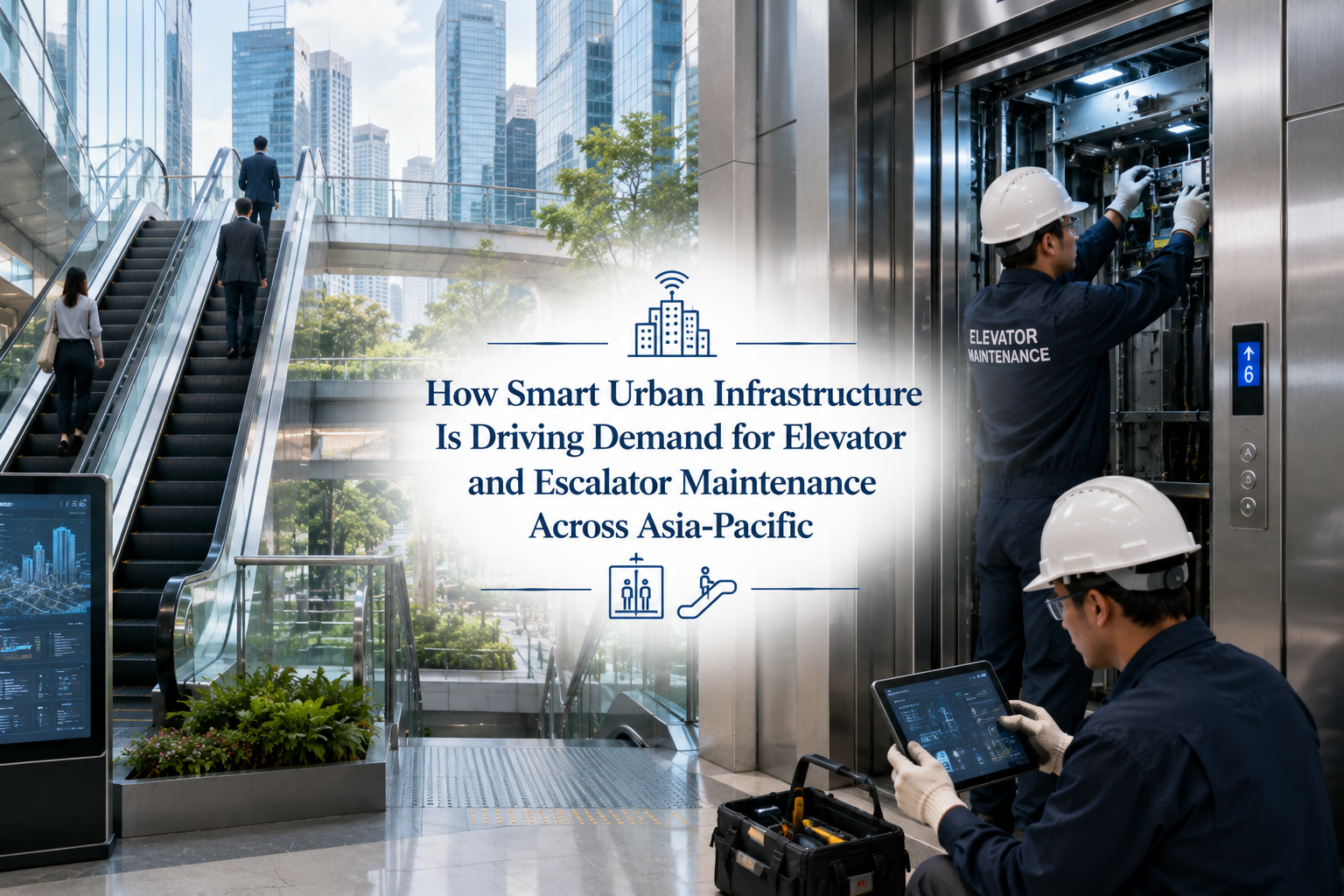
Rapid urbanization, expanding commercial infrastructure, and increasing investments in high-rise residential developments are transforming cities across the Asia-Pacific region. As buildings become taller and transportation hubs handle greater passenger volumes, elevators and escalators have evolved from convenience features into essential infrastructure. Their continuous operation is critical for ensuring safety, accessibility, and efficient movement of people, making maintenance services an increasingly important component of modern building management.
According to a study published by MarkNtel Advisors, the Asia-Pacific Elevator and Escalator Maintenance Market was valued at around USD 11.66 billion in 2025 and is projected to reach USD 19.28 billion by 2032, growing at an estimated CAGR of 7.45% during 2026–2032. Detailed insights can be found in this industry growth report, which highlights the increasing importance of preventive maintenance and digital service solutions as urban infrastructure continues to expand across the region.
Aging Infrastructure Is Increasing Maintenance Requirements
Across Asia-Pacific, many elevators and escalators installed during earlier phases of urban development are approaching the stage where regular servicing, modernization, and component replacement become essential. Rather than replacing entire systems, building owners are increasingly investing in maintenance programs that extend equipment life while maintaining operational reliability.
Routine inspections, predictive diagnostics, lubrication, component testing, and software updates help reduce unexpected failures and improve passenger safety. These services are becoming especially important in hospitals, airports, metro stations, shopping malls, office buildings, and residential complexes where uninterrupted vertical transportation is critical to daily operations.
Urban Development Continues to Expand the Installed Base
The Asia-Pacific region remains one of the world's fastest-growing construction markets. New commercial districts, smart cities, transit-oriented developments, and mixed-use projects are continuously adding elevators and escalators to the installed equipment base. As every newly installed system requires long-term servicing throughout its operational life, maintenance providers are experiencing sustained demand beyond initial equipment installation.
Governments across the region are also investing heavily in transportation infrastructure, including metro rail systems, railway stations, airports, and public facilities. These projects significantly increase the number of vertical mobility systems that require scheduled inspections and maintenance throughout their lifecycle.
Predictive Maintenance Is Transforming Service Delivery
Technological innovation is reshaping elevator and escalator maintenance. Traditional time-based servicing is gradually being complemented by predictive maintenance powered by sensors, Internet of Things (IoT) connectivity, cloud platforms, and artificial intelligence.
Connected elevators continuously monitor equipment performance, collecting operational data that helps identify wear, abnormal vibrations, temperature fluctuations, and other indicators before failures occur. Maintenance teams can schedule repairs proactively, reducing downtime while improving equipment reliability and passenger safety.
This transition toward data-driven maintenance also enables service providers to optimize technician deployment, improve spare-parts management, and deliver faster response times for customers managing multiple facilities.
Safety Regulations Continue to Shape the Market
Safety remains the highest priority in elevator and escalator maintenance. Governments throughout Asia-Pacific continue to strengthen regulations governing installation, inspection, modernization, and periodic maintenance to ensure public safety.
The International Organization for Standardization (ISO) develops internationally recognized standards that support safe and reliable elevator systems, while many regional authorities align maintenance practices with evolving safety requirements. In addition, organizations such as the International Labour Organization (ILO) continue promoting workplace safety practices that influence maintenance procedures and technician training across industrial and commercial environments.
Compliance with evolving regulations requires building owners to conduct regular inspections, maintain detailed service records, and replace aging components before they pose operational risks.
Skilled Technicians Remain Essential
Although digital technologies continue to improve maintenance efficiency, experienced technicians remain central to the industry. Complex diagnostic procedures, modernization projects, electrical repairs, and emergency servicing require specialized expertise that cannot be fully automated.
As elevator systems become more sophisticated through digital controls, destination dispatch technologies, and smart building integration, maintenance professionals require continuous technical training. Workforce development therefore remains an important priority for both equipment manufacturers and independent maintenance providers.
Sustainability Is Becoming a Key Consideration
Building owners are increasingly seeking maintenance strategies that support energy efficiency and sustainability goals. Properly maintained elevators consume less energy, experience fewer breakdowns, and generally operate more efficiently throughout their service life.
Modernization projects may include energy-efficient drives, LED lighting, regenerative technologies, upgraded controllers, and intelligent monitoring systems that improve operational performance while reducing electricity consumption. These improvements align with broader sustainability initiatives adopted by commercial real estate developers and public infrastructure operators throughout Asia-Pacific.
Looking Ahead
The Asia-Pacific elevator and escalator maintenance market is expected to continue expanding as urbanization, infrastructure investments, and smart building adoption accelerate across the region. The combination of a growing installed equipment base, stricter safety standards, predictive maintenance technologies, and long-term modernization requirements will continue supporting demand for specialized maintenance services.
As cities become more connected and buildings increasingly rely on intelligent infrastructure, elevator and escalator maintenance will play an even greater role in ensuring operational reliability, passenger safety, and efficient urban mobility. Rather than functioning solely as a support service, maintenance is becoming an integral element of sustainable infrastructure management across the rapidly evolving Asia-Pacific construction landscape.

 English
 Arabic
 French
 Spanish
 Portuguese
 Deutsch
 Turkish
 Dutch
Dutch
 Italiano
 Russian
 Romaian
 Portuguese (Brazil)
