


 Downloader
 Free FTP
Promote Your Product
Got a product, service, or story to share? Promote it directly to our active community and boost your brand today.
Create an Ad
Publish Bulk Blog Posts
Boost Your Reach! 📝
Have articles, guest posts, or bulk stories to publish? Send your content directly to our editorial team and feature on our platform.
Email Us Your PostsHow Puzzle Challenges Keep Your Brain Active
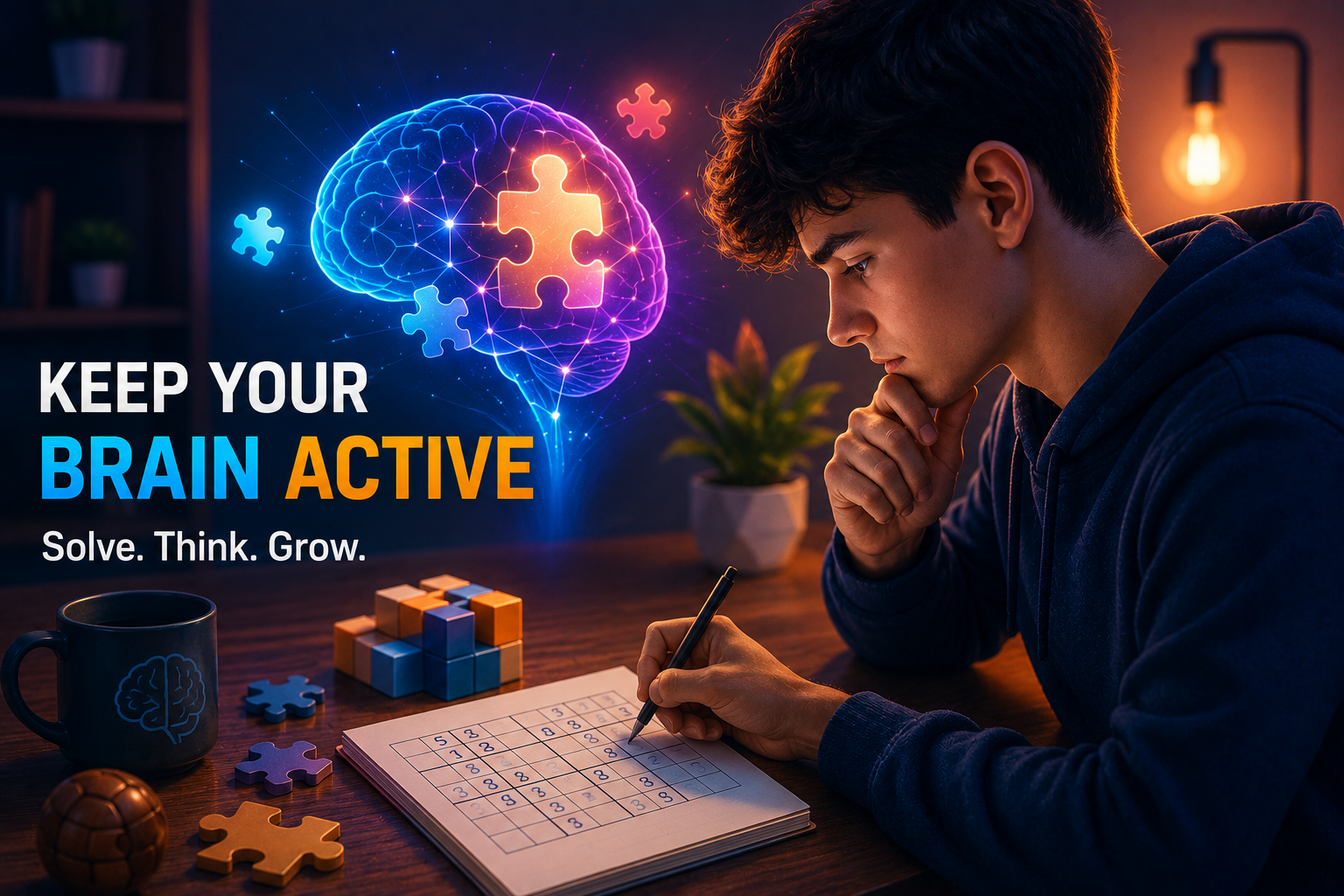
Our brains thrive on learning, adapting, and solving new problems. Just as physical exercise helps keep the body healthy, regular mental activity supports cognitive performance and keeps the mind engaged. One enjoyable way to achieve this is through brain training puzzles, which encourage you to think critically, recognize patterns, and approach problems from different angles.
Unlike passive entertainment, puzzle challenges require active participation. Whether you're solving logic puzzles, word games, number challenges, or visual brain teasers, every session encourages your brain to process information, evaluate possibilities, and make decisions. Over time, these experiences can help strengthen valuable thinking habits that extend beyond gaming.
Let's explore how puzzle challenges help keep your brain active and why making them part of your routine can be both enjoyable and rewarding.
Your Brain Benefits From Regular Challenges
The brain adapts when it encounters new information and unfamiliar situations. Solving different types of puzzles introduces fresh challenges that encourage your mind to stay engaged rather than relying on repetitive thinking.
Instead of memorizing answers, brain training puzzles encourage you to:
-
Analyze information carefully.
-
Compare multiple possibilities.
-
Recognize relationships.
-
Test different solutions.
-
Learn from mistakes.
These activities create an active learning process that keeps your thinking flexible and curious.
Puzzle Challenges Encourage Active Thinking
Many daily activities become automatic over time, requiring very little mental effort. Puzzle games interrupt this routine by presenting problems that require concentration and thoughtful decision-making.
Each puzzle asks your brain to:
-
Observe details.
-
Process clues.
-
Identify patterns.
-
Eliminate incorrect options.
-
Reach logical conclusions.
This continuous engagement is one reason many people enjoy completing daily puzzle challenges as part of their regular routine.
Instead of simply consuming information, you're actively creating solutions.
Problem-Solving Becomes More Efficient
Every puzzle introduces a goal that requires careful planning.
As you solve different challenges, you naturally improve your problem-solving skills by learning how to organize information, test ideas, and adjust your strategy when necessary.
For example, experienced puzzle players often:
-
Break large problems into smaller tasks.
-
Identify useful clues first.
-
Avoid rushing toward conclusions.
-
Evaluate several possibilities before deciding.
These habits become valuable not only during puzzle games but also in everyday situations that require careful thinking.
Variety Keeps the Mind Flexible
One of the greatest strengths of puzzle games is their variety.
Logic puzzles, crosswords, number games, matching challenges, escape puzzles, and visual riddles all encourage different forms of thinking.
Switching between puzzle types prevents your brain from becoming too comfortable with one style of problem.
Trying new challenges helps develop:
-
Logical reasoning
-
Observation
-
Memory
-
Creativity
-
Strategic planning
Regular exposure to different brain training puzzles encourages mental flexibility rather than repetitive thinking.
Daily Practice Builds Strong Thinking Habits
Long sessions aren't always necessary.
Even short daily puzzle challenges can help establish a routine that keeps your mind consistently engaged.
A daily habit offers several benefits:
-
Encourages continuous learning.
-
Builds confidence gradually.
-
Strengthens concentration.
-
Improves consistency.
-
Makes problem-solving feel more natural.
The goal isn't to solve the hardest puzzle every day. It's to maintain a habit that regularly exercises your thinking abilities.
Concentration Improves With Practice
Many puzzles require sustained attention.
Missing a single clue or overlooking a small detail can completely change the outcome.
Regular puzzle practice encourages you to remain focused for longer periods while filtering out distractions.
This improved concentration often carries into other activities such as studying, reading, planning projects, or learning new skills.
Like physical endurance, mental focus becomes stronger through consistent practice.
Learning From Mistakes Is Part of the Process
Few players solve every puzzle perfectly on the first attempt.
Fortunately, mistakes often become the most valuable learning opportunities.
Instead of becoming frustrated, experienced players review what happened and adjust their approach.
Ask yourself:
-
Which clue did I miss?
-
Why didn't my strategy work?
-
What could I try differently?
-
Did I rush my decision?
Reflecting after each challenge strengthens problem-solving skills while making future puzzles easier to approach.
Mental Exercises Support Lifelong Learning
Learning doesn't stop after school or formal education.
Simple mental exercises like puzzle solving encourage curiosity and continuous improvement throughout life.
Every completed puzzle introduces new ways of thinking and strengthens habits such as:
-
Careful observation
-
Logical analysis
-
Creative experimentation
-
Decision-making
-
Strategic planning
These abilities remain useful across many personal, educational, and professional situations.
Challenge Yourself Gradually
Improvement happens fastest when puzzle difficulty increases gradually.
If puzzles feel too easy, your brain stops adapting.
If they're overwhelmingly difficult, motivation often decreases.
Instead:
-
Master beginner puzzles.
-
Increase complexity slowly.
-
Try unfamiliar puzzle styles.
-
Set realistic daily goals.
-
Celebrate small improvements.
Progressive learning keeps your brain engaged without creating unnecessary frustration.
Build a Sustainable Puzzle Routine
Consistency matters more than intensity.
Rather than completing dozens of puzzles in one day and stopping for weeks, create a routine that fits comfortably into your schedule.
A simple plan could include:
-
One puzzle during breakfast.
-
A quick challenge during lunch.
-
A relaxing puzzle before bedtime.
These short daily puzzle challenges help maintain regular mental activity while fitting naturally into everyday life.
Keep Curiosity Alive
Curiosity is one of the most valuable habits puzzle games encourage.
Instead of searching immediately for answers, puzzle players learn to ask questions like:
-
Is there another solution?
-
What clue have I overlooked?
-
Can I solve this differently?
-
What pattern am I missing?
This mindset transforms puzzles from simple games into opportunities for continuous learning.
Daily Habits That Keep Your Brain Engaged
You don't need hours of practice to benefit from puzzle games. Small, consistent habits often produce the greatest long-term results.
Consider these simple routines:
-
Complete one of several brain training puzzles each day to keep your thinking active.
-
Rotate between different puzzle types to build a wider range of cognitive abilities.
-
Use short mental exercises during breaks instead of endlessly scrolling through social media.
-
Review completed puzzles to strengthen problem-solving skills and identify better strategies.
-
Gradually increase puzzle difficulty as your confidence and experience grow.
These habits create a balanced approach to brain training while keeping the experience enjoyable and motivating.
Final Thoughts
Puzzle challenges do much more than provide entertainment—they encourage your brain to stay active through observation, reasoning, planning, and creative thinking. By solving a variety of puzzles consistently, you develop valuable habits that improve the way you approach problems both inside and outside of games.
Whether you're completing a quick daily challenge or working through a complex logic puzzle, every session gives your mind an opportunity to learn something new. Over time, these small mental workouts build stronger thinking habits, improve focus, and make problem-solving feel more natural.
The key isn't finding the most difficult puzzle; it's staying consistent. Make puzzle-solving part of your daily routine, embrace new challenges, and enjoy the satisfaction that comes from discovering solutions through patience and smart thinking. With regular practice, brain training puzzles can become an enjoyable way to keep your mind active, curious, and ready for whatever challenge comes next.

 English
 Arabic
 French
 Spanish
 Portuguese
 Deutsch
 Turkish
 Dutch
Dutch
 Italiano
 Russian
 Romaian
 Greek
Greek
