

 Downloader
 Free FTP
Promote Your Product
Got a product, service, or story to share? Promote it directly to our active community and boost your brand today.
Create an Ad
Publish Bulk Blog Posts
Boost Your Reach! 📝
Have articles, guest posts, or bulk stories to publish? Send your content directly to our editorial team and feature on our platform.
Email Us Your PostsDo Industrial Systems Benefit From Haoba Multi Wing Fan Factory Design
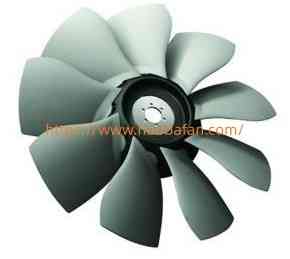
Multi Wing Fan Factory solutions are increasingly used in industrial projects where airflow management, system stability, and environmental control are important parts of operational planning. As industrial facilities expand and production systems become more complex, the need for structured ventilation and cooling solutions continues to grow across multiple sectors including manufacturing, energy, transportation, and infrastructure development.
One key reason for this growing adoption is the increasing focus on system efficiency. Industrial environments often require controlled air movement to support equipment cooling, workspace ventilation, and process stability. Fan systems are integrated into machinery, production lines, and building ventilation networks to help maintain consistent operating conditions. Proper airflow design can support equipment performance and help maintain stable working environments.
Another important factor is adaptability. Industrial projects vary widely in scale and application, from small production workshops to large-scale manufacturing plants and infrastructure facilities. Airflow systems must be able to match different installation conditions, space limitations, and operational requirements. Flexible fan configurations allow engineers to design systems that align with project-specific needs.
Manufacturing consistency is also an important consideration for industrial buyers. Projects often require multiple units of airflow equipment to be installed across different system sections. Consistent performance characteristics help ensure balanced airflow distribution and predictable system behavior. This is particularly important in large facilities where multiple ventilation points operate simultaneously.
Maintenance planning also plays a role in equipment selection. Industrial systems are typically designed for long-term operation, and maintenance accessibility can influence overall system efficiency. Equipment that supports easier inspection and servicing can help reduce downtime and improve system management over time. This consideration is especially relevant in environments where continuous operation is required.
In addition, many industries are placing greater attention on energy-related planning. Airflow systems are often part of broader facility energy management strategies. Efficient air movement can support cooling requirements while helping maintain operational balance across different system areas. Engineers often evaluate airflow solutions based on system design and operational requirements rather than isolated equipment performance.
Different industries apply airflow systems in different ways. Manufacturing facilities use ventilation systems for equipment cooling and workspace air management. Agricultural environments may require controlled airflow for storage or processing conditions. Transportation infrastructure such as tunnels or large stations often relies on structured ventilation systems for air circulation and environmental control. Each application requires a tailored approach to airflow system design.
Engineering teams also consider installation environment when selecting airflow equipment. Space constraints, ducting layout, and system integration requirements can all influence equipment selection. Modular design approaches allow for more flexible system planning and easier adaptation to project conditions.
Digital design tools and simulation technologies have also influenced airflow system development. Engineers can now model air movement patterns and system performance before installation, helping optimize equipment placement and system configuration. This has contributed to more structured planning in industrial ventilation projects.
Haoba provides industrial airflow solutions designed to support a range of engineering and environmental control applications. By focusing on manufacturing consistency and application-oriented design, the company supports projects that require structured ventilation and airflow management systems.
As industrial environments continue to evolve, demand for adaptable airflow solutions is expected to remain steady. Engineering teams and procurement specialists increasingly evaluate equipment based on system compatibility, operational conditions, and long-term usability. For more product information and airflow system solutions, please visit

 English
 Arabic
 French
 Spanish
 Deutsch
 Turkish
 Dutch
 Italiano
 Russian
 Romaian
 Portuguese (Brazil)
 Greek