


 Downloader
 Free FTP
Safeguarding Your Body in Surgery: The Essential Guide to Operating Table Positioning
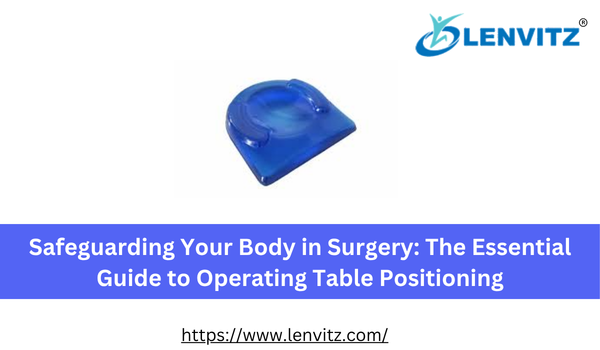
When preparing for a surgical procedure, most patients focus on the credentials of their surgeon or the recovery time. However, an equally critical element of a successful operation happens before the first incision is ever made: how your body is positioned on the operating table.
When you are placed under general anesthesia, your body loses its natural reflexes. You can no longer shift your weight if a limb falls asleep or adjust if a hard edge presses into your skin. Prolonged immobility on a rigid surgical table can lead to complications like nerve damage or pressure ulcers (bedsores). To prevent this, surgical teams utilize highly advanced medical cushions designed for specific surgical postures.
Here is how modern medical teams use targeted gel pads to keep you comfortable and completely safe, no matter your position during surgery.
1. The Standard Setup: Supine Position Gel Pads
The most frequent posture used in the operating room is lying flat on your back, known mathematically and medically as the supine position. While it seems straightforward, resting on a flat table for hours creates extreme pressure hubs on your heels, lower back (sacrum), elbows, and the back of your head.
To counteract this, surgical teams rely heavily on supine position gel pads. A contoured gel head ring cradles the base of the skull, preventing localized hair loss and pressure sores. Simultaneously, flat gel overlays and heel cups distribute body weight evenly across the table, maintaining healthy blood circulation to your extremities throughout the entire procedure.
2. Managing Side-Lying Surgeries: Lateral Position Gel Pads
When a surgeon needs access to your hip, kidneys, or chest, you must be positioned on your side. This side-lying alignment introduces significant orthopedic strain because the entire weight of your torso presses directly down onto a single shoulder and hip.
To stabilize and cushion the body, teams use a specialized mechanical support framework called a lateral positioner. This device gently locks into the operating table rails to keep you from rolling over during a delicate procedure.
To protect the skin from the rigid surface of the stabilizer, teams place contoured lateral position gel pads between your body and the support panels. Furthermore, an axillary gel pad is positioned right beneath the lower armpit to relieve pressure on the brachial plexus—a vital bundle of nerves that controls your arm and hand.
3. Specialized Surgical Care: Lithotomy Position Gel Pads
For gynecological, urological, or colorectal surgeries, patients are often placed in a posture where their legs are elevated and supported in stirrups. This is known as the lithotomy position.
Lifting and securing the legs for extended periods places unique stress on the calves, knees, and inner thighs. If the metal stirrups are unpadded, they can compress the peroneal nerve on the side of the knee, leading to temporary or permanent foot drop. Hospitals prevent this by wrapping the leg supports in thick, form-fitting lithotomy position gel pads. These pads absorb friction and redistribute pressure, ensuring that your legs remain fully supported and well-perfused with blood from start to finish.
Safety Beneath the Surface
The meticulous care provided in a modern operating room extends far beyond the surgical instruments. The strategic integration of supine position gel pads, targeted lateral position gel pads, a supportive lateral positioner, and specialized lithotomy position gel pads ensures that your body is meticulously protected. This invisible layer of engineering guarantees that you can wake up from your procedure safe, aligned, and ready to heal.

 English
 Arabic
 French
 Spanish
 Portuguese
 Deutsch
 Turkish
 Dutch
Dutch
 Russian
 Romaian
 Portuguese (Brazil)
 Greek
Greek
