


 Downloader
 Free FTP
Why Eagle Belt 0.50 Matters in Packaging Machine Performance
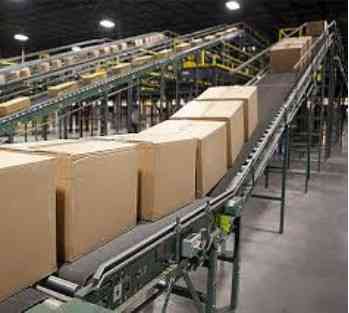
Packaging systems rely on small but essential components that keep movement smooth, synchronized, and dependable across daily production cycles. In belt-driven case sealing and conveyor-related applications, Eagle Belt 0.50 refers to a replacement belt identified as Top/Bottom T210 with the size 1520X50X5MM and described as durable, precise, and reliable for smooth machine operation.
Even though belts may seem like minor machine components, they play a direct role in maintaining motion control and product handling. When a belt begins to wear, lose grip, or fall out of specification, packaging equipment can experience inconsistent performance, reduced throughput, or unplanned downtime.
What This Belt Is
The referenced product is listed as an Eagle Belt: Top/Bottom T210, 1520X50X5MM. Other supplier listings identify the same size and part format as a replacement drive belt for Eagle case sealer models, including T200, T210, T210L, T200L, T400R, and T400RL.
This tells us the belt is intended for machine-specific use rather than general-purpose replacement. In packaging equipment, that kind of model compatibility matters because belts must match the machine’s dimensions, drive requirements, and contact behavior to support proper operation.
Why Belts Are Important in Packaging Systems
Belts are essential in packaging machinery because they transfer motion, help control product movement, and support repeatable machine cycles. In systems such as case sealers and conveying assemblies, belt condition affects how consistently cartons move through the machine and how reliably the equipment completes its intended task.
A properly fitted belt contributes to smoother operation, while a worn or stretched belt can create alignment issues, slipping, or reduced efficiency. This is one reason maintenance teams often monitor belts closely in production environments where uptime and speed are important.
Key Features of Eagle Belting
Eagle polyurethane belting is associated with high wear resistance, dimensional stability, reduced vibration, and use in applications such as packaging and sorting equipment. Open-ended Eagle timing belts are described as suitable for high-precision positioning and packaging equipment, showing their relevance to industrial environments that depend on accurate motion.
Additional Eagle product information also highlights synchronous drive benefits such as noise reduction, reduced maintenance, and energy efficiency. These characteristics are useful in packaging operations where machines run repeatedly through long production shifts and consistent mechanical performance is essential.
Why Size and Fit Matter
The specification 1520X50X5MM is important because exact sizing affects how the belt interacts with the drive system and machine surfaces. In packaging machinery, a belt that is too loose, too tight, or dimensionally mismatched can reduce grip, alter tracking behavior, or place unnecessary stress on related components.
This is why industrial users generally rely on model-specific replacement parts rather than choosing generic substitutes. When the replacement matches the intended dimensions and machine type, the system is more likely to return to stable operation with fewer performance issues.
The Link to Machine Reliability
Packaging equipment works best when every moving part supports stable and synchronized motion. A drive belt may not be the largest component in the system, but it directly affects how efficiently power and movement are transferred through the machine.
If that connection becomes unreliable, the result can be interruptions in carton feeding, inconsistent sealing performance, or more frequent maintenance stops. Replacing worn belts at the right time is therefore a practical step in protecting overall packaging line reliability.
Why Replacement Parts Planning Matters
Industrial maintenance is most effective when it is planned rather than reactive. Keeping critical replacement items on hand helps reduce downtime, especially for components such as belts that experience repeated friction, tension, and operational wear during normal machine use.
This approach is especially relevant for packaging lines, where one failed motion component can affect larger production targets. Access to dependable replacement options makes it easier to restore machine function quickly and keep output levels more consistent over time.
Supporting Long-Term Packaging Performance
In packaging systems, durable motion components help maintain product flow, machine timing, and consistent daily operation. The listed Eagle Top/Bottom T210 belt is presented as a precise and reliable replacement, while supporting sources show that Eagle belting is used in packaging and precision motion applications where wear resistance and dimensional stability are important. Over the long term, the value of packaging equipment parts becomes clear when they help prevent downtime and maintain equipment efficiency. For operators using case sealing or related machinery, Eagle Belt 0.50 is more than a replacement item; it is a working component that supports stable, accurate, and dependable packaging performance.

 English
 Arabic
 French
 Spanish
 Portuguese
 Deutsch
 Dutch
Dutch
 Italiano
 Russian
 Romaian
 Portuguese (Brazil)
 Greek
Greek
