


 Downloader
 Free FTP
How Do Hinged Deli Containers Handle Temperature?
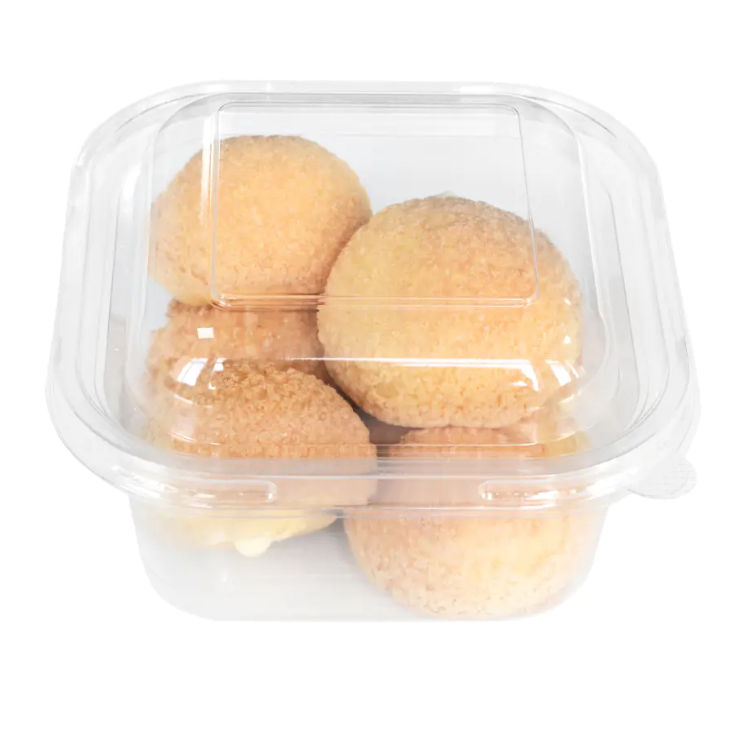
Hinged deli containers are used in food packaging systems for storing and displaying items such as salads, bakery products, and ready-to-eat meals. In practical use, the hinged deli containers rely on an integrated lid-and-base structure that must maintain consistent closure during handling, stacking, and transportation in food service environments.
One key factor influencing the hinged deli containers is hinge fatigue caused by repeated opening and closing cycles. The hinge area is a flexible stress point, and over time, continuous bending can lead to whitening, micro-cracks, or reduced elasticity. These changes may affect lid alignment and closing consistency even if the rest of the container remains unchanged.
Temperature variation also plays an important role. The hinged deli containers may be exposed to refrigeration, warm food filling, or ambient storage conditions. Cold environments can reduce flexibility, while heat can soften thin lid sections, affecting latch strength and sealing pressure. These thermal changes may gradually influence how securely the lid stays closed during use.
Stacking pressure and material clarity further impact performance. The hinged deli containers are often used in retail display environments where transparency is important, but structural rigidity must still support stacking loads. If deformation occurs in sidewalls or lid contact points, closure alignment may weaken over time.

 English
 Arabic
 French
 Spanish
 Portuguese
 Deutsch
 Turkish
 Dutch
Dutch
 Italiano
 Romaian
 Portuguese (Brazil)
 Greek
Greek
