


 Downloader
 Free FTP
Promote Your Product
Got a product, service, or story to share? Promote it directly to our active community and boost your brand today.
Create an Ad
Publish Bulk Blog Posts
Boost Your Reach! 📝
Have articles, guest posts, or bulk stories to publish? Send your content directly to our editorial team and feature on our platform.
Email Us Your PostsCustom Hangar Doors vs Standard Options
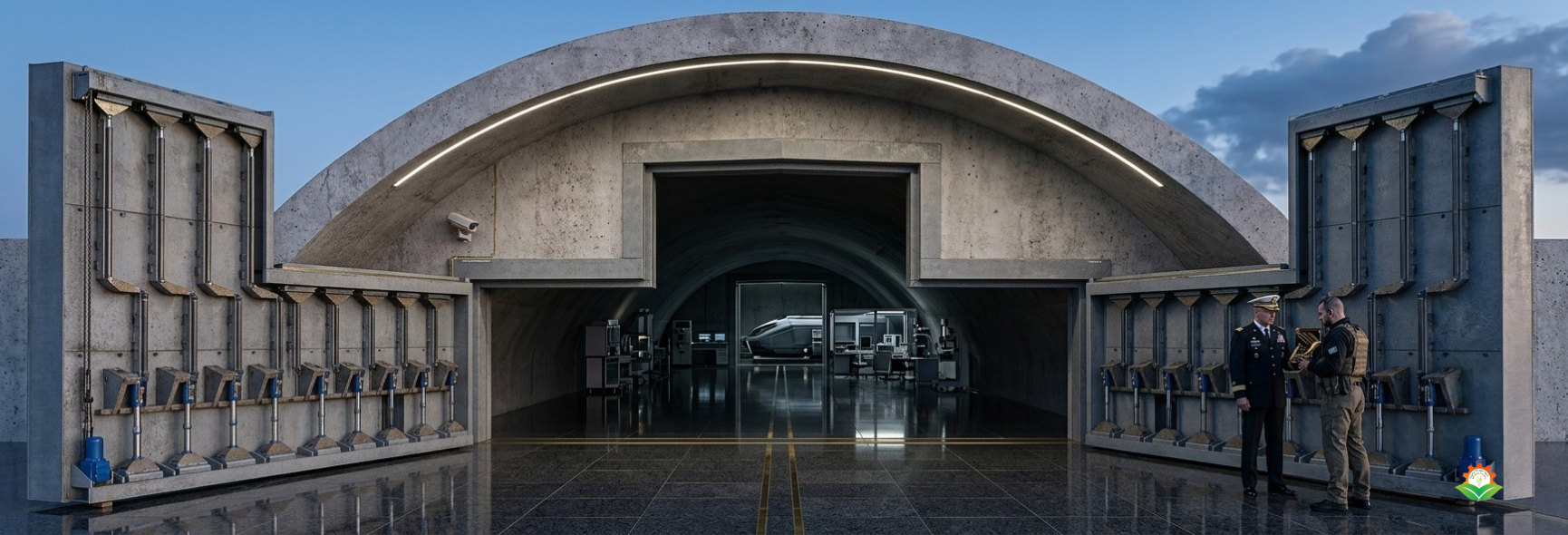
When a regional MRO facility in western India recently expanded its fleet servicing capacity, the project team faced a decision that would shape operations for the next two decades: stick with standard off-the-shelf hangar doors or commission a custom-engineered solution. After evaluating structural loads, aircraft clearance requirements, and long-term maintenance costs, they chose custom. Three years later, the facility reports near-zero unplanned downtime related to access systems.
That scenario plays out across military airbases, aerospace manufacturing plants, and commercial aviation hubs every year. The hangar door you specify is not a commodity purchase — it is a core infrastructure decision.
Why the Hangar Door Debate Actually Matters
Standard options exist for good reasons. They are faster to procure, easier to budget, and backed by predictable lead times. For low-traffic general aviation facilities or light industrial warehouses, they often perform adequately.
But aviation infrastructure rarely fits a generic mould. Aircraft wingspans keep growing. Military facilities demand blast resistance alongside rapid deployment access. MRO hangars need clear-span openings with no structural interruptions that could interfere with maintenance platforms or GSE movement.
When the facility requirements push beyond standard specifications, a custom hangar door is not a luxury — it is an engineering necessity.
Key Structural Differences
Engineering to the Aircraft, Not Around It
Standard hangar doors are designed around common aircraft categories. A wide-body maintenance facility, helicopter hangar for offshore operations, or aerospace manufacturing bay may require clear opening widths of 60 metres or more, with height tolerances that standard products simply cannot accommodate.
Custom hangar door design starts from the aircraft profile, operational frequency, and site-specific wind-load data — then works backward to the structural specification. This approach eliminates the compromise that comes with forcing an aircraft into an access envelope designed for something smaller.
The structural framing, door leaf configuration, track systems, and sealing arrangements are all engineered as an integrated system rather than adapted from a standard product.
Operational Performance Considerations
Standard doors typically cover basic weather protection, manual or semi-automated operation, and moderate wind-load ratings. For many facilities, this is sufficient.
Custom solutions address specific operational gaps that standard products cannot close:
Automation precision — Custom doors can be integrated with facility management systems, aircraft movement sensors, and perimeter security protocols. Opening and closing cycles are engineered to match operational tempo, not adjusted around a product's design limitations.
Wind-load performance — Sites exposed to cyclonic conditions, high-altitude crosswinds, or coastal weather require doors rated to site-specific wind pressures. Standard wind-load ratings may fall short of what structural engineering surveys recommend for exposed locations across the Indian subcontinent and offshore facilities.
Thermal and acoustic performance — Aerospace manufacturing environments and MRO facilities with precision equipment need controlled internal environments. Custom door systems incorporate appropriate insulation, sealing, and draught control as engineered features, not afterthoughts.
Applications Where Custom Solutions Prove Their Value
The case for custom engineering is strongest in facilities where standard products introduce operational risk or constraint:
-
Military airbases requiring blast-rated doors with rapid deployment capability
-
Wide-body MRO facilities where clear-span access exceeds standard product ranges
-
Aerospace manufacturing plants with strict environmental control requirements
-
Offshore helicopter hangars exposed to salt spray, high humidity, and wind loading
-
Defence logistics hubs where security and access control are non-negotiable design criteria
For defence and aerospace applications particularly, the technical depth offered by specialist hangar door manufacturers in India has grown considerably. Companies combining structural engineering, fabrication, and on-site service capability can now deliver projects that previously required imported solutions.
Facilities evaluating blast-rated access systems and aircraft protection requirements will find relevant engineering context through Hangar door specification resources that address the overlap between blast protection and operational access design.
Buyer Evaluation: What to Assess Before Committing
Whether specifying standard or custom, the selection process should go deeper than product catalogues.
Engineering capability first — Can the manufacturer produce structural calculations, load analysis, and wind-load certification for your specific site? A supplier unable to provide engineering documentation is not equipped for critical infrastructure projects.
Manufacturing standards — Fabrication quality determines long-term performance. Assess welding standards, surface treatment processes, and material traceability. Sigma Power Tech hangar door products, for instance, are evaluated against defence and aerospace manufacturing criteria, not general industrial standards.
Customisation depth — Understand where customisation genuinely ends. Some suppliers offer cosmetic variation on standard products; true custom engineering means the structural design adapts to your facility, not vice versa.
Lifecycle support — Installation is the beginning of the operational relationship. Assess maintenance support, spare parts availability, and response capability before award, not after commissioning.
Common Specification Mistakes
Choosing based primarily on price is the most persistent error in hangar door procurement. The operational cost of a door system that underperforms — in availability, weather protection, or security — consistently exceeds any upfront saving within the first operational cycle.
Underestimating wind-load requirements for the specific site is equally damaging. Generic regional wind data is not a substitute for site-specific structural assessment, particularly for facilities in exposed coastal or elevated locations.
Overlooking future expansion is a longer-term problem. A door system that cannot accommodate a larger aircraft type, additional automation, or structural modification will either constrain operations or require full replacement — neither outcome is cost-effective.
Conclusion
The choice between custom and standard hangar doors is ultimately a question of alignment between the door system and the facility's actual operating requirements. Standard products serve a legitimate purpose where requirements are straightforward and predictable. Custom engineering becomes essential when the aircraft, the environment, the security requirements, or the operational tempo pushes beyond standard parameters.
For aviation and defence infrastructure, the cost of getting this decision wrong is measured not just in maintenance expenditure but in operational capability and aircraft protection. Specifying correctly from the outset — with the right engineering partner and the right level of technical rigour — is what separates facilities that perform reliably from those that manage problems indefinitely.

 English
 Arabic
 French
 Spanish
 Portuguese
 Deutsch
 Turkish
 Dutch
Dutch
 Russian
 Romaian
 Portuguese (Brazil)
 Greek
Greek
