


 Downloader
 Free FTP
Why Multigrain Atta Is Replacing Refined Flour in Indian Homes
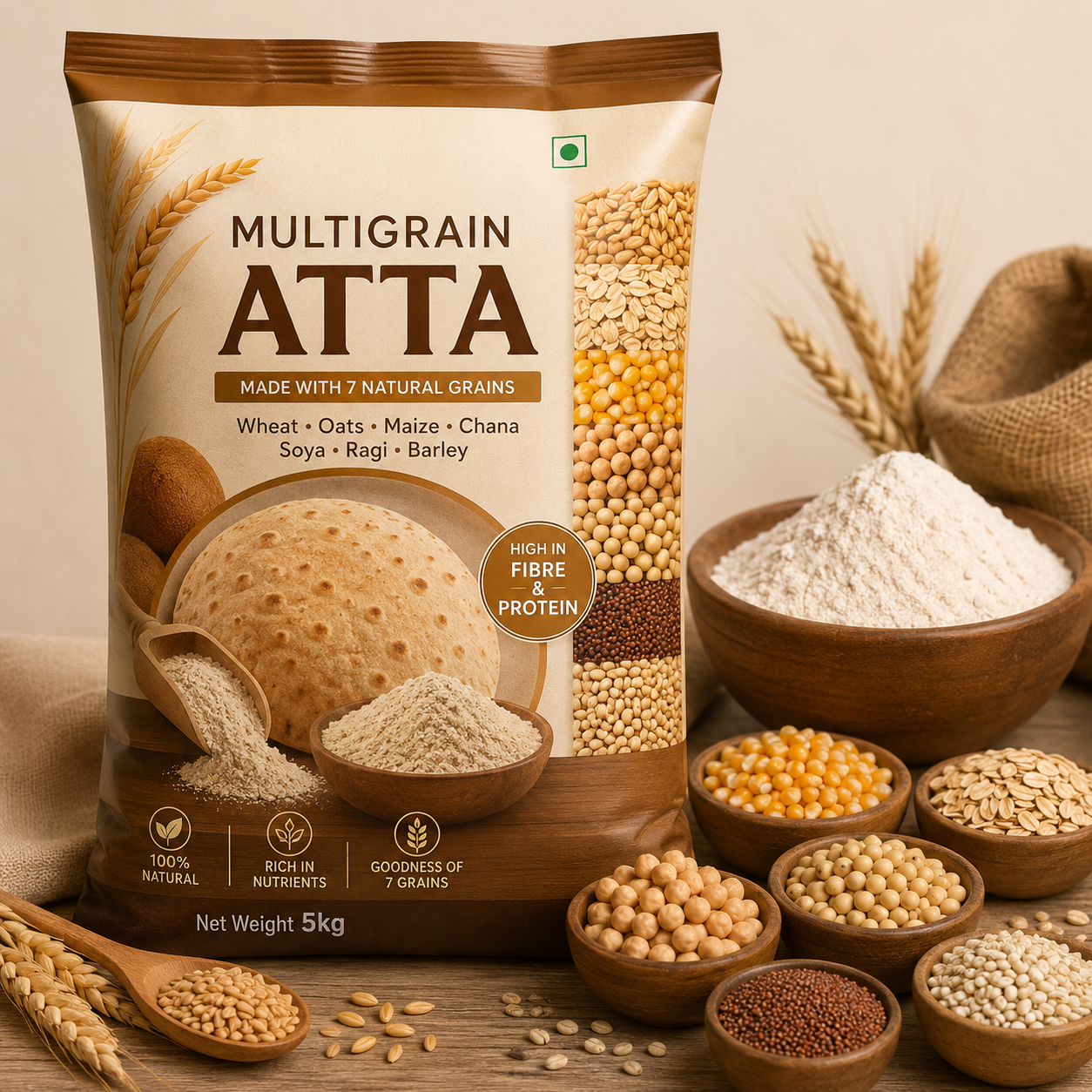
Introduction: One Swap That Tells the Whole Story
There is a quiet renovation happening in Indian kitchens across cities like Delhi, Pune, Bengaluru, and Lucknow.
It does not involve new appliances or trendy gadgets. It shows up in something far more ordinary — the flour container on the kitchen shelf. For decades, that container held refined wheat flour, white and fine, bought out of habit more than choice. Today, more and more households are replacing it with something that looks grainier, smells earthier, and delivers far more in terms of actual nutrition.
Multigrain atta has moved from health store shelves into everyday grocery lists. And the reasons behind that shift say a lot about how urban India is rethinking what it eats.
Why Refined Flour Lost Its Grip on Indian Households
Refined flour — maida and even standard white wheat flour — was never really chosen for its nutritional value. It was chosen for convenience, shelf life, and the soft textures it produced in rotis, parathas, and flatbreads.
But awareness catches up eventually.
More people today understand that highly milled flour strips away the bran and germ from the grain — the very parts that carry fibre, B vitamins, and minerals. What remains cooks well but feeds the body less. For a generation managing sedentary office routines, lifestyle-related health concerns, and rising diabetes rates, that trade-off has started to feel too steep.
The conversation around food has matured. People are reading labels, asking about glycaemic index, and thinking about what their daily roti is actually made of. And that thinking is pushing them toward whole grain and multigrain alternatives.
Multigrain Atta and the Modern Wellness Kitchen
The appeal of multigrain flour is not complicated. Combining grains like wheat, jowar, bajra, ragi, oats, and others into a single blend means every batch of dough carries a wider nutritional profile than single-grain flour can offer.
More fibre supports digestion. A lower glycaemic load helps with energy levels through the day. The presence of multiple grain proteins adds variety that the body uses differently than wheat alone.
For working families who cannot overhaul their entire diet, swapping the flour they already cook with is one of the most practical wellness changes available. The roti looks the same on the plate. The method is identical. But what it does inside the body is meaningfully different.
Brands like 10on10foods have made this swap even more accessible by offering stone-ground, whole grain blends without unnecessary additives — and for households that cook in volume, ordering multigrain atta 10 kg means the healthier choice is also the convenient one, always stocked and ready to use.
What This Shift Looks Like in Real Households
It rarely begins with a nutrition plan or a doctor's advice. More often, it starts with one family member — usually whoever manages the kitchen — deciding to try a different flour after reading something or hearing about it from a friend.
The first few rotis might taste slightly different. Nuttier, denser, with a flavour that takes a meal or two to get used to. Then it becomes normal. Then it becomes the preference.
That is how lasting food habits form — not through dramatic overhauls but through one substitution that sticks.
Meal planning in urban India is increasingly built around this kind of incremental thinking. Less processed where possible, more whole grain where practical, and convenience that does not require sacrificing quality.
Conclusion: The Flour You Choose Is a Small Decision With a Long Reach
No single ingredient transforms a diet. But the flour used for daily rotis — cooked in nearly every Indian home, at nearly every meal — comes close to being the most impactful everyday food choice a household makes.
Shifting to multigrain atta does not ask much. It fits into existing cooking routines without friction. And over weeks and months of consistent use, the cumulative effect on energy, digestion, and overall nutrition is real.
Urban India is already making this move, one kitchen at a time.

 English
 Arabic
 French
 Spanish
 Deutsch
 Turkish
 Dutch
Dutch
 Italiano
 Russian
 Romaian
 Portuguese (Brazil)
 Greek
Greek
