


 Downloader
 Free FTP
EPR Registration for End-of-Life Vehicles in India
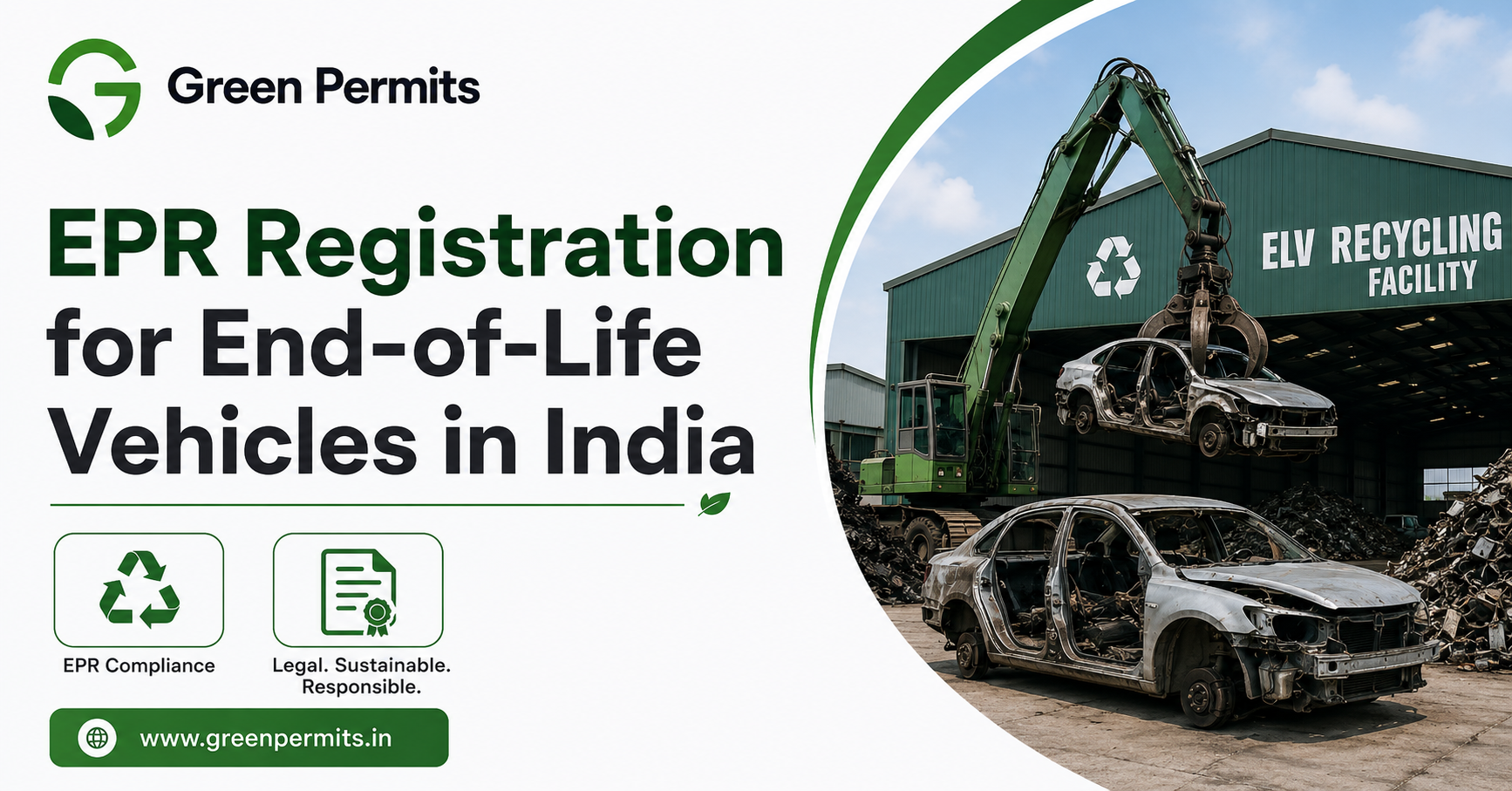
The automobile recycling sector is becoming increasingly important as the number of old and unfit vehicles continues to rise across the country. To improve scientific recycling and environmentally safe disposal practices, the government has introduced EPR registration requirements for End-of-Life Vehicles (ELVs) under the vehicle recycling and waste management framework.
EPR stands for Extended Producer Responsibility, under which vehicle manufacturers and producers are responsible for managing recycling obligations related to vehicles introduced into the market. The framework encourages organized dismantling, recycling, and material recovery through authorized recycling and scrapping facilities.
EPR registration for End-of-Life Vehicles is now becoming an important compliance requirement for automobile manufacturers, importers, and vehicle producers operating in India.
Importance of ELV EPR Registration
The ELV EPR framework helps ensure proper recycling and disposal of old vehicles through authorized recycling systems. It also supports recovery of valuable materials such as steel, aluminum, plastics, rubber, and automotive components.
Businesses operating without proper EPR compliance may face:
- Regulatory notices and penalties
- Environmental compliance risks
- Restrictions on operations
- Legal liabilities under environmental regulations
The framework also promotes responsible manufacturing practices and strengthens sustainable vehicle lifecycle management.
As environmental regulations continue to expand, vehicle producers are expected to maintain proper EPR compliance systems.
Businesses Covered Under ELV EPR
EPR registration generally applies to:
- Vehicle manufacturers
- Automobile producers
- Importers of vehicles
- Brand owners selling vehicles in India
The regulations may apply to:
- Passenger vehicles
- Commercial vehicles
- Two-wheelers
- Three-wheelers
- Electric vehicles
- Heavy motor vehicles
Businesses introducing vehicles into the Indian market are required to fulfill annual recycling obligations under the EPR framework.
Process of ELV EPR Registration
The EPR registration process is generally managed through the CPCB portal developed for vehicle recycling and compliance management.
The process generally includes:
- Portal registration and account creation
- Submission of company and GST details
- Filing of vehicle sales data
- Submission of compliance-related information
- Verification by authorities
- Grant of EPR registration approval
Vehicle producers are also required to fulfill EPR obligations through authorized Registered Vehicle Scrapping Facilities (RVSFs) and approved recycling systems.
Proper documentation and compliance planning help businesses complete registration smoothly.
Role of Registered Vehicle Scrapping Facilities
Registered Vehicle Scrapping Facilities play an important role in the ELV EPR system. These facilities scientifically dismantle old vehicles and recover recyclable materials through environmentally safe methods.
The recycling process helps:
- Reduce environmental pollution
- Improve material recovery
- Support circular economy practices
- Reduce landfill waste
- Promote organized recycling infrastructure
Vehicle manufacturers and producers are expected to coordinate with authorized scrapping facilities for fulfillment of EPR obligations.
Environmental and Business Benefits
The ELV EPR framework supports sustainable waste management and environmentally responsible recycling systems.
Businesses maintaining proper EPR compliance benefit through:
- Better environmental compliance management
- Improved sustainability performance
- Reduced regulatory risks
- Stronger corporate responsibility practices
- Long-term operational stability
As industries increasingly focus on sustainability and circular economy systems, EPR compliance is becoming an important part of the automobile recycling ecosystem.
Learn the Complete ELV EPR Registration Process
If you are planning to apply for EPR registration for End-of-Life Vehicles in India, understanding the compliance process, recycling obligations, CPCB requirements, and documentation is essential before starting operations.
Read the complete guide here:
👉 https://www.greenpermits.in/02/elv-epr-registration-in-india-rules-process-compliance/
📞 Get Expert Assistance for ELV EPR Registration
If you need assistance with ELV EPR registration, CPCB authorization, vehicle recycling compliance, or environmental documentation, the experts at Green Permits Consulting can guide you throughout the complete process.
🌐 Website: https://www.greenpermits.in
📞 Phone: +91 78350 06182
📧 Email: [email protected]

 Arabic
 French
 Spanish
 Portuguese
 Deutsch
 Turkish
 Dutch
Dutch
 Italiano
 Russian
 Romaian
 Portuguese (Brazil)
 Greek
Greek
