


 Downloader
 Free FTP
Future Trends in the PP Jumbo Bag Packaging Industry
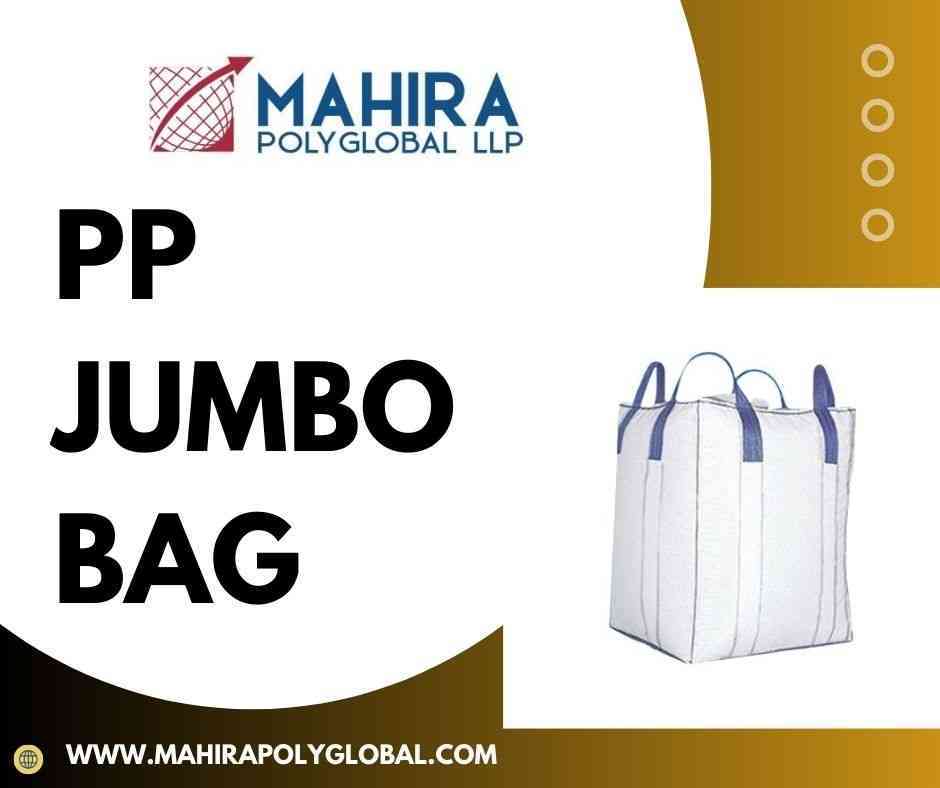
The PP jumbo bags, which are alternatively called FIBCs (Flexible Intermediate Bulk Containers), have historically been considered the best form of packaging material for the bulk goods employed by agriculture, chemicals, construction, and minerals industries. They are cheap, durable, recyclable, and stackable; therefore, PP jumbo bags can be safely considered a good mode of transporting large quantities of goods. However, what is currently happening in the field of PP jumbo bag packaging is that "cheap sacks for bulk goods" are no longer acceptable in the eyes of PP jumbo bag manufacturers across the globe, including in India. It becomes clear that the manufacturers of these bags seek to produce better, safer, and environmentally friendly designs to cater to the needs of contemporary manufacturing firms, warehouses, and distribution centers.
Smarter Designs and Better Performing Features
The leading trend in the PP jumbo bag industry is the shift from the old "yellow sacks" to the high performance design trend. Nobody cares about how expensive a bag is anymore; instead, people want to know whether or not it provides protection from the harmful UV rays, whether it is conductive or static resistant, how durable it is, and how well it fits into an automatic loading and unloading system. The industry has seen a lot of specialized designs such as Type C and Type D FIBCs which have been developed for use in the chemical and pharmaceutical industries in order to prevent the build-up of static charges. Another important trend is that of lighter materials that can carry heavy loads to cut costs. The only issue is the balance between durability and weight. While a heavier bag will ensure better protection against damage during handling, its weight increases the cost of production. Data-driven design that uses strength-to-weight ratio and testing can strike a perfect balance between these two. Indian jumbo bag makers are upgrading their machinery to weave sturdier products.
Sustainability and the need to “go green”
Concerns about the environment have turned the whole PP jumbo bag industry upside down. Governments, multinationals, and even farmers are beginning to wonder: “Is there a way for me to recycle or reuse this bag without sending it to the landfill or the ocean?” The response used to be awkward but now manufacturers are meeting environmental pressures with products featuring recycled PP, more robust yet thinner laminates, and detailed guidelines for reuse or recycling. Some firms are also trying out mono material FIBCs that are more readily recyclable or even PP blends that contain biodegradable additives. However, fully biodegradable jumbo bags are still scarce and too costly. The problem here is the very nature of polypropylene, a highly durable material that performs well but does not play well in the environmental arena if used for disposable items. This is why manufacturers are moving away from single use sacks and towards reusable or long life PP jumbo bags capable of surviving multiple uses. Bags manufacturers in India who develop closed loop collection and recycling programs can capitalize on this shift towards sustainability.
Digitalisation and traceability of bulk packaging
Not only materials and structural properties matter in the future of PP jumbo bags, but also digital capabilities. In order to ensure that one knows from what batch a particular bag comes, how long it has already been used, and even what its carbon footprint is, companies require traceability. Hence, features such as barcode printing, QR code printing, and even RFID tagging may become necessary for jumbo bags. Such a bag turns out to be not only the means of transportation but also a carrier of data that helps to trace the movements of goods in a warehouse or the amount of fertiliser used on a farm. Furthermore, one may scan a QR code on a PP jumbo bag carrying a specific type of raw material in order to be sure that the right material has come into the factory. Nevertheless, the problem is that even though the feature is useful, it implies additional costs for a product that was traditionally inexpensive.
India's emergence as a major player in the production of PP jumbo bags
India is gradually emerging as one of the most important players in the PP jumbo bag industry. The development of the agricultural, chemical, and construction industries in India has led to increased demand from within, and the low labour cost advantage in addition to increasing technical expertise in the country has led to an increase in the popularity of bags manufactured in India in international markets. It is predicted that the growth rate of the Indian PP jumbo bag market is set to grow by more than 6% annually over the next ten years, thus making it one of the fastest growing markets in terms of volume. In addition, the Indian jumbo bag industry is focusing on specialization. Manufacturers of jumbo bags in India are producing specialized bags that can withstand high humidity, tough rural terrain, and varied loading methods. New Jumbo bag manufacturers in India have invested in wide fabrics and high speed looms.
How Mahira Polyglobal LLP fits into the changing landscape
As far as Indian companies trying to take steps above simple PP bag manufacturing goes, Mahira Polyglobal LLP can be considered one of those enterprises which is trying to embrace the future of PP jumbo bags. While other companies continue to produce traditional yellow FIBCs, the enterprise is paying more attention to the needs of various industries and trying to find ways how to serve those better. For example, by providing custom sizes, closing mechanisms, and fabrics, they enable brands and distributors to handle loads precisely, minimize spillages, and increase the appeal of products. Thus, farming cooperatives and fertilizer producers would probably need bags with clear printings and re-sealable closure mechanisms, while industrial users will require durable and UV-resistant variants for outdoor storage. Additionally, Mahira Polyglobal LLP makes special emphasis on the quality of their products, which is crucial since even one bad bag can lead to spills, accidents, or shipment refusal.
Automation, logistics, and bag compatibility
With increased automation in factories and warehouses, PP jumbo bags are now expected to be compatible with such processes. The conventional bag that is manually “thrown” or “stacked” does not necessarily work seamlessly with mechanical robotic arms, vacuum-lifters, or automated palletisers. Modern PP jumbo bags have been designed with a view towards making it easier for machines to lift and stack them without damaging them. This involves designing the bags with dedicated lifting loops, symmetrical design, and pre-designed “hanging” bags. Standardised sizes and stacking profiles are also becoming common to facilitate pallet planning in automated systems. This is because automation requires consistent packaging solutions, but bulk packaging materials are inherently varied in terms of size, material, and weight. Indian jumbo bag producers can benefit from working closely with equipment suppliers and logistics experts in designing robot-compatible yet flexible bags.
Work safety, regulations, and international standards
A new important development impacting the PP jumbo bag manufacturing business involves greater emphasis on safety requirements and changes in regulations. In some nations, filled PP jumbo bags should comply with specific criteria related to their ability to be stacked, slung, and, if necessary, anti-static. Moreover, special attention should be paid to labeling, warning labels, and even limitations concerning the life cycle of the product, which means that companies cannot ignore the issue anymore and have to start paying more attention to aspects other than cost. Export-oriented Indian companies realize that compliance is mandatory to enter foreign markets, while improvements in the sphere of work safety have resulted in an increased rejection of unsafe products. The irony is that safety-focused bags are usually more expensive than others, but the damage from an accident may cost far more. Therefore, in the future, we will see more skilled workers and instructions printed right on the bags along with enhanced cooperation between PP jumbo bag producers and users.
Conclusion
From the analysis in “Future Trends in the PP Jumbo Bag Packaging Industry”, it is evident that the PP jumbo bag packaging industry will go way beyond ordinary plastic sacks for bulk packaging. Better designs, improved materials, traceability through technology, environmental considerations, and packaging designs that will allow for automation are some of the things that will define the use of PP jumbo bags in the coming future. In India, jumbo bag manufacturers in India and even broad bag manufacturers in India are gearing towards meeting the new demands set forth by their customers locally and internationally. Firms like Mahira Polyglobal LLP give us an idea of how the PP jumbo bag packaging industry should look like as the industry blends traditional strengths of polypropylene with better designs and safety features. The end result is not only cost-saving packaging but more importantly, improved logistics operations.
Frequently Asked Questions
Q1. Is there a possibility to reuse PP jumbo bags or are they disposable and meant to be used only once?
Some PP jumbo bags are intended to be used again if there is no visible damage on the bag, yet others can be single-use depending on the condition of the material and its environment. It depends on the specific bag and the instructions of the producer.
Q2. What are the differences between jumbo bags and regular PP woven bags?
PP jumbo bags (FIBCs) are significantly larger than regular PP woven bags and are intended to carry tonnes of materials. Moreover, FIBCs have strengthened lifting loops and stronger fabric.
Q3. Can you recycle PP jumbo bags?
Most PP jumbo bags are made of polypropylene, so they can be easily recycled. However, the problem lies in collecting soiled or mixed bags and cleaning them. Some Indian producers and buyers try to implement recycling programs.
Q4. Which kind of industries require special PP jumbo bags?
Industries which make wide use of special types of bags like anti-static, conductive FIBCs, breathable or food-grade liners and highly durable bags suitable for high payloads include chemicals, pharmaceutical, food, and mining industries.
Q5. Who is the largest manufacture of PP Jumbo bag?
There is no single answer to this question since the leader in this field varies according to location, type of products, and capacity. The Indian buyer can choose from established jumbo bag manufacturers in India and bags manufacturers in India such as Mahira Polyglobal LLP, but he/she must keep in mind that other factors like quality and safety must be considered.

 English
 Arabic
 French
 Spanish
 Portuguese
 Deutsch
 Turkish
 Dutch
Dutch
 Russian
 Romaian
 Portuguese (Brazil)
 Greek
Greek
