


 Downloader
 Free FTP
Promote Your Product
Got a product, service, or story to share? Promote it directly to our active community and boost your brand today.
Create an Ad
Publish Bulk Blog Posts
Boost Your Reach! 📝
Have articles, guest posts, or bulk stories to publish? Send your content directly to our editorial team and feature on our platform.
Email Us Your PostsACS Citation Format: Journal Article Writing Guide
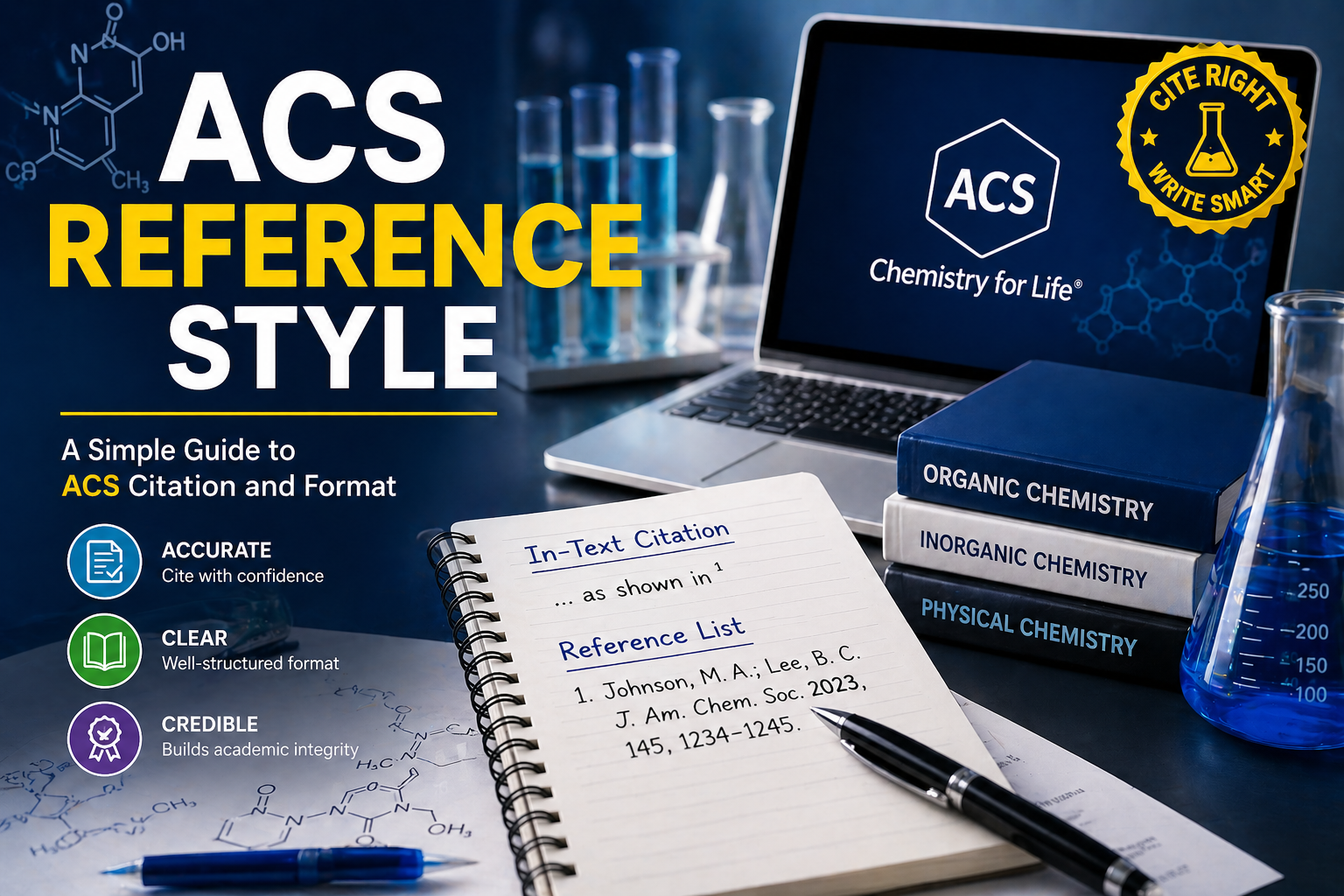
ACS Citation Format: Journal Article Writing Guide
You’ve done the hard part. Research? Done. Writing? Done. Now comes that last step that quietly causes stress—citations.
I used to rush this part. Big mistake.
One small formatting issue can make your whole article feel off. And if you're targeting acs citation format, then clean referencing isn’t optional. It’s part of the game.
Let’s fix that properly.
Why Most People Struggle With ACS Format
Most people struggle with ACS citation format because it requires strict ordering of details like author names, journal abbreviations, and publication data, which leaves little room for error and can feel overwhelming without a clear system.
That’s the truth.
It’s not hard. It just needs accuracy.
Once you get the pattern, you stop second-guessing yourself.
A Simple Way to Understand ACS Format Citation
Forget complicated explanations.
I look at acs format citation like a label on a product. Every detail tells you something important.
-
Who created it
-
What it’s about
-
Where it was published
-
When it came out
-
Where to find it
That’s all a citation does.
No more, no less.
The Standard Format You Must Follow
Here’s the structure used in acs journal reference format:
Author(s). Article Title. Journal Abbreviation Year, Volume, Page Range.
That’s your base formula.
Now let’s break it into parts so you can apply it without confusion.
Start With Author Names
Write the last name first. Then initials.
Example:
Hassan, A.
For multiple authors:
Hassan, A.; Green, B.; Liu, Y.
Each name is separated by a semicolon.
I always double-check initials. It’s easy to slip here.
Write the Article Title
Use sentence case.
Example:
Effect of pressure on liquid viscosity
No quotation marks. No extra styling.
Just plain text.
Add Journal Abbreviation
Don’t write the full journal name.
Use the shortened version.
Example:
J. Chem. Thermodyn.
If you’re unsure, look it up. Don’t guess.
Include Year, Volume, and Pages
Now add the publication details.
Example:
2020, 150, 50–58.
Follow this order:
-
Year
-
Volume
-
Page numbers
Complete Citation Example
Here’s how it all looks together:
Hassan, A.; Green, B. Effect of pressure on liquid viscosity. J. Chem. Thermodyn. 2020, 150, 50–58.
That’s a proper ACS reference.
How Do You Add Citations Inside the Text?
In ACS citation format, in-text citations can appear as superscript numbers, numbers in parentheses, or author-date references, each connecting directly to a numbered list of full references at the end of the article.
Let’s go through each option.
Superscript Style
Example:
Viscosity changes under pressure.^1
This is compact and clean.
Parentheses Style
Example:
Viscosity changes under pressure (1).
Still simple and easy to read.
Author-Date Style
Example:
Hassan (2020) studied viscosity changes.
This style feels more conversational.
Pick one style and stay consistent. Switching styles breaks the flow.
Common Problems You Should Avoid
I’ve seen strong content lose impact because of these small mistakes.
Wrong Formatting Order
Don’t mix things up.
Correct order:
Author → Title → Journal → Year → Volume → Pages
Using Full Names Instead of Initials
Wrong:
Ahmed Hassan
Right:
Hassan, A.
Missing Key Details
Leaving out volume or pages weakens your citation.
Everything matters.
Poor Punctuation
ACS format depends on commas and periods.
One missing comma can make your citation look incorrect.
A Shortcut That Saves Time
Here’s what I do.
I keep one correct citation saved in my notes.
Whenever I need a new one, I copy it and replace the details.
This helps me:
-
Avoid mistakes
-
Work faster
-
Stay consistent
It’s simple, but it works every time.
Making Your Article Feel Natural
Let’s be honest.
Readers don’t care about citation rules. They care about clarity.
So while you’re applying acs citation format, don’t forget:
-
Keep sentences short
-
Avoid over-explaining
-
Use real examples
Because clean writing matters just as much as correct formatting.
Using Keywords Without Killing the Flow
You’re working with:
-
acs citation format
-
acs format citation
-
acs journal reference format
Here’s my approach.
I place keywords where they fit naturally.
Example:
“If you’re learning acs format citation, start by understanding the basic structure.”
That’s it.
No repetition. No forced placement.
Practical Example You Can Follow
Let’s make this real.
Text:
Pressure influences chemical behavior in different systems.^1 Many experiments support this observation.
Reference:
-
Hassan, A. Pressure effects in chemical systems. J. Chem. Educ. 2019, 96, 200–207.
Use this as a base when writing your own citations.
Why Proper Citations Matter for Your Blog
Here’s something many writers overlook.
Citations affect how your content feels.
When your acs citation format is clean:
-
Your article looks trustworthy
-
Readers stay longer
-
Your content feels structured
And when readers trust your content, they’re more likely to return.
My Personal Way of Handling ACS Citations
I don’t try to memorize rules anymore.
I focus on repetition.
Once I learned one correct format, I kept using it.
Over time, it became automatic.
That’s the goal.
Final Thoughts
ACS citation format isn’t complicated. It just requires attention to detail.
Once you understand the structure, everything becomes easier.
Stick to the pattern. Keep your writing clear. Check your work once.
That’s all you need to do.

 English
 Arabic
 French
 Spanish
 Portuguese
 Deutsch
 Turkish
 Dutch
Dutch
 Russian
 Romaian
 Portuguese (Brazil)
 Greek
Greek
