


 Downloader
 Free FTP
Bajra Atta & Jowar Flour: The Ancient Grains Reclaiming Indian Kitchens
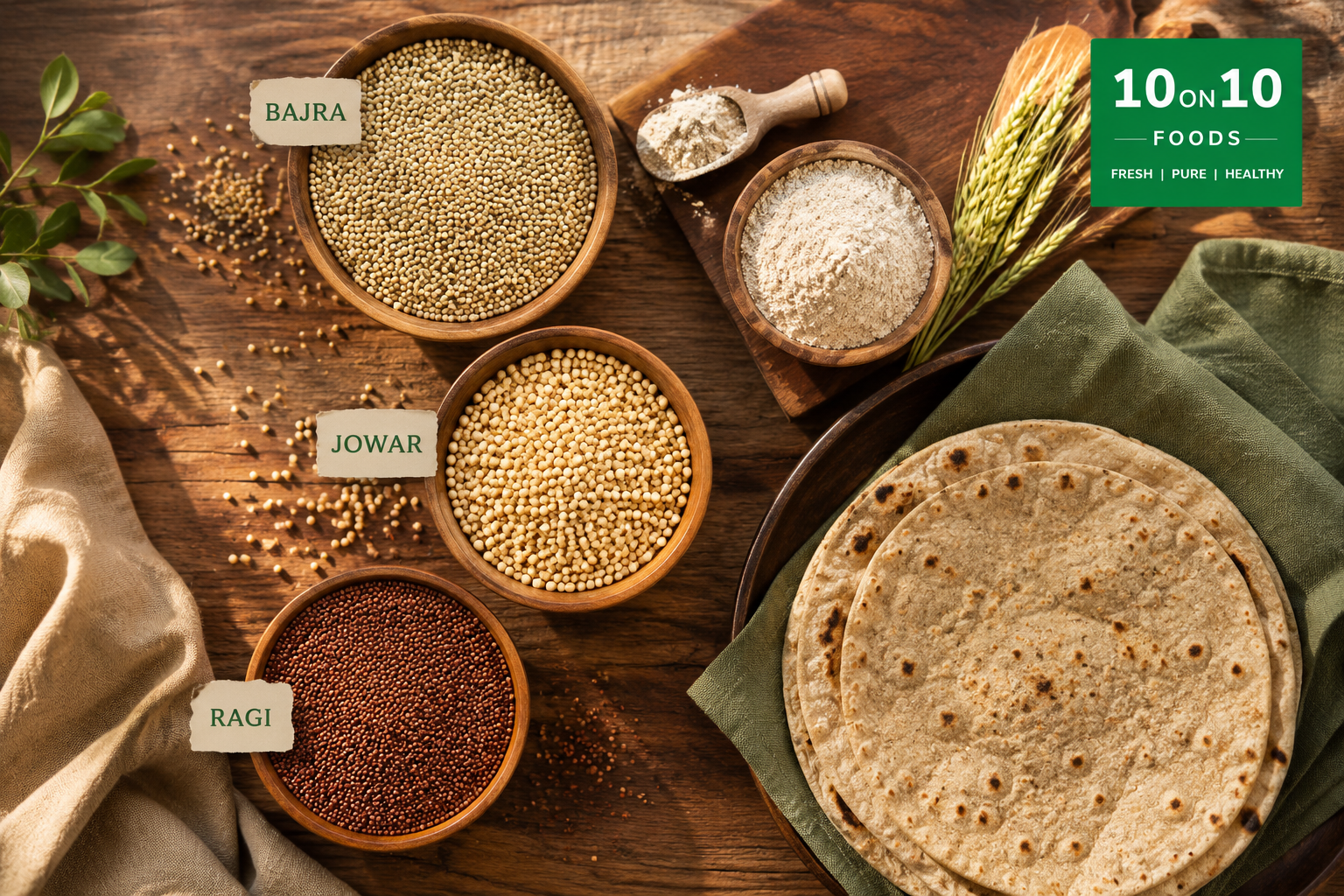
The Quiet Revolution on Your Kitchen Shelf: Why Ancient Millets Are Winning the Modern Pantry War
There's a shift happening — not in Silicon Valley or a Michelin-starred kitchen, but in the humble grain section of Indian households. And it's long overdue.
Walk into any progressive grocery store in Bangalore, Mumbai, or Delhi right now and you'll notice something interesting. The flour aisle has quietly transformed. Nestled between the refined maida and the ubiquitous atta are small, serious-looking packets with names that sound like they belong to your grandmother's recipe diary — bajra, jowar, ragi. Except these aren't your grandmother's pantry staples anymore. They're being repackaged, re-storied, and rediscovered by a generation that's done with processed food and genuinely curious about what they're eating.
This isn't a fad. It's a reckoning.
The Millet Renaissance Is Already Here — Most People Just Haven't Caught Up
India declared 2023 the "Year of Millets," and the global response was surprisingly warm. The United Nations backed it. Chefs from Tokyo to Toronto started experimenting with sorghum and pearl millet. But what's quietly unfolding at the grassroots level, in home kitchens and wellness circles across India, is far more interesting than any government initiative.
People are returning to grains that this subcontinent has grown for over 5,000 years — not out of nostalgia, but because modern nutrition science keeps validating what traditional Indian diets knew intuitively. Low glycemic index. High fibre. Rich in minerals. Naturally gluten-free. Grown in conditions that barely need irrigation. Millets check every box that today's health-conscious, climate-aware consumer actually cares about.
The question now isn't whether millets belong in your kitchen. It's how to use them well.
Bajra: The Underdog That Deserves a Permanent Spot on Your Counter
Pearl millet — or bajra — grows where wheat cannot. In the arid stretches of Rajasthan and Gujarat, it's been a survival crop for centuries. But "survival food" undersells it wildly.
Bajra flour is dense with nutrients that most urban diets are quietly deficient in. It's one of the better plant-based sources of iron, which matters especially for women and anyone eating predominantly vegetarian. It contains magnesium, which plays a role in over 300 enzymatic reactions in the body — including those linked to sleep quality, stress response, and blood sugar regulation. Its glycemic index is significantly lower than wheat flour, making it a grain that keeps you full and steady rather than spiking and crashing.
What most people don't realize is that the form in which you consume bajra makes an enormous difference. Commercially milled bajra flour, processed at high heat, loses much of its nutritional integrity. Stone-ground flour — the older method — retains the bran, the germ, and the natural oils of the grain. If you're making the switch to bajra, it genuinely matters where your flour comes from and how it's made. Using a high-quality bajra atta that's stone-ground means you're getting the whole grain as it was meant to be eaten — not a processed shadow of it.
What Happens When You Actually Cook With It
There's a moment of adjustment with bajra that no recipe blog will warn you about. It doesn't behave like wheat flour. It has a slightly earthy, almost nutty depth of flavour that takes about three uses to fall in love with. Roll it into rotis and they'll be thicker, slightly rougher in texture, and far more satisfying in a way that's hard to explain until you've eaten one.
The traditional preparation is bajra ki roti — a thick, hand-patted flatbread typically eaten with ghee and raw onion, especially in Rajasthan. But the modern kitchen has found new ground for bajra:
Bajra porridge is having a moment in health-forward households as a slow, warming breakfast that holds you through the morning — a counterpoint to the sugar-loaded granola bowls that dominate wellness Instagram.
Bajra pancakes — think dhokla-like savoury rounds or slightly sweet weekend stacks with banana and jaggery — are a genuinely good way to introduce children (and skeptical spouses) to the flavour.
Bajra-based bhakri is being reinvented by home bakers who add sesame seeds, ajwain, or even sun-dried tomatoes into the dough. Low-key, it's one of the more interesting things happening in Indian home cooking right now.
Blend bajra flour into soups as a thickener instead of cornstarch. Mix it 50-50 with whole wheat for rotis that are more nutritionally robust without being jarring to the palate. Start slow. Stay consistent.
Jowar: The Other Ancient Grain Worth Taking Seriously
If bajra is the bold, earthy choice, jowar — sorghum — is the more approachable entry point into millet cooking. Lighter in colour, milder in flavour, and significantly more versatile in texture, jowar flour bridges the gap between traditional Indian flatbreads and the global clean-eating repertoire.
Jowar flour is naturally gluten-free and exceptionally high in dietary fibre — the kind that supports gut microbiome diversity, a topic that's moved from obscure science journals to mainstream wellness conversations in the last few years. It also contains plant compounds called antioxidants that are associated with reduced inflammation, which is increasingly understood to be the slow-burning engine behind many chronic lifestyle diseases.
The jowar flour revolution is particularly significant for people managing Type 2 diabetes or pre-diabetes — a population that has grown alarmingly in urban India. With its low GI and high fibre content, jowar doesn't just substitute for refined carbohydrates; it actively supports the metabolic function that refined carbohydrates disrupt.
Jowar rotis are thinner and more pliable than bajra — easier to roll, quicker to adapt. Jowar flour also works beautifully in:
Jowar upma, made exactly like the semolina version but with a nuttier bite and better fibre. Jowar dosa when mixed with urad dal and fermented overnight — one of the cleanest breakfasts you can put together. Jowar cookies and crackers for snackers who want something crunchy without the refined flour guilt. And increasingly, in homemade pasta and noodles for the food-curious household experimenting with Indian supergrains in global formats.
The Clean Label Movement and Why Sourcing Matters More Than Ever
Here's something worth sitting with: the global food industry has spent decades convincing consumers that convenience and processing are signs of progress. That white flour is "refined." That fast-cooking grains are better. The wellness conversation of the 2020s is fundamentally a pushback against that narrative.
The clean label movement — which demands short ingredient lists, recognizable components, and minimal industrial processing — has found natural allies in traditional Indian grains. But it only works if the supply chain holds integrity all the way through. Stone-ground. Unbleached. Unenriched. Stored properly. Sourced from farms where the grain is grown as it was meant to be.
This is why brands that take the provenance of their ingredients seriously, like 10on10foods, are gaining trust in a category where skepticism is healthy. When you're replacing a staple as fundamental as atta in your household, you want to know the grain's story — not just the marketing copy on the front of the packet.
The Practical Truth About Making the Shift
Nobody goes from wheat rotis to 100% millet rotis overnight. Nor should they. The most sustainable approach is integration — swapping one or two meals a week, gradually developing a palate for earthier, denser flavours, and letting your gut microbiome adjust.
A sensible starting point: replace one weekly breakfast with bajra porridge. On Saturdays, make jowar rotis instead of wheat. If you bake, try a 30% bajra or jowar substitution in your usual recipe. Give it a month before you decide it's not for you.
The cooking learning curve is real but short. The health payoff is longer, quieter, and more meaningful.

 English
 Arabic
 French
 Spanish
 Portuguese
 Deutsch
 Turkish
 Dutch
Dutch
 Russian
 Romaian
 Portuguese (Brazil)
 Greek
Greek
